
When a critical incident unfolds, every minute counts. In Uruguay’s capital city of Montevideo, authorities are now turning to autonomous drones to shave precious minutes off emergency response times, and potentially give police a clearer picture of what they’re walking into before they even arrive.
Drone automation company FlytBase has announced a new citywide public safety program with Uruguay’s Ministry of the Interior (MOI), developed in partnership with local technology firm Timerix. The initiative connects the city’s existing gunshot detection network directly to an automated drone response system, creating what the companies say is one of the first deployments of its kind in Latin America.
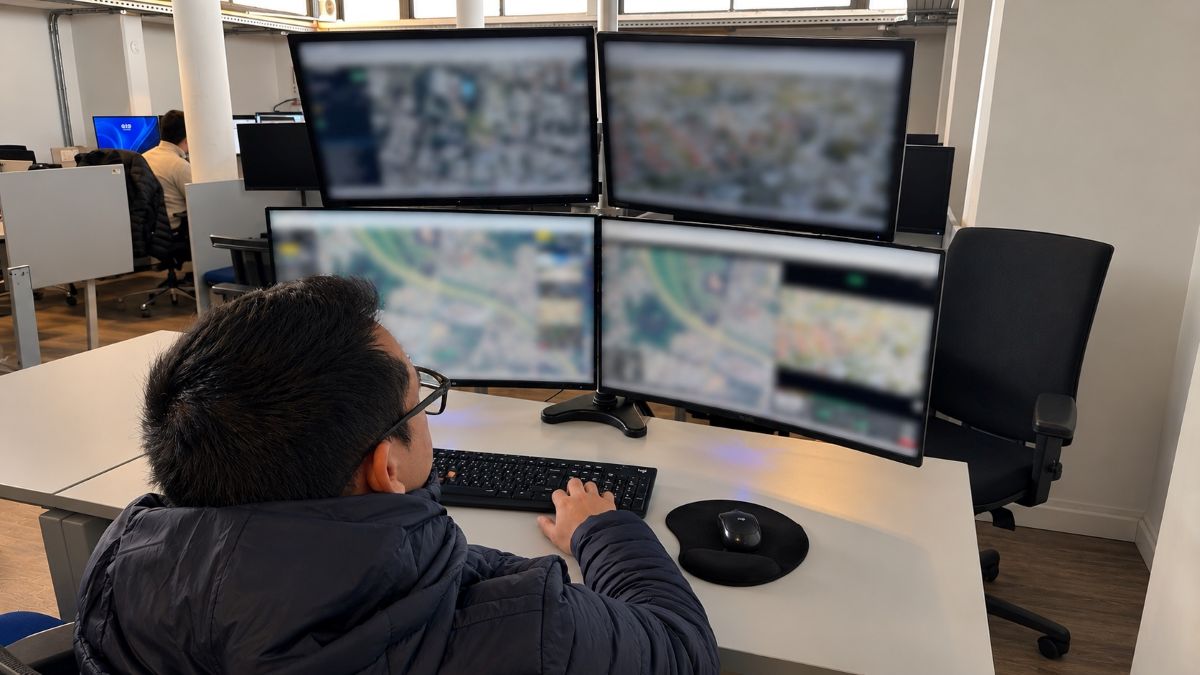
The concept is simple but powerful: when the city’s ShotSpotter system detects gunfire, a nearby drone can be dispatched automatically from a docking station, fly to the scene, and begin streaming live video back to a command center within minutes. For police officers responding to potentially dangerous situations, that aerial view could make a significant difference.
Montevideo has been using ShotSpotter technology since 2023 to detect and locate gunshots in real time. The new drone program builds on that foundation by adding an autonomous aerial response layer. According to FlytBase, Uruguay is the first country to integrate an automated drone deployment system directly with an existing ShotSpotter network at this scale.
“An autonomous drone program gives you the full operational picture, from the event that triggers it, to the nearest drone that responds, to awareness on the ground,” says Nitin Gupta, founder and CEO of FlytBase. “That is what makes a citywide program like this possible, efficient, and safe.”
FlytBase’s software platform manages the drone operations across the city, coordinating flights between multiple docking stations and delivering real-time aerial footage to emergency personnel. The company says the system is designed with public-sector security requirements in mind, offering on-premise, private cloud, and sovereign cloud deployment options so agencies can maintain control over sensitive data.
Data privacy is perhaps one of the most important considerations for governments adopting drone technology. And that is why FlytBase is quick to point out that its platform complies with standards including SOC 2 Type II, ISO 27001, and GDPR.
For Timerix, the local technology partner helping implement the project, the deployment represents a glimpse of what public safety operations could look like across the region in the coming years.
“Drone as First Response is the present,” says Federico De Hoyos of Timerix. “Today, we can deploy drones in seconds, assess situations in real time, and assist security forces.”
The announcement also highlights the growing momentum behind Drone as First Response (DFR) programs worldwide. Public safety agencies in the United States have increasingly adopted drones to support emergency response, search-and-rescue missions, and situational awareness. Uruguay’s approach stands out because it links automated drone dispatch directly to a citywide detection system, reducing the time between an incident occurring and eyes arriving overhead.
The Ministry of the Interior plans to use the Montevideo deployment as a model for other public safety agencies across Latin America. If successful, the project could offer a glimpse of the future of emergency response: sensors detect an incident, software evaluates the event, and autonomous drones launch automatically, all before the first responders reach the scene.
More: DJI unlocks longer-range Dock 3 drone missions with new update


FTC: We use income earning auto affiliate links. More.




Comments