
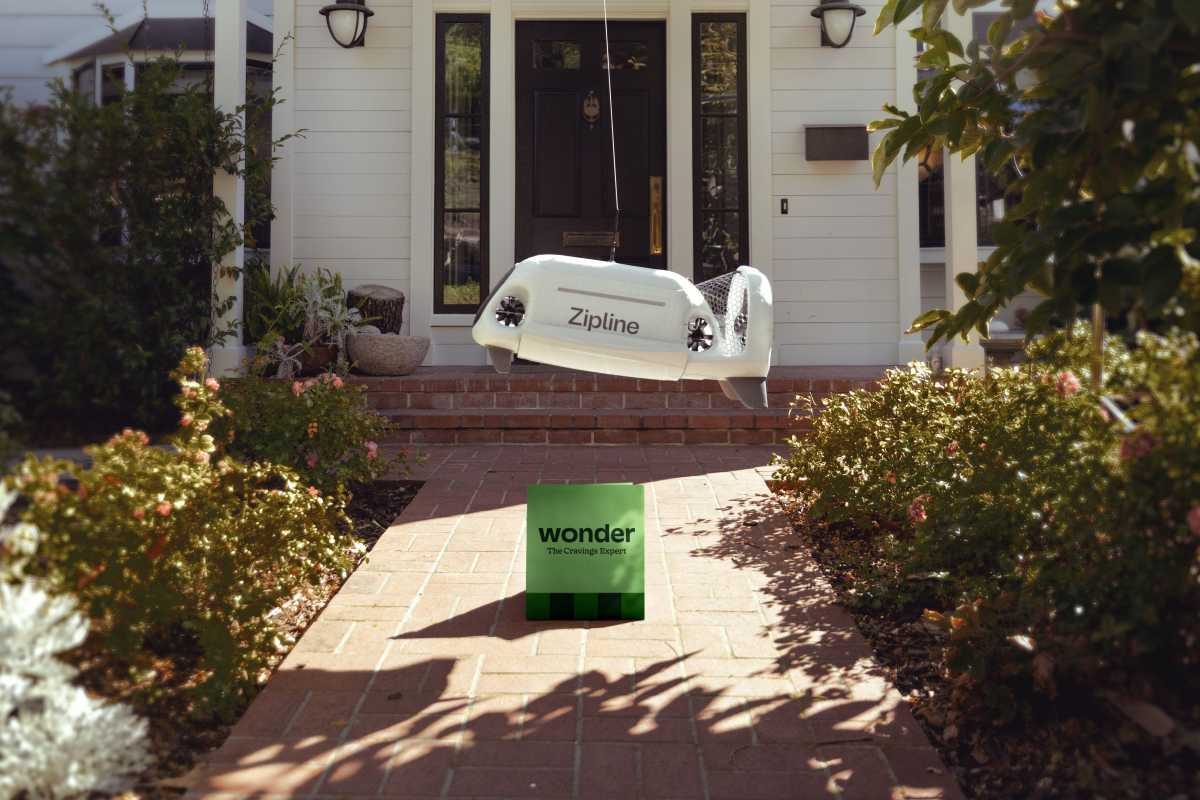
The next big improvement in drone delivery might not be faster deliveries or longer flight times. It could be making sure your neighbors barely notice the drone bringing your package.
That’s the idea behind Zipline’s latest engineering upgrade, which uses real-time sound modeling to help its autonomous delivery drones fly more quietly. The company has announced that the technology, called sound-optimized dynamic flying, is now running across its entire fleet.
Zipline says the upgrade, combined with other hardware and software improvements, has reduced overall sound exposure per flight by 68% and peak-volume noise by 24% compared with its 2025 fleet. Those figures are based on the company’s internal modeling, rather than independent measurements.
The timing is significant. As drone delivery expands across the US, noise has become a growing source of frustration for some communities. Residents in places such as Richardson, Texas, have complained about the persistent buzzing of Amazon delivery drones flying over their homes, with some describing the repeated flights as disruptive to everyday life.
For companies hoping to make drone delivery a regular part of American life, keeping the peace with people who never ordered a package may be just as important as getting orders to customers quickly.
Teaching drones to fly more quietly
Zipline’s approach starts with a design that differs from many conventional multirotor delivery drones. Its aircraft feature fixed wings, allowing them to transition into forward flight and glide much like airplanes. Once they reach cruising speed and altitude, they can turn off all but one motor, reducing the amount of time multiple propellers need to run.
The new software helps them reach that quieter cruising phase more efficiently.
Rather than following a rigid, pre-planned flight path, each drone uses onboard weather sensors to measure real-time wind conditions. It combines those readings with a custom acoustics model to determine how it should adjust its speed, altitude, and movements to minimize noise.
Think of a cyclist rolling downhill instead of pedaling hard to accelerate. A Zipline drone might dip its nose to pick up speed using gravity, or pitch upward to slow down gently instead of relying on its motors to do all the work. The result is a smoother transition into and out of wing-powered flight, with less motor activity and less noise.
Zipline cofounder and CTO Keenan Wyrobek says the company wants people to welcome the service rather than simply tolerate it. That means making quiet operation a central part of the engineering process, not an afterthought.
Quieter flights, faster deliveries
There’s another benefit to all that aerodynamic fine-tuning: efficiency.
Zipline says the new flying technique has shortened its average flight time by 53 seconds while reducing energy consumption per flight by 21%. Its drones also spend roughly 50% longer cruising on their wings.
Those improvements could add up across a fleet that the company says completes a delivery somewhere in the world every 15 seconds.
The update builds on other noise-reduction measures, including Zipline’s patented ultra-quiet propellers and its delivery architecture, which keeps the main aircraft around 330 feet above the ground while a separate delivery mechanism brings packages down to customers. Zipline says other delivery drone services typically operate around 32 feet above ground during delivery, although operating heights vary by system and flight phase.
Will quieter drones win over communities?
Zipline’s announcement comes as drone delivery companies face a difficult balancing act: customers want convenience, but residents don’t necessarily want the accompanying aircraft noise overhead several times a day.
Reducing noise could help ease those concerns, particularly as services expand into more neighborhoods. Still, quieter does not automatically mean inaudible, and Zipline’s reported improvements have yet to establish how much residents will notice the difference in real-world conditions.
The company says the new technology also lays the groundwork for higher-altitude flights and more sophisticated maneuvers that could make future deliveries quieter still.
For now, Zipline is betting that smarter flying can make drone delivery less intrusive. If the approach delivers on its promise, the best compliment a neighborhood could give its next delivery drone might be that nobody noticed it was there.
More: DJI Modify 1.7.0 adds new ways to refine drone 3D models


FTC: We use income earning auto affiliate links. More.

Comments