
It’s been a while since we’ve talked about the use of drones in Ukraine by both sides of the conflict but over the last year, a new type of drone has begun being used to counter anti-UAV activities. However, the side effects are starting to show their downside.
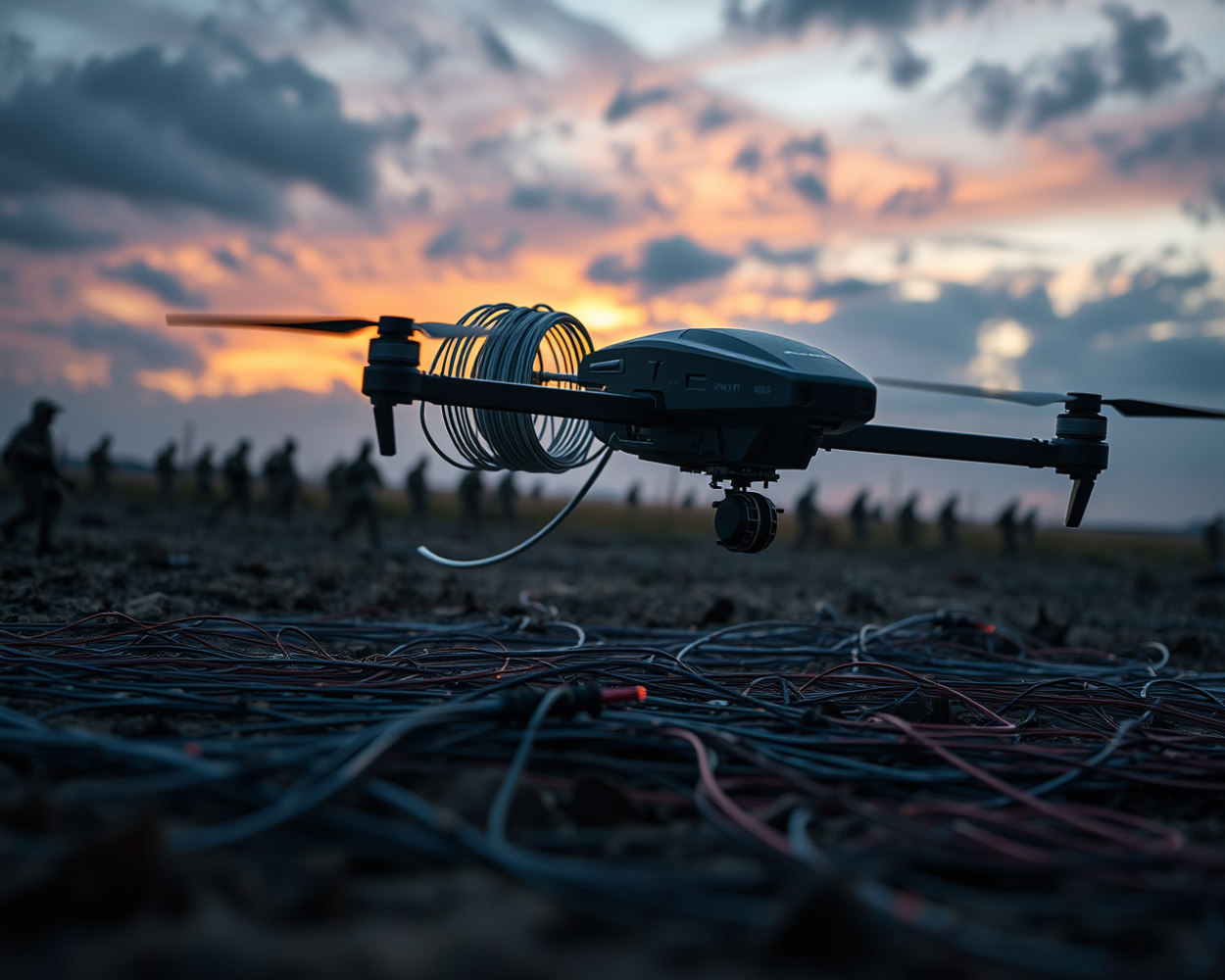
The use of fiber-optic drones in Ukraine isn’t new; the two sides began using them once both realized it was the easiest way around drone hacking. What they are is FPV drones attached with an explosive warhead and a spool of fiber optic cable. The spool is unwound as the drone flies, allowing pilots to operate without fear of being taken down by electronic warfare units.
The trade off is a more limited range, most drones can fly between six and 15 miles. Another trade off, which is becoming more noticeable, are the miles of spent wire left after a drone has been shot down or impacts a target.
These wires are hard to see and can be mistaken in the field for booby traps, making operations slower as teams can easily get caught by the wires and have to question their safety.
A recent report by Business Insider shares that even the Ukrainians are starting to see the problem as some fields are now covered in a spider web of fiber optic cables.
Ukraine and Russia fly thousands of drones each day. Some are on one-way missions like these hard-wired drones, and others are returnable. While only contained to the battlefields closest to the front, Russia has begun working on wired drones with ranges far exceeding the current standard. Some extend up to 50 miles while still connected to their controller via a wire.
Tethered drones aren’t a new concept. Outside of war, they can be quite useful. One example has been mobile cell towers. Called “Flying COWs,” these drones are tethered to the ground, providing both power and data communication. While in the sky, the drones can provide cell service to devices in their view for days on end.
Used during natural disasters when cell towers are affected, these are easy to set up and take down solutions when needed in a pinch.


FTC: We use income earning auto affiliate links. More.


Comments