
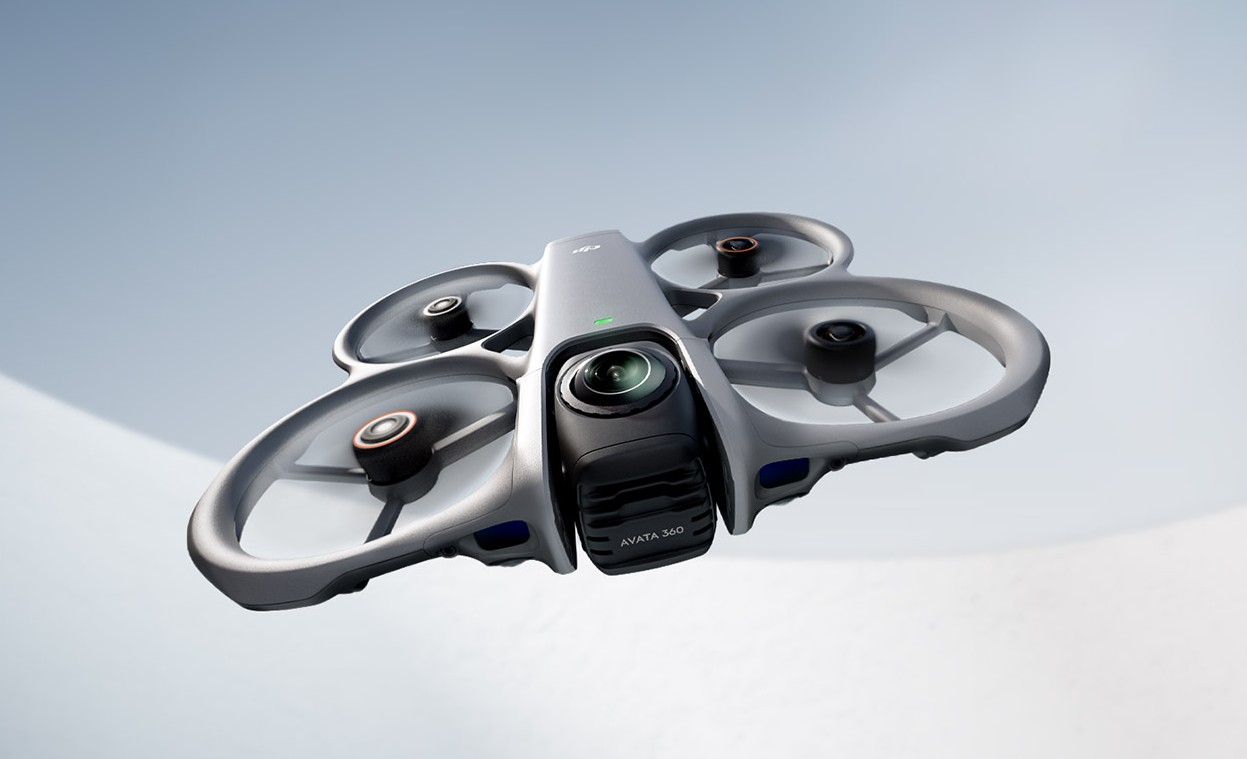
Just as DJI is gearing up to unveil its first-ever 360-degree FPV drone, the Avata 360, the company has launched a legal offensive against its fastest-rising rival, Insta360. And this time, the battle isn’t about specs or features — it’s about who owns the underlying technology powering the next era of drones.
DJI has filed a patent ownership lawsuit in China against Insta360’s parent company, Arashi Vision, claiming that six key patents registered by the firm should legally belong to DJI. The Shenzhen Intermediate People’s Court has already accepted the case, signaling that this is no minor dispute; it’s headed for a full legal showdown.
The market reaction was immediate and sharp. Arashi Vision’s shares dropped 7% on Monday, closing at CNY181.15 ($26.23), underperforming a broader Shanghai market that itself fell 3.6%. For a company that only recently went public, that kind of drop reflects serious investor concern over what’s at stake.
At the heart of DJI’s claim is a specific provision in Chinese patent law: “service inventions.” The company argues that the disputed technologies were developed by former DJI employees within one year of leaving — and are directly tied to the work they performed while at DJI. If proven, the rights to those patents would belong to DJI, not Insta360.
And these aren’t minor features. The patents reportedly cover core drone technologies, including flight control systems, structural design, and image processing. In other words, the very foundation of how modern drones fly, stabilize, and capture visuals.
What’s adding intrigue to the case is how the patents were filed. According to people familiar with the matter, some inventors were listed as “requesting anonymity” in domestic Chinese filings. But in corresponding international (PCT) filings, where disclosure is mandatory, their identities were revealed. A comparison reportedly shows that these individuals are former core DJI R&D engineers who worked on critical drone projects.
Those employees, sources say, had deep access to DJI’s most important technologies during their tenure — raising the central question now before the court: were these innovations independently developed at Insta360, or are they extensions of work done at DJI?
Insta360 has so far taken a cautious stance, saying it is conducting an internal review and will disclose further details if required. But the broader context makes it clear why this case matters far beyond six patents. Because this isn’t just a lawsuit, it’s the legal front of a rapidly escalating product war.
Update: Insta360 founder counters DJI lawsuit with 28-patent allegation
For years, DJI and Insta360 operated in adjacent but distinct categories. DJI dominated the skies with drones, while Insta360 built a global following through its 360-degree cameras like the super versatile X5 and ONE RS, redefining how creators capture and reframe footage.
But over the past year, that separation has completely collapsed. In December, Insta360 — through its Antigravity drone brand — launched the Antigravity A1, marketed as the world’s first 8K 360 drone. Its pitch was simple but disruptive: bring the “shoot everything, reframe later” philosophy of 360 cameras into the air. The response was immediate, with reported sales exceeding CNY30 million ($4.3 million) within 48 hours in China.
DJI, meanwhile, was making moves in the opposite direction. The company expanded deeper into handheld imaging last year with products like the Osmo series and, crucially, launched the Osmo 360 (35% off right now), stepping directly into Insta360’s home turf.
Now, with the Avata 360 on the horizon, DJI appears ready to merge both worlds — combining its FPV drone expertise with fully immersive 360 capture. Slated for a March 26 release, Avata 360 is shaping up to be DJI’s first true 360-degree FPV drone. Leaks and teasers point to 8K 360-degree video capture, upgraded obstacle sensing, LiDAR-assisted navigation, and compatibility with DJI’s latest video headsets and motion controllers. Needless to say, Avata 360 is creating excitement even before its launch.
Related: Antigravity A1 drone discount arrives before April feature update
If 360 drones become the next big category, and all signs suggest they might, the companies that control the core flight and imaging technologies will define the market. As such, DJI’s legal move can be seen as an attempt to lock down that foundation before competitors gain further ground.
There’s also a deeper industry signal here. The case highlights growing tensions around talent mobility in high-tech sectors, where engineers frequently move between companies working on similar problems. If the court sides with DJI, it could set a powerful precedent around how far employees can take their knowledge, and what legally belongs to their former employer.
For Insta360, the stakes are equally high. Its push into drones is still new, but clearly strategic. Losing key patents, or even facing prolonged legal uncertainty, could disrupt product development and dent its credibility just as it tries to establish itself beyond cameras.
For DJI, this is about more than defense. It’s about reinforcing its position not just as a drone maker, but as the company that owns the entire aerial imaging stack — from flight systems to how content is captured, processed, and experienced. And all of this is unfolding just as the Avata 360 is about to take center stage.
More: DJI Avata 2 prices crash ahead of new 8K FPV drone


FTC: We use income earning auto affiliate links. More.

Comments