
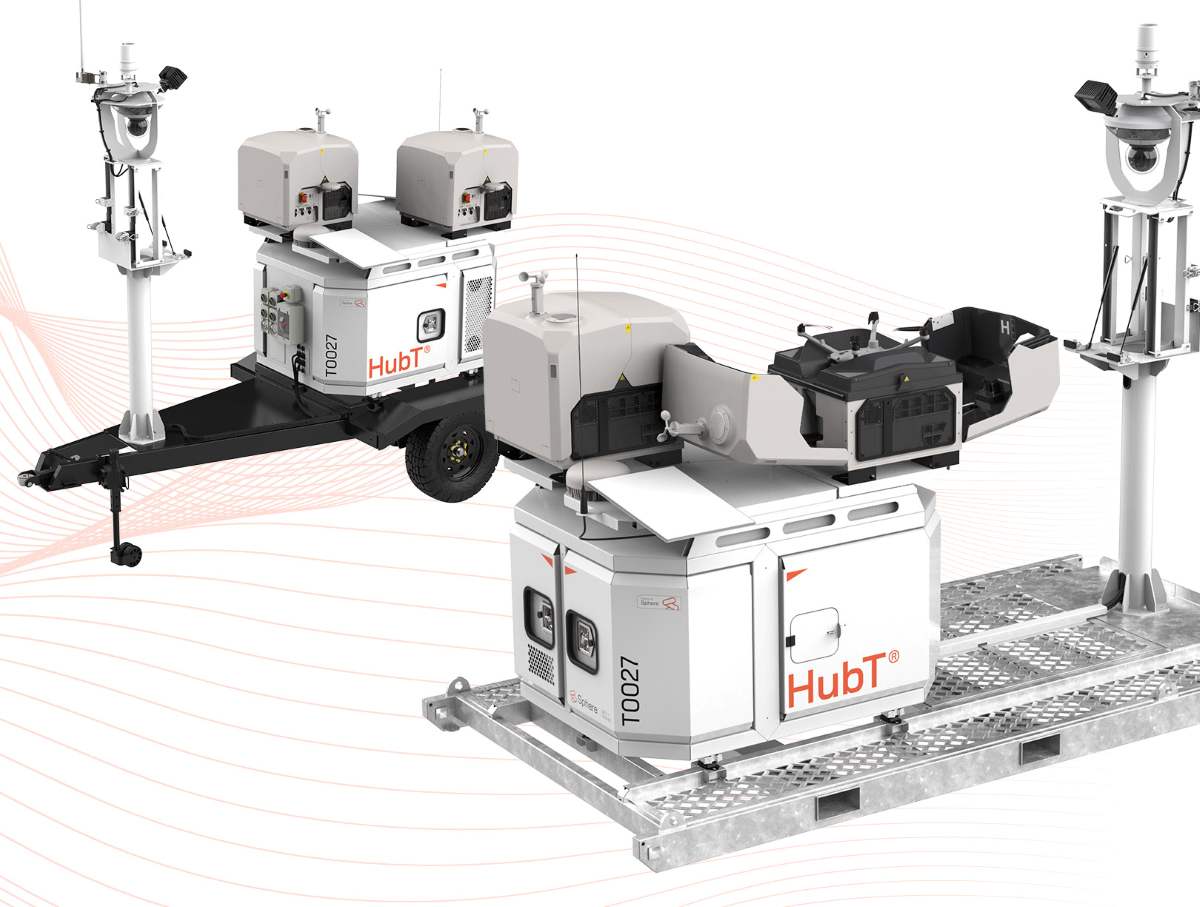
Sphere is tightening its grip on autonomous drone deployments with a set of practical upgrades to its HubT platform, but the biggest shift is how the system is now built.
The Australian drone solutions provider has brought HubT hardware production fully in-house, a move aimed squarely at speeding up deployment timelines and improving consistency across installations. Combined with new deployment options and streamlined compliance, the update is designed to get autonomous drone systems operational in days instead of weeks.
For context, HubT is Sphere’s plug-and-play sensor and infrastructure stack built to support fixed-site drone operations, including integrations with systems like the DJI Dock 2 and Dock 3. It’s used by industries such as mining, utilities, and infrastructure that rely on repeatable aerial data capture from the same location, often under beyond visual line of sight (BVLOS) permissions.
What’s new here starts with flexibility on the ground. Sphere has introduced two deployment configurations — Trailer and Skid — to better match real-world site conditions. The Trailer setup is suited for flat but uneven terrain, while the Skid configuration is designed for concrete or evenly prepared surfaces. That flexibility removes the need for extensive civil works, which have traditionally slowed down or complicated drone dock deployments.
Just as important is what’s happening behind the scenes. By handling enclosure fabrication, electrical design, wiring, integration, and compliance testing internally, Sphere is eliminating its reliance on third-party contractors. The company has also brought qualified electricians directly into its production team, ensuring every unit moves through a continuous build-test-certify cycle under one roof.
The payoff is both speed and predictability. Without external contractor bottlenecks, customers no longer have to wait on availability or deal with inconsistent build quality. Each HubT unit leaves production fully assembled, tested, and ready for deployment, complete with compliance documentation.
That compliance piece has also been strengthened. The updated system is engineered to align with the latest Australian electrical standards from the outset, rather than being retrofitted after installation. In practice, that means site approvals become a validation step instead of a time-consuming remediation process — a key advantage for large-scale industrial customers.
All of this feeds into faster time-to-operation. With Sphere’s vertically integrated production model and regulatory progress under its BVLOS self-assessment trial, HubT systems can move from delivery to active data capture in a matter of days. That’s a significant shift in an industry where deployments often stretch into weeks or even months.
CEO Paris Cockinos says the move to in-house production was deliberate, giving the company full control over build quality, timelines, and scalability, which many competitors still struggle to offer.
Beyond deployment, HubT continues to tie into Sphere’s Curo platform, which tracks missions end-to-end — from flight scheduling to processed data delivery — offering customers full visibility into performance metrics like airtime and time-to-data.
More: Drone surveying without GCPs? Wingtra claims sub-3 cm accuracy


FTC: We use income earning auto affiliate links. More.




Comments