
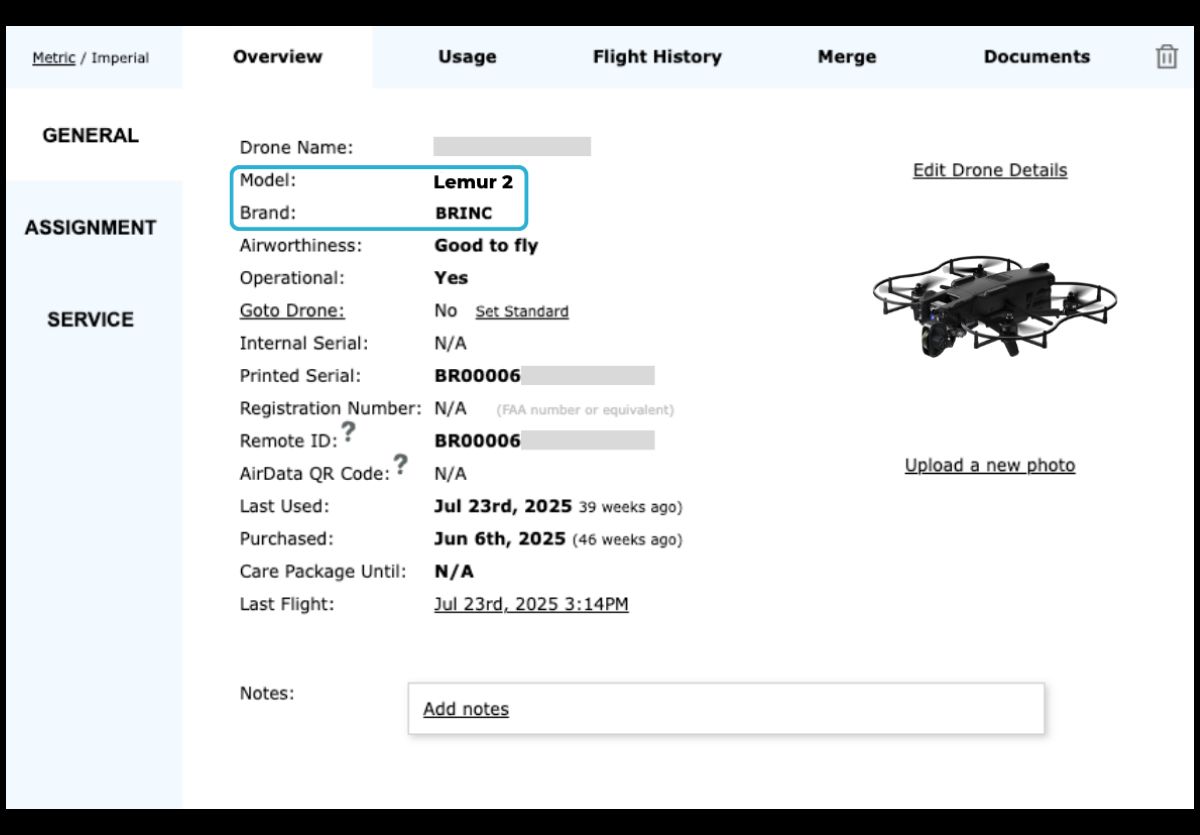
As drone programs become a bigger part of policing, firefighting, and emergency response across the US, keeping clean records of every mission is turning into a serious challenge. This is why drone fleet management platform AirData has announced a new integration that automatically captures and organizes flight data from BRINC’s Lemur 2 and Responder drones. The goal is simple: help public safety agencies create complete mission records without forcing pilots to do extra paperwork after every flight.
That may sound like a back-office update, but it addresses a fast-growing need in the drone world. According to the Electronic Frontier Foundation’s Atlas of Surveillance, more than 1,500 law enforcement agencies in the United States now operate drone programs. At the same time, Drone as First Responder, or DFR, expanded sharply in 2025. Some departments have reported that drones can resolve roughly 20% to 25% of calls without requiring officers to physically respond on the ground.
As those programs scale, agencies need reliable ways to track flights, pilot activity, maintenance schedules, and equipment usage. That’s especially important when departments face audits, budget reviews, compliance checks, or public records requests.
AirData says the new BRINC connection automatically pulls mission data directly from BRINC systems and places it into AirData’s platform. That means records are created whether or not a pilot manually uploads files or fills out logs later.
“Public safety agencies rely on a connected ecosystem of tools,” says David Benowitz, vice president of strategy and marketing communications at BRINC. He stresses that integrating with platforms like AirData helps ensure flight data is captured and accessible without adding friction during critical operations.
BRINC has focused heavily on drones designed for emergency situations rather than consumer flying. The Lemur 2 is built for indoor missions, allowing responders to inspect buildings and assess risky scenes before entering. The Responder, meanwhile, is designed for DFR programs and can launch autonomously to 911 calls while providing live video, thermal imaging, and remote operation capabilities.
AirData CEO Eran Steiner says the company’s platform has now processed more than 60 million flights. He says connecting BRINC hardware into the system gives agencies more than just flight logs. Instead, he explains, departments gain a broader system of record that can track pilot activity, equipment health, and long-term operational trends automatically.
That could matter as public safety drone programs face growing pressure to prove value while maintaining transparency. Departments increasingly need to show how drones are used, how often they respond, whether fleets are properly maintained, and how much work they save.
In short, as emergency drones become more common, the software managing them may become just as important as the aircraft themselves.
More: Princess Cruises brings free Alaska-themed drone show to Seattle


FTC: We use income earning auto affiliate links. More.




Comments