
For years, scaling drone operations has largely meant one thing: buying more docks. Whether it’s public safety agencies launching Drone as First Responder (DFR) programs or utility companies inspecting power lines, the formula has been fairly straightforward, with each drone typically needing its own dedicated dock. But according to California-based drone company SiFly Aviation, that approach becomes expensive and inefficient pretty quickly once operations start growing. Now, the company says it has a better idea.
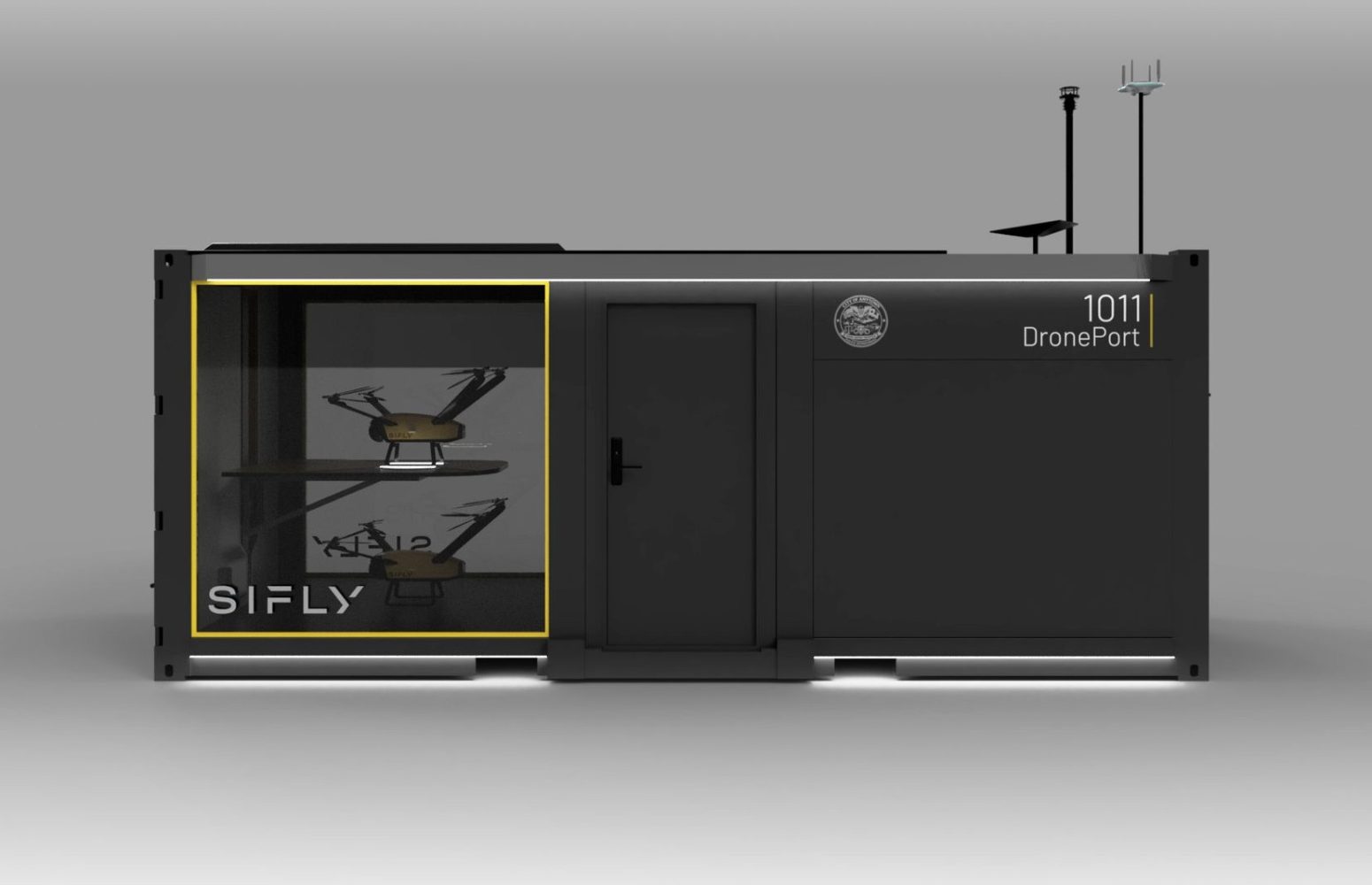
SiFly has announced DronePort, a new infrastructure platform designed to support regional multi-drone operations from a single system. Instead of deploying numerous fixed drone docks across a city or service area, DronePort works more like a mini airport for drones — allowing multiple aircraft to launch, recover, recharge, and operate from one centralized node.
The company believes that model could dramatically change how large-scale drone operations are built.
“We kept hearing the same thing from customers: drones create value, but scaling with docks gets expensive fast,” says CEO Brian Hinman. “Aviation solved this with shared infrastructure. Airports support many aircraft, not just one. DronePort brings that same model to drone operations.”
That comparison to airports is central to SiFly’s pitch. Traditional drone dock systems are usually designed around a single aircraft tied to a fixed location. As coverage needs expand, operators often have no choice but to add more docks, increasing infrastructure costs and creating fragmented coverage zones.
DronePort aims to replace that setup with a more flexible system. According to SiFly, a single DronePort can support multiple drones while covering a much larger operational area. The company claims the platform delivers up to five times greater coverage per node while reducing deployment costs by as much as tenfold compared to conventional dock-based systems.
The concept could be particularly appealing for DFR programs, which are becoming increasingly popular among police and emergency response agencies across the United States. Those programs rely on drones reaching incident scenes quickly, often before first responders arrive. Wider coverage with fewer infrastructure points could make those deployments more practical and affordable for agencies with limited budgets.
Beyond public safety, SiFly says DronePort is designed for large-area and linear operations such as utility inspections, pipeline monitoring, rail infrastructure, and agriculture. Instead of constantly relocating drones or installing dense networks of docks, operators could theoretically maintain persistent aerial coverage from a smaller number of strategically placed DronePorts.
Another key feature is mobility. Unlike many fixed dock systems, DronePort can reportedly be deployed where it’s needed, including disaster response environments and temporary mission sites.
The system is also designed to work alongside the company’s Q12 long-endurance drone, which offers multi-hour flight times and extended range capabilities. Combined with rapid turnaround charging and maintenance, SiFly says the goal is continuous aerial operations that traditional dock systems struggle to achieve.
To help customers plan deployments, the company is also launching a DronePort Network Planner tool. Operators can enter their mission requirements and coverage area to estimate how many drones and DronePorts they would need, and compare those numbers against traditional dock-based deployments.
Preorders for DronePort are now open, with initial deployments expected later this year.
More: FCC’s DJI, Autel ban ignores how drones actually work


FTC: We use income earning auto affiliate links. More.




Comments