
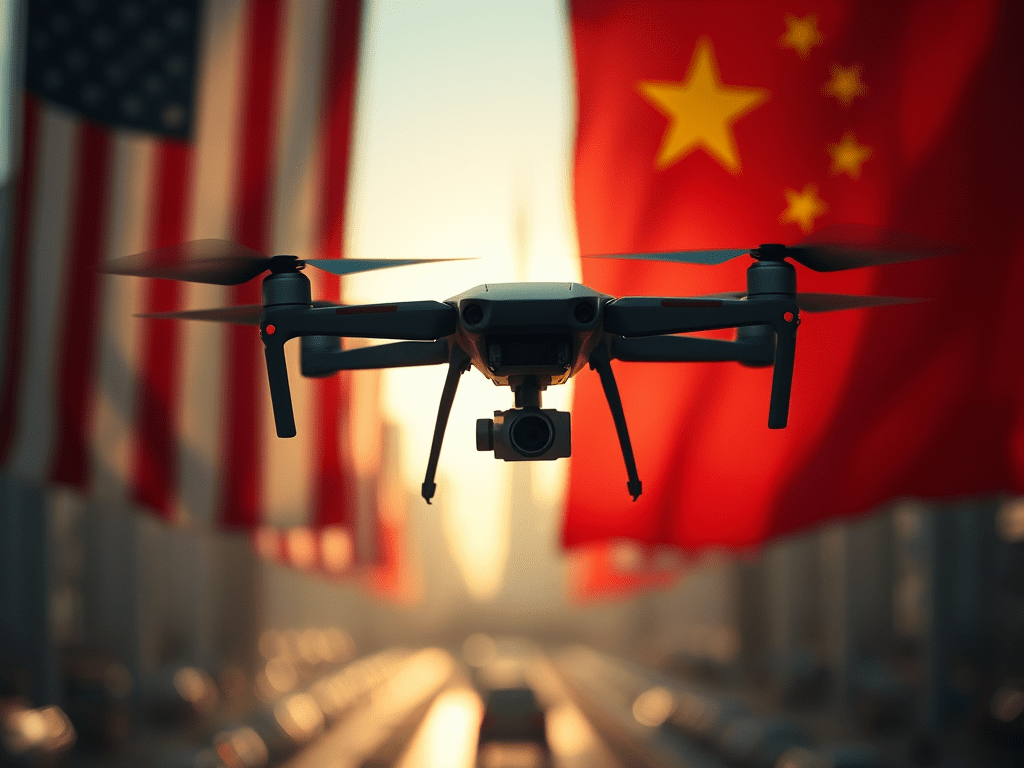
The Federal Communications Commission (FCC) has expanded the list of aircraft exempt from its sweeping foreign-drone import restrictions, marking another sign that federal regulators are willing to make targeted exceptions even as the broader crackdown remains in place.
The latest move creates a new pathway for certain foreign-made toy drones to enter the US market. But while the decision adds to a growing list of FCC-approved exemptions, it stops well short of reopening the door for the camera-equipped drones from DJI and Autel that most recreational and commercial pilots actually fly.
Here’s the full story…
In a June 16 order, the FCC announced that certain foreign-made “toy drones” will no longer be treated as national security risks and can once again receive the approvals needed to enter the US market. The move creates a narrow exception to the agency’s December 2025 decision that effectively blocked new foreign-made drones and critical drone components from obtaining FCC authorization. The catch? The FCC’s definition of a toy drone is extraordinarily limited.
To qualify, a drone must weigh no more than 150 grams, remain within line of sight at distances of 100 meters or less, have no network or connectivity capabilities, carry no camera or surveillance sensors, and offer no more than 10 minutes of flight time. In other words, the exemption applies to basic flying toys rather than the camera-equipped drones that dominate today’s consumer and professional markets.
The FCC said it was acting after receiving a national security determination from the Pentagon that these “unsophisticated, low-risk toys” do not present the same concerns associated with more advanced drones. According to the agency, such devices lack the range, endurance, sensing systems, connectivity, payload capacity, and data-collection features found in modern drone platforms.
This isn’t the FCC’s first carveout, though. Earlier this year, the agency approved a number of exemptions for specific drone platforms and components that federal officials determined did not pose national security risks. Those approvals included systems from companies such as Parrot, Wingtra, AeroVironment, Teledyne FLIR, Neros Technologies, and others, as well as several individual drone models that later received conditional approval. The latest decision suggests the FCC’s list of acceptable drones continues to grow, even as restrictions remain firmly in place for most foreign-made consumer camera drones.
The December 2025 restrictions dramatically reshaped the US drone landscape by placing all foreign-produced drones and critical drone components on the FCC’s Covered List. That move prevented new models from receiving the FCC equipment authorizations required for importation and sale in the United States. Existing approved products remained legal to own and fly, but future launches suddenly faced a major roadblock.
The latest exemption does nothing to change that reality for camera drones like the DJI Mini 5 Pro or even the tiny Neo 2, which weighs only 151g.
Popular categories including photography drones, FPV aircraft, enterprise inspection platforms, mapping drones, and public safety systems remain subject to the broader restrictions. Any drone equipped with cameras, advanced sensors, communications links, or network capabilities falls outside the toy-drone carveout.
That distinction has become increasingly controversial within the drone community.
Many pilots argue that modern camera drones can operate without transmitting data over the internet. Platforms like DJI already offer offline operating modes that disable network connectivity while maintaining direct communication between the aircraft and controller. Critics therefore question whether a blanket restriction on camera-equipped foreign drones accurately reflects the security risks posed by every device.
Related: DJI presents FCC with report finding no drone security threats
The debate extends beyond data security. Supporters of the restrictions argue that the United States must reduce reliance on foreign drone supply chains and strengthen domestic manufacturing capabilities, particularly given growing geopolitical tensions. Industry groups supporting the FCC’s broader actions have framed the restrictions as necessary to protect national security and encourage American drone production.
Opponents counter that the consumer drone market currently lacks significant US-made alternatives. While several American companies build military systems, industrial aircraft, and specialized enterprise drones, affordable camera drones for photographers, content creators, and recreational pilots remain largely dominated by overseas manufacturers.
That leaves many users in an unusual position. Existing drone models that received authorization before the December restrictions can still be sold and flown legally in the United States. But as inventories eventually decline and technology continues to advance elsewhere, pilots may find themselves with fewer options for upgrading to newer aircraft.
The FCC’s decision also arrives amid ongoing legal and political battles over drone policy.
Earlier this year, drone maker DJI challenged the restrictions in federal court, arguing that the regulatory framework underpinning the FCC’s actions raises constitutional and procedural concerns. The broader policy has also generated intense public interest. When the FCC sought comments on its drone initiatives, thousands of responses poured in from drone operators, businesses, public safety agencies, and industry stakeholders concerned about the future of the US drone ecosystem.
At the same time, the FCC has shown signs that it is willing to make limited adjustments around the edges of its policy. In May, the agency announced that Chinese-made drones and certain other consumer devices already in use in the United States would continue receiving critical software updates through at least the end of 2028.
For now, though, the agency’s latest move offers relief primarily for manufacturers of basic toy aircraft rather than the pilots who rely on drones for photography, filmmaking, inspections, agriculture, search-and-rescue, or everyday recreational flying.
The FCC may have opened a small door, but for most of the drone industry, the larger gate remains firmly shut.
More: Only $139? Yes, this is the cheapest DJI drone ever


FTC: We use income earning auto affiliate links. More.


Comments