
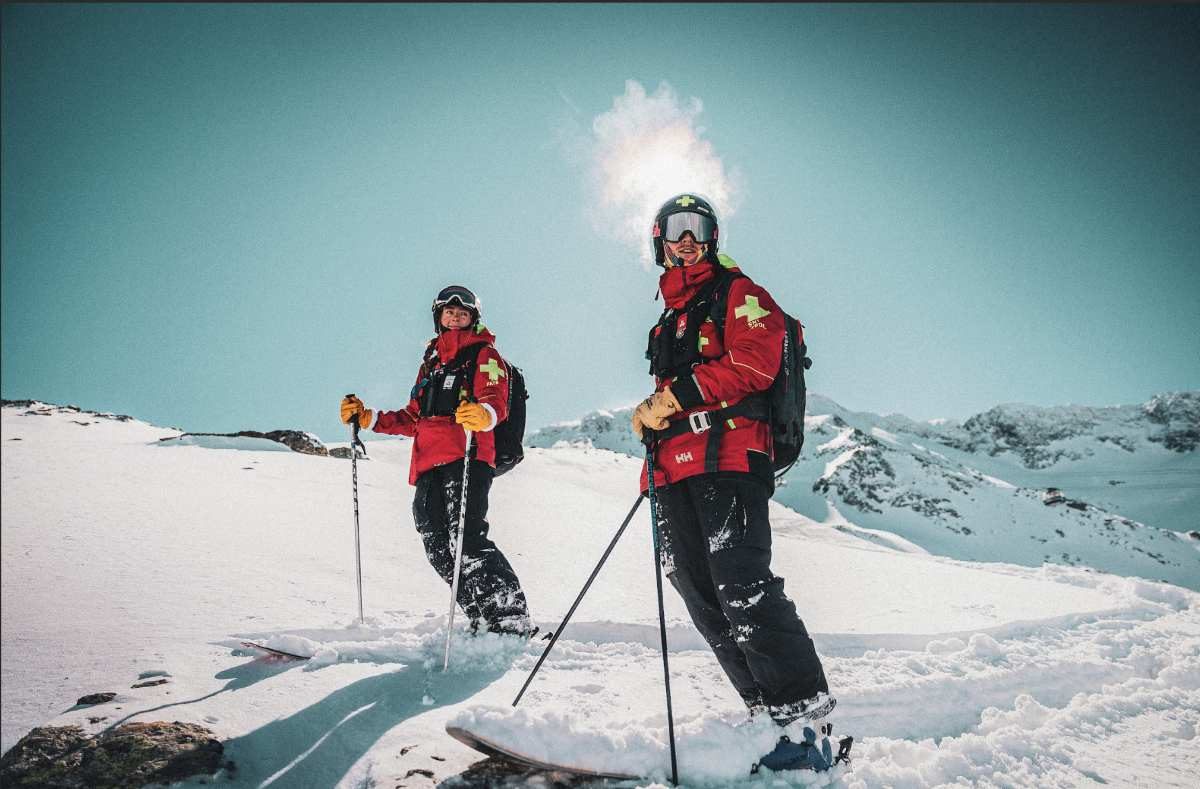
When an avalanche strikes in the French Alps, rescuers are racing against a brutal clock. Survival rates fall sharply after about 20 minutes, making every second between the emergency call and locating a victim incredibly valuable.
That’s the challenge facing ski patrol teams at Val Thorens, Europe’s highest ski resort, where a new video case study shows how the DJI Dock 3 and Matrice 4TD drone are helping responders gain critical aerial intelligence almost immediately after an alert. The result is faster decision-making, safer operations, and potentially a better chance of finding people before time runs out.
The video offers one of DJI’s clearest demonstrations yet of how autonomous drone technology is moving beyond inspections and mapping into life-saving public safety operations.
Located 2,300 meters (7,545 feet) above sea level, Val Thorens sits in the heart of the French Alps and serves as one of the gateways to Les 3 Vallées, the world’s largest interconnected ski area. With more than 600 kilometers (373 miles) of linked slopes and terrain rising above 3,200 meters (10,500 feet), it’s a dream destination for skiers, but also one of Europe’s most demanding mountain environments for emergency responders.
Weather can change rapidly. Visibility can disappear within minutes. Heavy snowfall, strong winds, and avalanche risks can make it dangerous for rescue teams to even reach an incident.
Traditionally, responders often had to travel to the scene before fully understanding what they were facing. DJI’s autonomous docking system is designed to change that.
According to the company, Dock 3 can automatically launch a drone within 10 seconds of an alert, day or night, without personnel first transporting equipment to a launch site. From there, the Matrice 4TD begins transmitting live aerial imagery back to the command center, allowing rescue coordinators to quickly evaluate terrain, weather conditions, possible access routes, and search areas before committing teams into hazardous conditions.
One of the system’s standout capabilities is its thermal imaging camera, which DJI says can help responders detect survivors during searches, including in challenging snowy environments where victims may be difficult to spot with conventional cameras alone.
Rather than sending personnel into uncertain terrain simply to assess an incident, rescue leaders can first build a clearer operational picture from above.
“In the mountains, time and information are everything. The faster we can understand a situation, the faster we can make the right decision,” says Olivier Gardet, first aid technical director of Val Thorens Ski Service.
Gardet emphasizes that the technology isn’t replacing experienced rescue professionals. Instead, it’s giving them better information before they put themselves at risk.
That additional perspective can help teams determine the safest approach, evaluate snowpack conditions, monitor changing weather, identify hazards, and deploy resources more efficiently — all while reducing unnecessary exposure to dangerous terrain.
The system’s permanent readiness is another major advantage.
Unlike conventional drone operations that require someone to transport, assemble, and launch equipment, Dock 3 keeps the aircraft housed, charged, and ready for immediate deployment. For a resort like Val Thorens, which typically operates from November through May and welcomes hundreds of thousands of visitors each winter, having aerial support available at a moment’s notice could prove invaluable.
The broader takeaway extends well beyond one French ski resort.
As mountain destinations contend with growing visitor numbers, increasingly unpredictable weather, and the need to cover vast alpine terrain with limited resources, autonomous drones are becoming an increasingly important tool for public safety agencies. Instead of relying solely on reports from the ground, responders can now begin many incidents with a live aerial overview that helps them make faster, more informed decisions.
DJI calls the concept “Dock as First Responder,” and the footage from Val Thorens provides a compelling real-world example of what that looks like. Rather than replacing the expertise of ski patrol teams, the autonomous system gives them a crucial head start when minutes can mean the difference between life and death.
More: How automated DJI drones are changing public safety in Celaya


FTC: We use income earning auto affiliate links. More.




Comments