
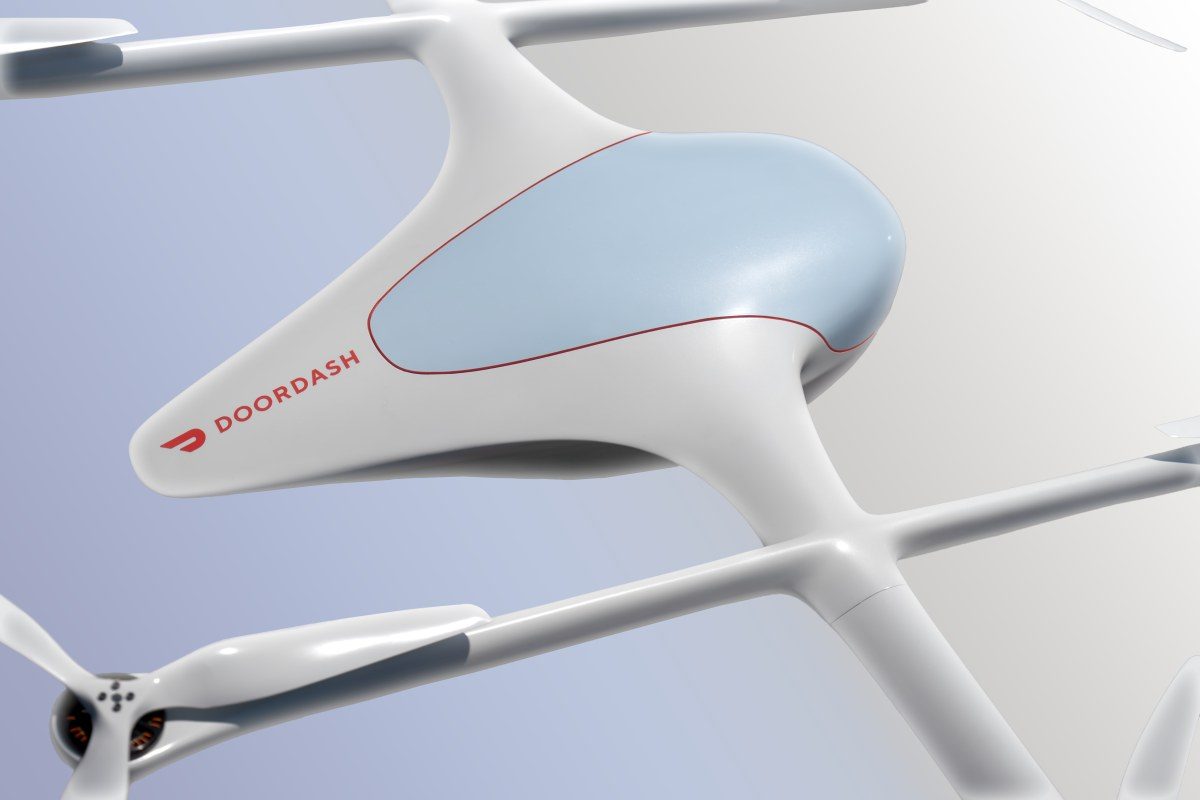
DoorDash has spent the past few years bringing drone deliveries to customers through partners including Wing and Flytrex. Now, the delivery giant is taking a much bigger piece of the operation in-house, developing its own aircraft, ground infrastructure, and delivery software through its DoorDash Air program.
The company has unveiled its purpose-built autonomous delivery aircraft and detailed an end-to-end system designed to connect restaurants, drones and customers without requiring merchants to completely rethink how they operate.
Pilot deliveries are set to begin in Northern California, with national restaurant brands including Chipotle and Popeyes Louisiana Kitchen among the early partners, alongside local businesses such as Momo N Curry.
It’s a notable evolution for a company that has already been experimenting with drone delivery. Instead of simply providing the marketplace and leaving the flying to specialized drone operators, DoorDash now wants to control much more of what happens between the restaurant and the customer’s doorstep.
DoorDash started with the delivery, not the drone
DoorDash says one of the biggest challenges in autonomous delivery isn’t actually flying the aircraft. It’s everything that happens before takeoff and after landing.
Think about a typical restaurant order. Someone has to prepare it, package it, hand it over to the delivery system, and make sure it eventually reaches the right customer. With a drone, those handoffs have to work reliably without adding a bunch of extra work for restaurant employees. That’s why DoorDash says it started by focusing on the “first and last ten feet” of the delivery.
The company has developed loading systems, merchant handoffs, packaging, and order-data processes designed specifically around drone delivery. It’s also working on different loading options so the system can fit into existing restaurant operations.
“We didn’t start with a drone and ask what would fit. We started with what people order and how local businesses actually operate, then built the entire system from there,” says Harrison Shih, head of DoorDash Air.
That philosophy also influenced the aircraft itself. Rather than designing a drone first and figuring out what it could carry, DoorDash says it analyzed its own order data to understand what customers actually buy, how much those orders weigh and how far they typically travel.
According to the company, about 80% of typical DoorDash restaurant orders are light and small enough for its aircraft to carry safely. That doesn’t mean 80% of orders will automatically qualify for drone delivery, though. Weather, flight range, distance, traffic, and the contents of an individual order can all affect the decision.
Six propellers and a winch
The resulting aircraft is built specifically around those constraints.
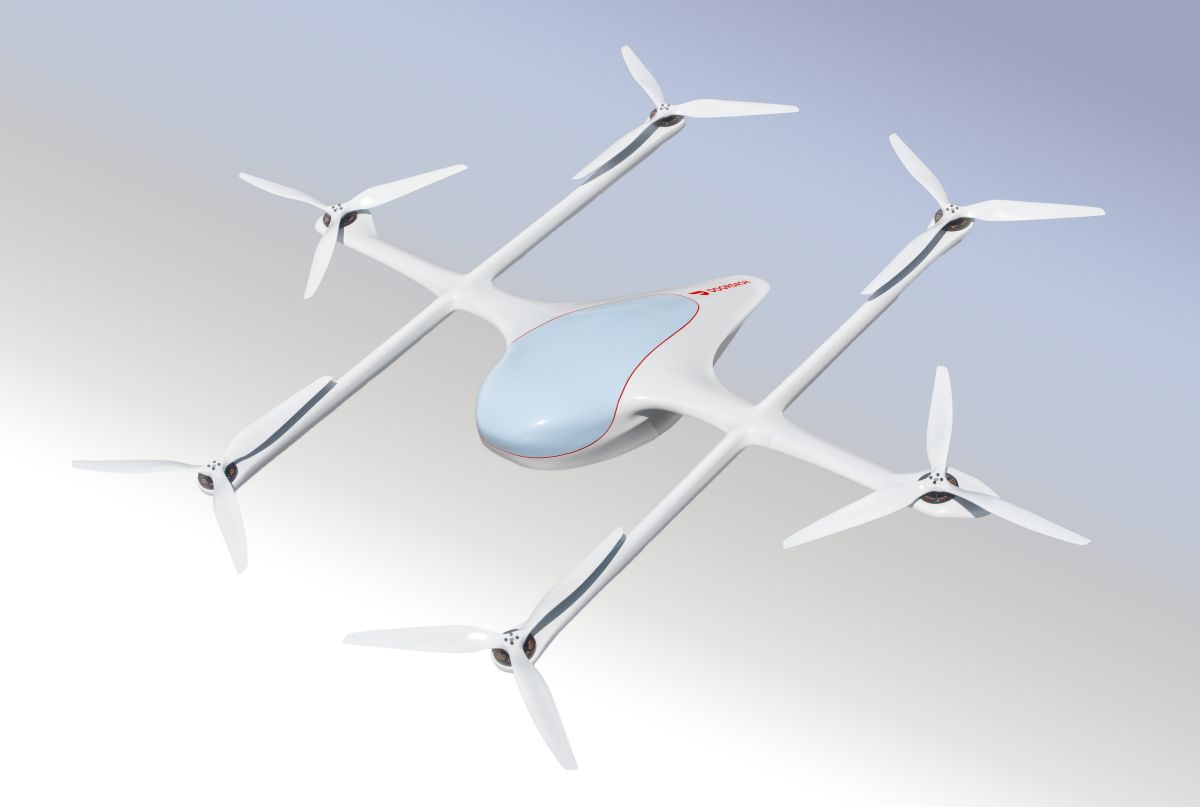
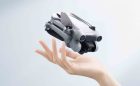
DoorDash’s drone uses six slow-spinning propellers positioned at the ends of its arms. The company says its cruising noise at delivery altitude is roughly comparable to that of a passing car.
The aircraft also uses a winch to lower orders to the customer’s designated delivery spot rather than requiring the drone to land directly at every destination.
That matters because a drone doesn’t necessarily need a convenient landing area at someone’s home. A backyard, driveway, or other designated location can potentially become the drop-off point while the aircraft remains airborne.
DoorDash has also incorporated multiple failsafe systems, including a mechanism designed to safely lower the aircraft in rare situations.
And speed is obviously a major part of the proposition. Based on estimates from its initial tests, DoorDash says its drone deliveries have taken less than five minutes on average from the restaurant to the customer’s door.
That’s an early testing figure rather than a promise that every future drone order will arrive in five minutes. Still, it gives an idea of what DoorDash is trying to achieve as it adds another delivery mode to its network.
You might not even have to ‘choose’ drone delivery
Here’s where DoorDash’s strategy gets particularly interesting. The company isn’t building DoorDash Air as a completely separate delivery business. Its drones are being plugged into the same Autonomous Delivery Platform, or ADP, that already coordinates other delivery methods across DoorDash’s network.
That includes human Dashers, DoorDash’s autonomous Dot delivery robot, and other autonomous delivery partners.
The software can look at factors such as an order’s weight, contents, distance, weather, flight range, and kitchen preparation time before determining how that particular order should reach the customer.
In other words, DoorDash doesn’t necessarily want customers to think about which machine — or person — will deliver their food. The company wants its system to figure that out.
That builds on work DoorDash has already been doing with third-party drone operators. The company has partnered with Wing on drone delivery pilots and has also worked with Flytrex to bring drone delivery to customers in parts of the Dallas-Fort Worth area.
DoorDash’s move in-house doesn’t mean those partnerships suddenly become irrelevant. Instead, its own aircraft become another option that can be orchestrated alongside those partners and other delivery methods.
Big chains and small restaurants
The first DoorDash Air pilot will include both major restaurant brands and smaller local businesses.
Chipotle and Popeyes are among the early national partners, while Momo N Curry represents the small-business side of the experiment.
For restaurants, the appeal is relatively straightforward: access to another delivery method without having to build or operate the drone infrastructure themselves.
Chipotle’s chief digital officer Arlie Sisson says DoorDash Air gives the company another way to provide customers with convenience while keeping its restaurant operations largely unchanged.
Popeyes echoes that point, saying its restaurant teams can prepare orders as they normally would and hand them off for the drone to handle the rest.
For smaller businesses, that operational simplicity could be even more important. Momo N Curry owner Mohan Khatiwada notes that his restaurant has a small front-of-house team, making every minute spent getting orders out the door matter.
That’s exactly the type of merchant DoorDash says it wants to support with Air.
Why DoorDash wants to own more of the stack
The bigger story here isn’t really about a new drone. It’s about DoorDash trying to own more of the technology behind the delivery experience.
For years, drone delivery has largely been a story of partnerships. Restaurants provide the food, DoorDash provides the marketplace and customer relationship, while specialized drone companies provide the aircraft and aviation operation. DoorDash Air changes that equation.
With its own aircraft, ground infrastructure, autonomous delivery software, and FAA-certified Part 135 operation, DoorDash can now develop the entire process around the orders already flowing through its platform. That could give the company more control over how drones integrate with restaurants and customers as the technology scales.
DoorDash says it has already completed hundreds of thousands of autonomous deliveries across Dot and its robot and drone partners. Adding its own aircraft gives the company another piece of that growing autonomous network.
And DoorDash isn’t suggesting drones will replace Dashers. Human couriers will continue to handle the vast majority of orders, particularly deliveries that are too large, complicated or otherwise unsuitable for autonomous systems.
Instead, the company’s vision is a delivery network where drones, robots and people each handle the orders they are best suited for. That’s a considerably bigger ambition than simply putting DoorDash-branded drones in the sky.
The Northern California pilot will provide an early look at whether that vision works in the real world. If it does, DoorDash could eventually have something that few other delivery companies can offer: an entire autonomous delivery stack, from the restaurant counter to the customer’s doorstep, operating inside the same marketplace.
And for customers, the most interesting part may be how little of that complexity they actually see. One day, you could simply tap “Order,” watch your food being prepared, and then see a drone carrying it toward your house. You won’t necessarily need to know whose drone it is. But for the first time, it could very well be DoorDash’s.
More: Cyberhawk takes drone inspections offshore with expanded SSE deal

FTC: We use income earning auto affiliate links. More.

Comments