
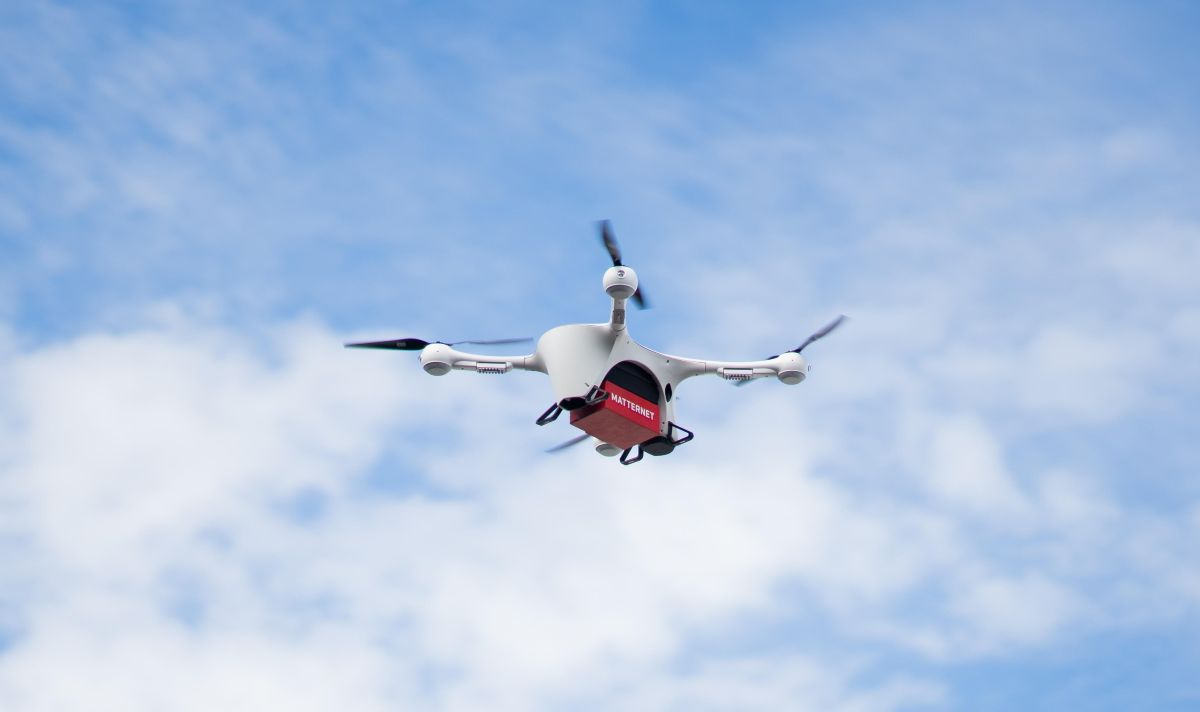
London traffic can be more than a daily frustration when doctors are waiting on urgent test results. For children receiving care at Great Ormond Street Hospital (GOSH), getting medical samples to a laboratory faster could help clinicians make critical decisions sooner. That’s where drones are stepping in.
Matternet has expanded its UK healthcare delivery network to include Great Ormond Street Hospital, one of the world’s leading pediatric care centers. The California-based drone delivery company is working with British healthcare logistics startup Apian to transport time-sensitive pediatric pathology samples, with the service reducing urgent delivery times by up to 90%.
The operation initially connects GOSH with nearby laboratories run by The Doctors Laboratory (TDL). The partners plan to expand the network to additional locations, potentially bringing the benefits of drone delivery to more NHS facilities.
For a hospital treating children with rare and complex conditions, every minute saved in the diagnostic process can matter.
“Our ambition with this partnership is to support our clinical teams to transport and test samples faster,” says Dr. Tim Liversedge, chief of staff for Core Clinical Services and consultant paediatric anaesthetist at GOSH. He adds that faster testing could help teams make decisions more efficiently for patients and their families.
Dr. Kimberly Gilmour, chief of laboratory medicine at GOSH, points to another familiar challenge: London’s traffic. Instead of relying entirely on ground couriers navigating congested streets, drone deliveries can get samples to laboratories in minutes, allowing testing to begin sooner.
The distinction is important. Faster sample transport doesn’t automatically mean instant results, but it can help eliminate delays before laboratory testing even begins.
For Matternet, the expansion also marks another step in its growing UK healthcare business. The company has been operating commercial drone delivery services for more than a decade, starting with humanitarian missions in 2014 before moving into healthcare logistics in Europe and the US. It has also worked with major logistics partners, including UPS.
Apian, meanwhile, was founded by NHS doctors and has developed a logistics platform connecting hospitals, laboratories and pharmacies using drones, ground robotics and software. Its existing London network has already delivered thousands of patient samples.
The bigger opportunity is scaling this approach across the NHS. If the partners can extend the network to more sites, drone deliveries could help hospitals move urgent medical samples more predictably, while reducing dependence on road transport.
For families waiting for answers about a child’s health, that may be the most meaningful benefit: less time spent waiting for a sample to reach the lab, and more time for clinicians to focus on what comes next.
More: SkyeBrowse wants drone teams to ditch the CAD round trip


FTC: We use income earning auto affiliate links. More.




Comments