
With the 2026 FIFA World Cup set to bring more than one million international visitors to stadiums across the United States, federal security planners are moving early to counter one of the fastest-growing threats in modern event protection: small drones.
Utah-based Fortem Technologies announced it has received a multimillion-dollar order through a Department of Homeland Security procurement to help protect US World Cup venues using its net-equipped DroneHunter interceptors. The company says it was selected as the only kinetic counter-drone solution for the upcoming tournament.
The 2026 FIFA World Cup will be the largest in history, featuring 48 teams competing across 16 host cities in the United States, Mexico, and Canada. Eleven US cities will host matches between June and July. With packed stadiums and global media attention, the security footprint will rival that of the Olympics.
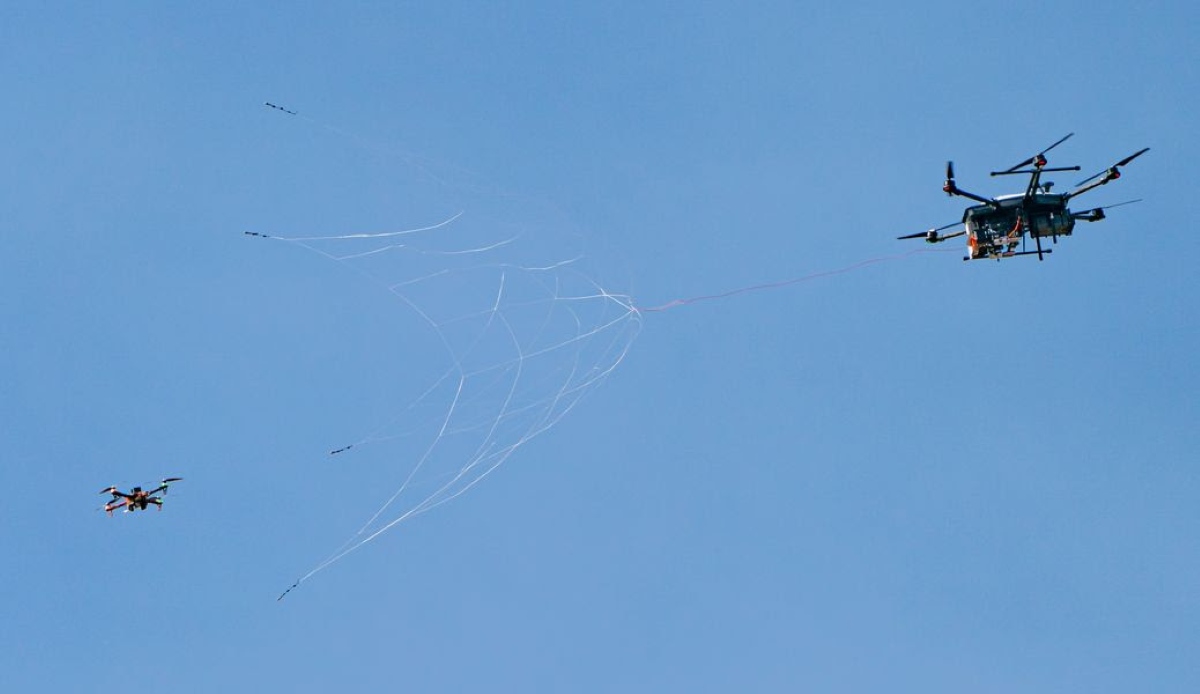
Unlike traditional counter-drone tactics such as radio-frequency jamming or projectile-based systems, Fortem’s DroneHunter uses a net-based capture method. The interceptor hexcopter launches a tethered net to physically snag a rogue drone and carry it away, minimizing the risk of falling debris over crowds. In dense stadium environments where tens of thousands of spectators sit shoulder to shoulder, that distinction matters.
Small drones, once considered recreational gadgets, are now widely recognized by security agencies as potential tools for surveillance, disruption, or coordinated attacks. Neutralizing them safely inside urban airspace is complicated. Jamming can interfere with legitimate communications and may not work on pre-programmed autonomous aircraft. Traditional kinetic systems can create dangerous debris.
More: Baltimore man faces prison for flying drone over NFL stadium
Fortem argues its approach avoids those tradeoffs.
“It’s an honor for Fortem to once again protect the FIFA World Cup, this time on our home turf,” says CEO Jon Gruen. He adds that the rise of small drones represents one of the most consequential security shifts in decades, but one that the company has already addressed at scale.
This will mark Fortem’s second consecutive World Cup deployment. The company previously supported security operations during the 2022 tournament in Qatar, where it was also selected as the only kinetic mitigation provider among layered counter-drone systems.
The new order includes Fortem’s TrueView R30 radar units for drone detection and tracking, SkyDome command-and-control software for autonomous response coordination, and DroneHunter interceptors. The systems are designed for rapid deployment and repositioning as matches move between host cities.
The contract comes as the Department of Homeland Security increases its focus on counter-UAS capabilities ahead of both the World Cup and nationwide events marking America’s 250th anniversary. In January, DHS announced the creation of a new Program Executive Office for Unmanned Aircraft Systems and Counter-UAS, alongside $115 million in related investments.
Fortem says it is currently the only company authorized to deploy a drone-on-drone kinetic interceptor in US airspace, with operational validation in Ukraine, the Middle East, and East Asia.
New: Why is DJI selling a 4K drone for $149?


FTC: We use income earning auto affiliate links. More.


Comments