
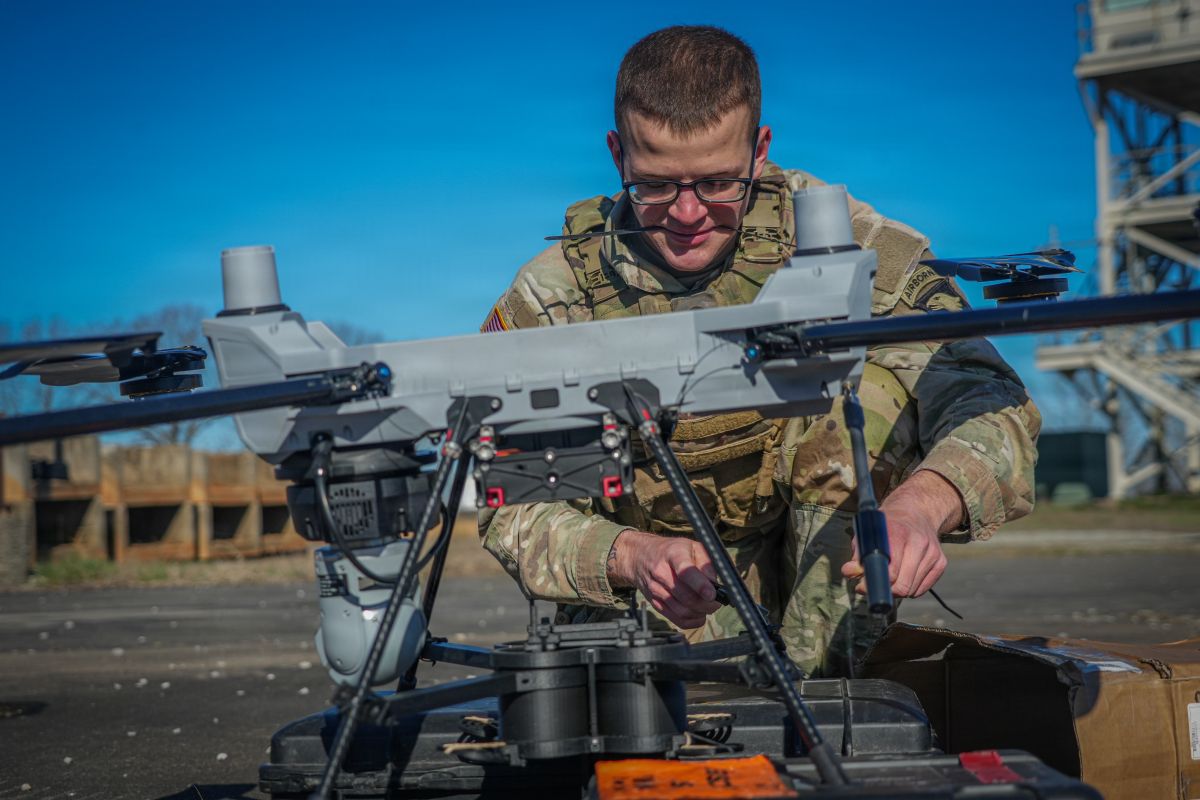
The future of warfare may look very different from what most people imagine, and the US Army just offered a glimpse of it. In a recent live-fire exercise at Fort Campbell, Kentucky, the 101st Airborne Division tested how drones can work side-by-side with soldiers in real combat scenarios. The takeaway? Drones aren’t just helpful tools anymore; they’re quickly becoming the first line of action on the battlefield.
Army leaders say this shift is happening fast. “Drones are reshaping the geometry of the battlefield in real time,” said Brig. Gen. Travis McIntosh. In simple terms, that means the old advantages — like distance or hiding spots — don’t protect troops the way they used to. With drones and artificial intelligence (AI), armies can now see farther, react faster, and strike more precisely than ever before.
During the exercise, multiple types of drones were deployed, including the MQ-1C Gray Eagle (a large surveillance drone), smaller reconnaissance drones, and newer experimental systems. These drones were flown by trained operators from different Army units and worked alongside Special Forces on the ground.
Before soldiers even moved in, drones were already scanning the battlefield.
“They’re great for over-the-hill reconnaissance,” said Army Spc. Basil Holland, who operates small drones. “They can spot targets at short and medium range and give you eyes on anything you need.”
Meaning, instead of walking into danger blind, soldiers can now see what’s ahead — thanks to a drone doing the risky work first.
One of the most striking parts of the drill was how often machines made the first move. According to exercise coordinator Chief Warrant Officer 2 Page Frazier, drones were used to establish initial contact before human troops stepped in. That’s a major shift from traditional combat, where soldiers typically lead the charge.
The exercise also brought in representatives from the US Army Reserve, who are looking to adopt similar tactics. Their takeaway highlights just how much warfare has changed. “In the past, troops were trained to look down for roadside bombs,” said planner Sammy Stevens. “Now, we have to look up in the air.”
That single line captures the evolution of modern threats and defenses. The collaboration between active-duty units and the Reserve is also helping the Army move faster. By sharing lessons learned — what works and what doesn’t — the military can avoid costly mistakes and roll out new technology more efficiently across all units.
More: US Army orders 2,500 Skydio drones in record deal


FTC: We use income earning auto affiliate links. More.




Comments