
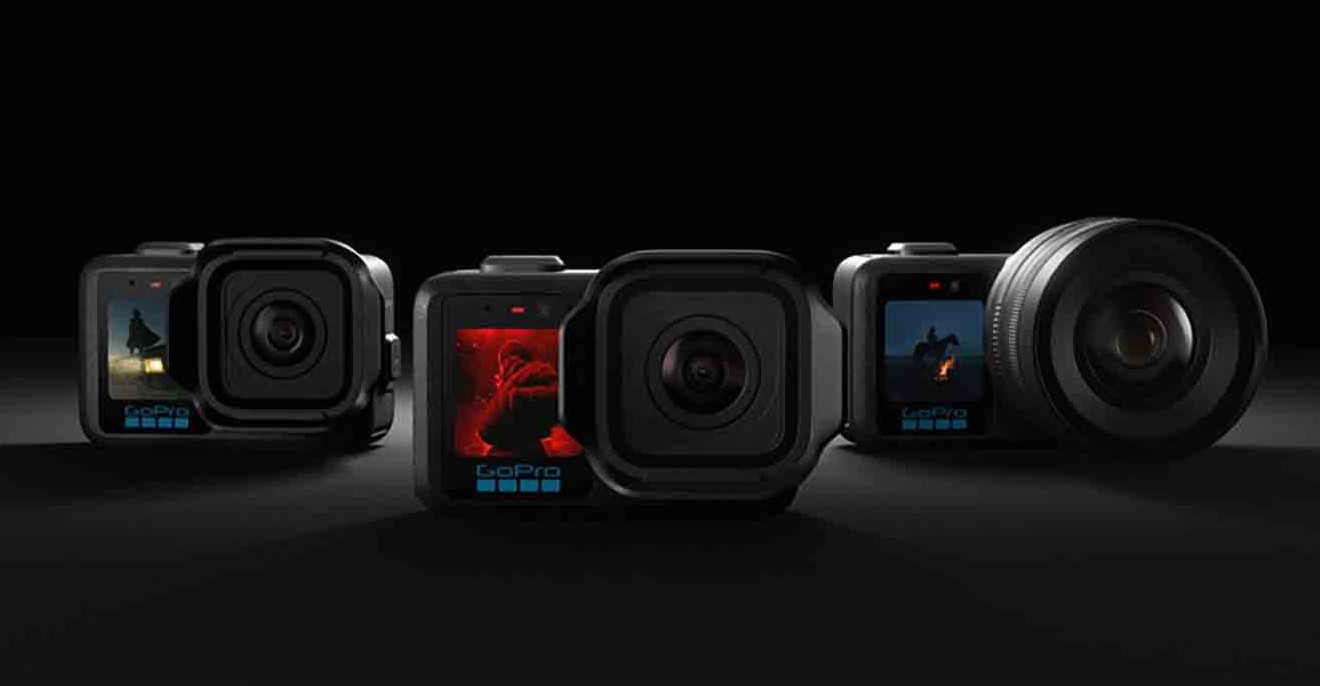
If GoPro built its name on strapping cameras to helmets, its latest move is asking a much bigger question: what if that same pocket-sized device could replace a full-blown cinema rig? The new Mission 1 series is GoPro’s boldest attempt yet to bridge two worlds that rarely overlap: ultra-portable, rugged cameras and professional-grade cinema tools. And on paper, at least, it’s doing that with a level of firepower that feels almost disproportionate to its size.
Tiny cameras with massive specs
The Mission 1 series includes three models — Mission 1 Pro, Mission 1 Pro ILS, and the more accessible Mission 1 — but they all share the same core DNA. That starts with a new 50-megapixel 1-inch sensor, significantly larger than what you’d expect in a traditional GoPro, paired with a brand-new GP3 processor built on an ultra-efficient 5nm architecture.
That combination is what enables the headline-grabbing specs, but more importantly, it’s what makes those specs usable in real-world conditions. GoPro is promising up to 14 stops of dynamic range, along with improved low-light performance thanks to larger effective pixel sizes. In practical terms, that means better detail retention in high-contrast scenes — think bright skies and shadowy foregrounds — and cleaner footage when the lights drop.
And then there’s the performance ceiling. The flagship models are capable of shooting 8K at 60 frames per second, alongside 4K at 240fps and ultra-high-speed bursts reaching 960fps in 1080p. These are numbers typically associated with far larger and more expensive cinema systems, not something that can fit in a jacket pocket.
New: DJI Avata 360 drone is finally available to buy in US
While the entire lineup is impressive on paper, the Mission 1 Pro ILS is arguably the most important product in this launch. This version introduces a Micro Four Thirds mount, opening the door to a vast ecosystem of interchangeable lenses.
That single change fundamentally shifts how the camera can be used. Instead of being locked into a fixed ultra-wide perspective, creators can now experiment with shallow depth-of-field, long-range telephoto shots, or specialized macro work. It’s the kind of flexibility that has traditionally defined mirrorless and cinema cameras — and it’s now arriving in a form factor that GoPro users will find instantly familiar.
In doing so, GoPro isn’t just expanding its lineup; it’s stepping into direct competition with established players in the interchangeable lens market, while still leaning on its reputation for durability and portability.
Built like a GoPro, but working like a cinema rig
Despite the shift toward professional filmmaking, GoPro hasn’t abandoned its roots. The Mission 1 and Mission 1 Pro are waterproof down to 66 feet without any additional housing, and the design has been tweaked to better handle demanding environments. Larger buttons make operation easier with gloves, while a bigger OLED rear display improves usability in the field.
Battery life is another area where GoPro is clearly trying to stand out. The company claims over five hours of recording at 1080p and more than three hours at 4K/30 on a single charge, helped by the efficiency of the GP3 chip and the new Enduro 2 battery. Thermal performance — often a weak point in compact high-resolution cameras — has also been a focus, with GoPro positioning the system as capable of sustained recording in challenging conditions.
At the same time, the camera is embracing features that professional users expect. Support for 10-bit color, log profiles, high bitrates, and timecode sync positions the Mission 1 series as a legitimate multi-camera production tool rather than a secondary or “crash cam.”
Audio has also been upgraded in a meaningful way. A four-microphone array, combined with 32-bit float recording, is designed to deliver cleaner, more reliable sound, while a new wireless mic system integrates directly with the camera and other devices.
What makes this launch feel more complete is the ecosystem surrounding it. GoPro isn’t just selling a camera; it’s building a modular system that can scale depending on how it’s used.
There are grips that double as cages, media mods that add HDMI output and expanded audio inputs, ND filters for cinematic exposure control, and even a powered grip that can push recording times significantly higher. For creators who want a ready-to-go setup, bundled “Creator” and “Ultimate Creator” editions combine these accessories into more comprehensive kits.
Everything ties back to the company’s software layer, including the GoPro Quik app, which continues to handle cloud uploads, automated edits, and mobile-first workflows. That combination of pro-grade capture and streamlined editing is clearly part of the broader pitch.
Pricing, release date, and what comes next
GoPro says it will reveal pricing and additional details at the NAB tradeshow (April 19 -22), with preorders for key models beginning May 21 and retail availability starting May 28 in the US. The interchangeable lens version and higher-end creator bundles are expected later in the year, alongside a steady rollout of accessories through the summer.
For years, GoPro has defined a category, but also been somewhat boxed in by it. Action cameras are incredibly capable, but they’ve rarely been taken seriously as primary tools for cinematic production. The Mission 1 series is an attempt to change that perception. By combining high-end imaging capabilities with a rugged, compact design, GoPro is effectively asking a new question: what if your main camera didn’t have to be big, fragile, or expensive?
Whether it can truly compete with established cinema and mirrorless systems will depend on real-world performance. But one thing is clear — GoPro is no longer just refining its niche. It’s actively trying to redraw the boundaries of it.
More: DJI vs Insta360 patent war just got a lot more intense


FTC: We use income earning auto affiliate links. More.




Comments