
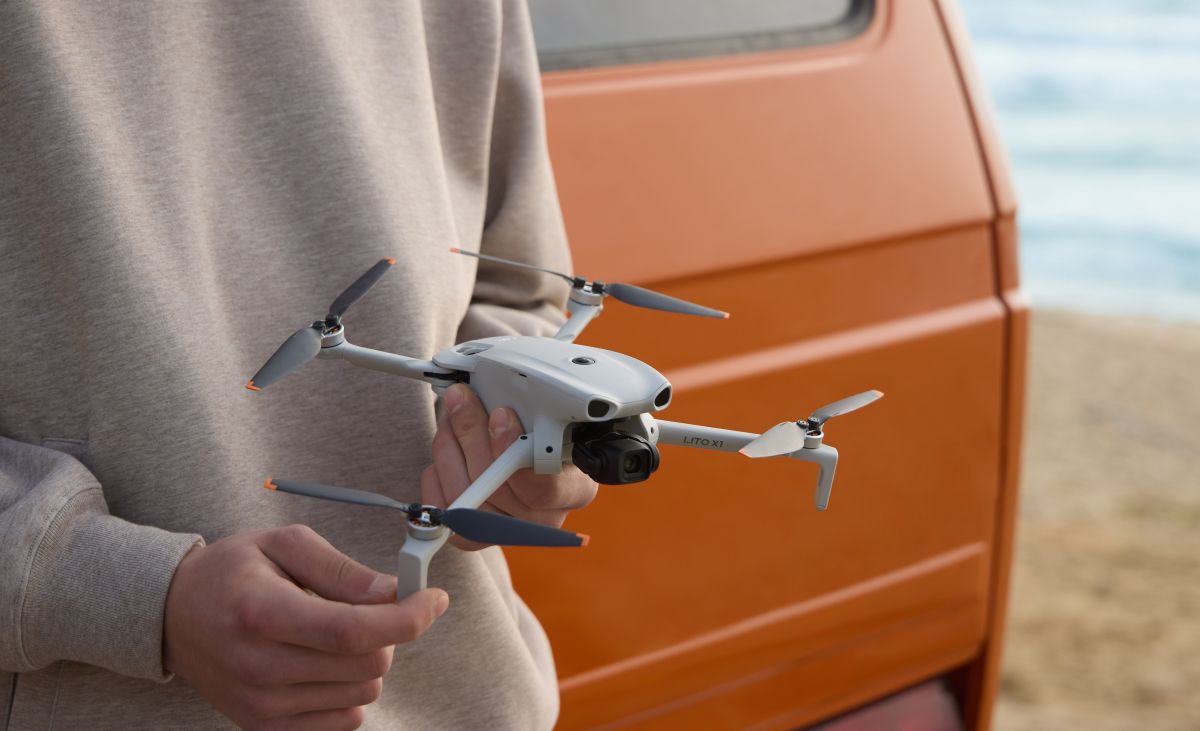
America has been criticized for cracking down on Chinese drone makers. But now China’s capital is doing something even more dramatic: banning new consumer drone sales altogether. That’s an awkward headline for DJI’s home market.
Starting May 1, Beijing will ban new consumer drone sales, tighten transport and storage rules, and require approvals for flights across the city. That’s a stunning development in the home country of DJI, the company that built the modern global drone market and remains the biggest consumer drone brand the world has ever seen.
Beijing says security comes first
Local officials are blunt about the reasoning behind the ban.
“As the capital, Beijing faces greater challenges in low-altitude security, making it more urgent to strengthen the regulation of drones,” says Xiong Jinghua, a senior legislative official involved in the rulemaking process.
That language may sound familiar to American readers. In the US, lawmakers and regulators have repeatedly raised concerns about data security, critical infrastructure, and the risks posed by foreign-made connected devices. Beijing is now using its own version of that same logic.
The move didn’t come out of nowhere, though. Beijing had already declared its entire airspace a restricted zone last year, requiring approval for drone flights before takeoff. But the new rules escalate matters significantly.
Authorities will prohibit the sale or lease of drones and 17 categories of designated “core components” without public security approval. Bringing new drones or restricted parts into Beijing will also be tightly controlled.
Inside the city’s Sixth Ring Road — a vast urban zone surrounding central Beijing — residents will be barred from storing more than three drones or 10 core components at a single location without approval.
Travelers heading to Beijing may also face at least two baggage checks, one before departure and another upon arrival, to detect drones or restricted components.
Unauthorized flights can lead to confiscation, fines, and other penalties. Basically, this is no ordinary no-fly-zone update. It is a full consumer drone clampdown.
Why DJI should care
Beijing is not banning DJI specifically. But when one company dominates the global consumer drone category, broad restrictions on that category hit especially close to home.
DJI turned drones into a mainstream gadget. It helped millions of people experience aerial photography, travel filmmaking, FPV flying, mapping, and creative storytelling. For many consumers, “drone” became shorthand for DJI.
That’s why this matters beyond one city’s local regulations. If China’s capital is signaling that privately owned drones need much tighter control, it makes people think differently about the product class itself. When the capital adopts hardline drone restrictions, markets like Shanghai, Guangzhou, or Shenzhen could eventually consider similar frameworks around security zones, logistics hubs, or dense urban districts.
And sentiment matters in consumer tech. When buyers fear future restrictions, many stop upgrading. They postpone purchases. They wait for clarity. That can hurt brands quietly but quickly.
Regional reports cited earlier this year suggested some Chinese drone owners rushed to sell equipment before tighter rules arrived. At certain retail outlets, DJI sales reportedly fell sharply in anticipation of new controls.
That’s also a problem for the broader industry because hobbyists often become professionals later. Today’s weekend pilot can become tomorrow’s surveyor, cinematographer, or enterprise drone buyer.
And it’s not that China doesn’t want drones at all. The country has heavily promoted its “low-altitude economy” in recent years, encouraging industries tied to delivery drones, inspections, agriculture, logistics, mapping, and future urban aviation.
So does Beijing’s move contradict that vision? Not exactly.
The new rules suggest China still supports drones as an economic tool, but with stricter state oversight, especially in sensitive cities. Commercial, industrial, and government-approved operations can continue. What appears to be shrinking is the idea of wide-open consumer drone freedom in politically important urban zones.
China isn’t abandoning drones. It may simply be redefining who gets to use them.
America is creating a second headache
If Beijing were the only challenge, DJI could likely manage it. But the company is simultaneously dealing with growing pressure in the United States. We’ve been regularly highlighting how DJI remains locked in a high-stakes fight with the Federal Communications Commission in the US.
DJI recently told a US appeals court that FCC actions could block as many as 25 new drone and camera launches in 2026, creating potential losses above $1.5 billion. DJI claims that around $700 million is tied to delayed or denied authorizations for existing planned products, with another $860 million linked to future launches that may not reach US shelves.
That means DJI is now dealing with two different headaches at once:
- China restricting consumer drone activity in its capital
- America restricting approvals for future DJI products
For any global company, that is rough timing.
But here’s the important part for American consumers: existing DJI products already approved for sale are still widely available. That means popular models like the DJI Mini 5 Pro, Air 3S, new Avata 360, and various gimbals/cameras remain in circulation through retailers and marketplace sellers.
In fact, uncertainty around future launches has helped create some of the most aggressive discounts seen in months as sellers compete to move current inventory. So while tomorrow’s DJI lineup may face question marks, today’s lineup can still be a bargain. That creates a strange market dynamic: regulators are making future products harder to launch, while current products may be cheaper than ever.
The bottom line
Recent covert drone attacks and smuggling incidents overseas have shown governments how small drones can be transported, hidden, and deployed in ways that were harder to imagine just a few years ago. That reality is reshaping policy worldwide.
Drones were once marketed mainly as fun flying cameras and creative tools. Increasingly, governments see them as strategic technology tied to security, surveillance, and infrastructure risks. And nowhere is that shift more visible than in this moment.
The United States has questioned Chinese drones. Beijing is now questioning consumer drones in China’s own capital. For DJI, that’s more than awkward optics. It’s a sign that the world’s most successful drone company now has to navigate something far harder than flight: politics.
More: DJI Lito drones aren’t coming to US, buy these instead


FTC: We use income earning auto affiliate links. More.

Comments