
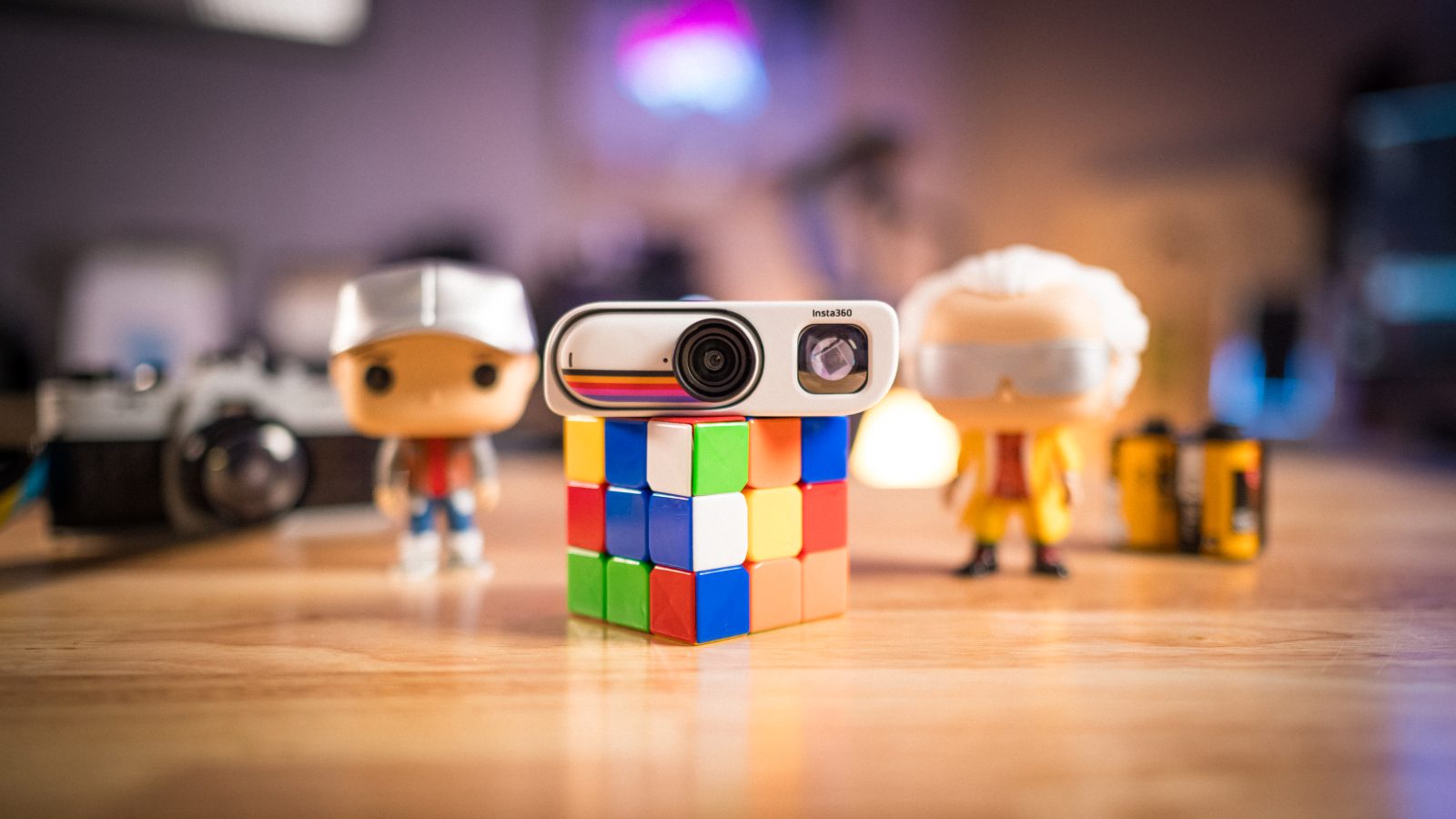
Over the last year, Insta360 has planted a flag on two ideas: retro nostalgia and photography. The Go 3S Retro bundle is where those two threads come together: a tiny, screenless camera dressed up in 80s styling, built around a top-down viewfinder and meant to pull you out of your phone and back into the moment. I’ve spent real time with it, and I want to walk you through what it actually is, what’s genuinely fun about it, what got on my nerves, and the one price question you should settle before you buy.
The lineage: where this idea comes from.
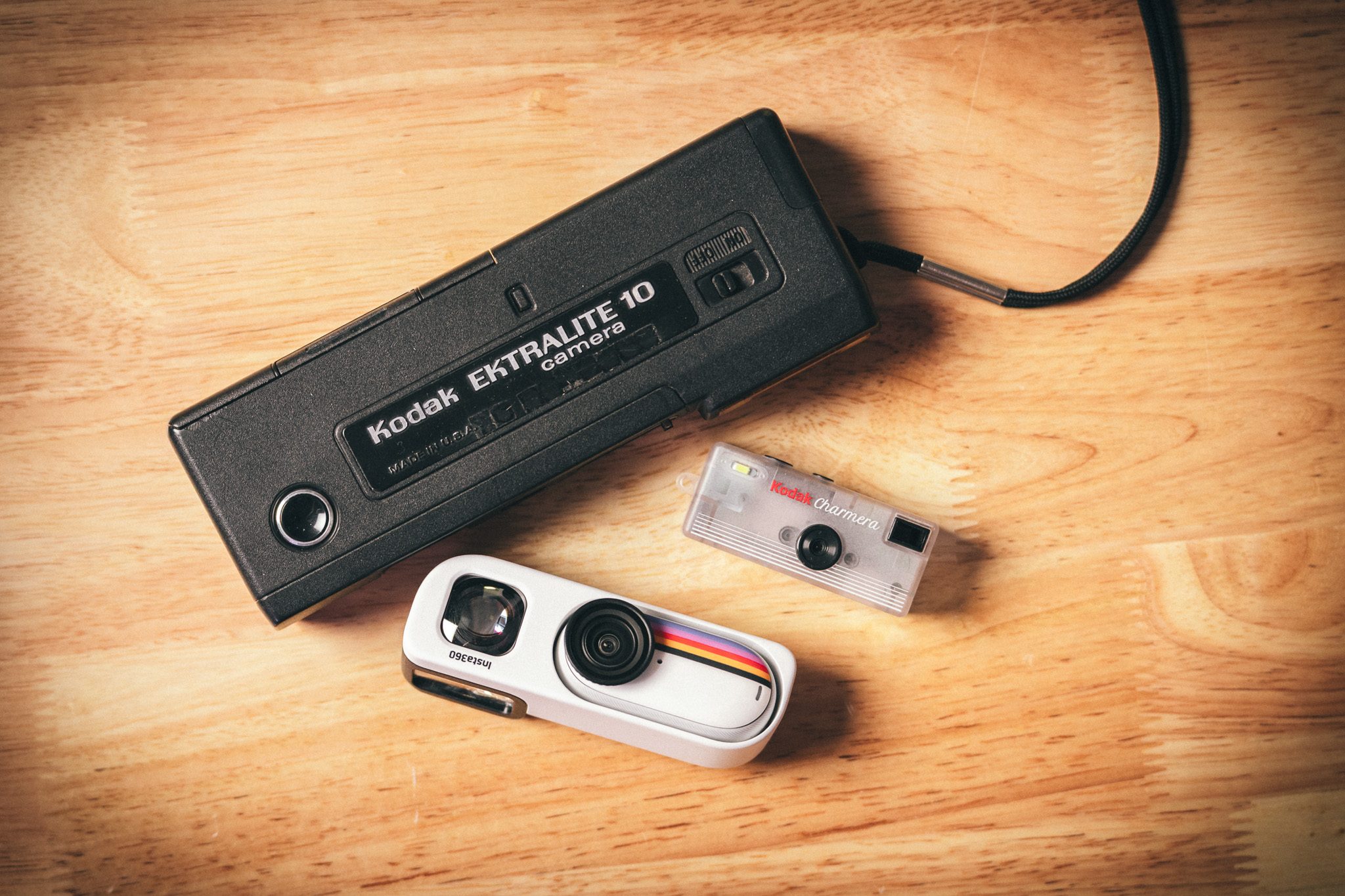
It helps to understand what the Retro bundle is reaching for. It draws a clear line from cameras like the Kodak Ektralite 10 pocket camera from the 80s and, more recently, the Kodak Charmera keychain cameras people have been clipping to their wrists for a few years now. The Go 3S Retro sits right in that vibe: part fashion accessory, part nostalgia, but obviously a more capable camera.
The heart of this bundle is the top-down viewfinder, and it’s the best part of the experience. You look down into it, the way you would with an old Hasselblad or a Rolleiflex in classic street photography, and frame your shot from above. The image is mirrored, so what’s on your left reads as your right, which is genuinely disorienting the first few times. The field of view through the viewfinder is also noticeably wider than what the camera actually captures.
But once you settle into it, it’s a blast. There’s something about composing a shot by looking down instead of holding a screen at arm’s length that changes how you shoot. It slows you down and makes it feel like street photography again. I handed it to my kids, who’ve never touched an old camera in their lives, and they had a genuine blast with it. That reaction told me a lot. The experience is the product here, and it delivers.
What you’re actually buying.
Let’s clear up the confusion right away, because the “bundle” naming trips people up. At its core, this is still the Go 3S you already know. It’s still the same 12 megapixel, 4K camera, same feature set, nothing changed on that front. What’s different is what comes in the box and how you interact with it.
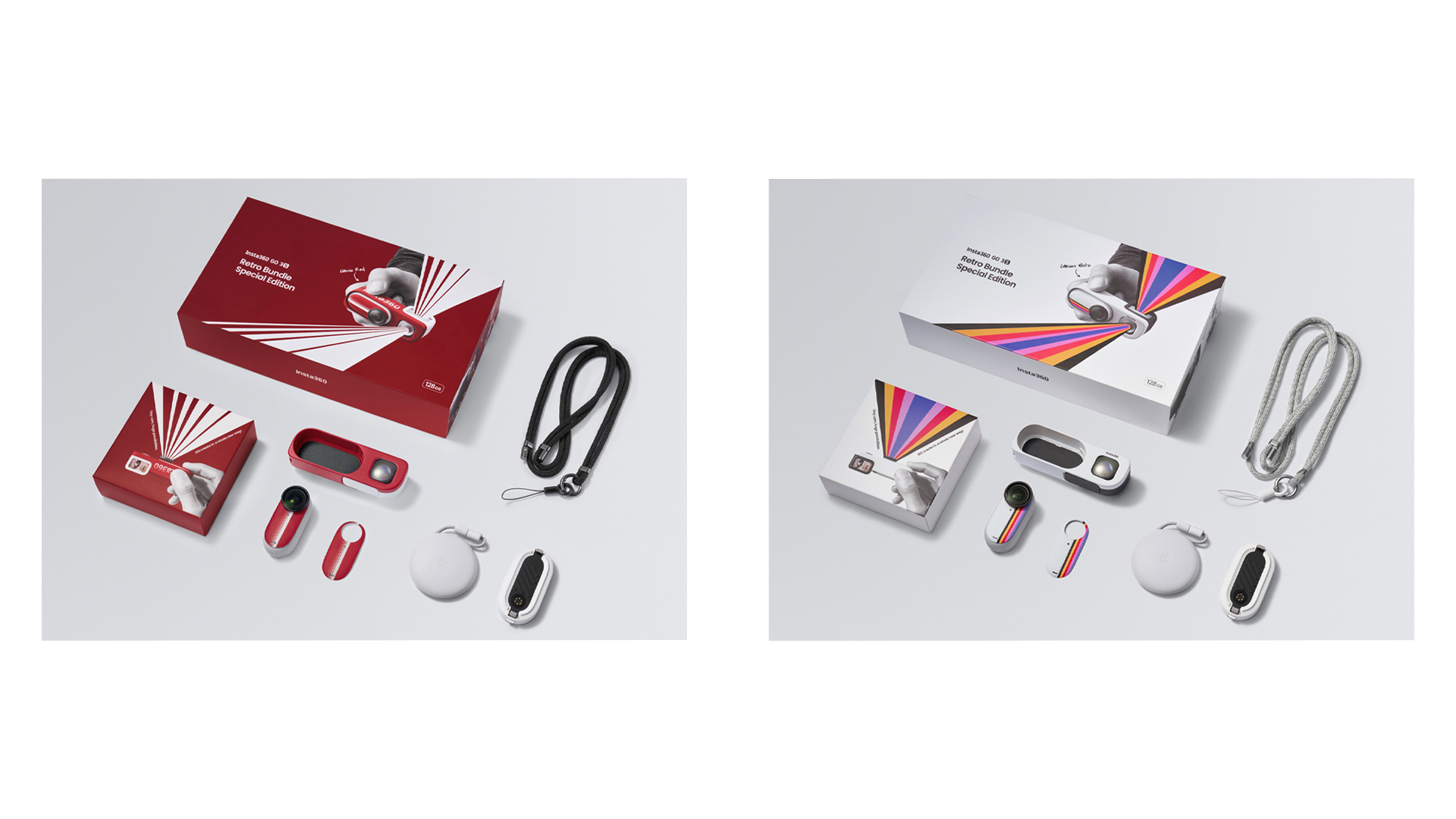
With the standard Go 3S, you get the little pod plus the full action-camera housing you drop it into, which is what unlocks the complete Go 3S experience, screen and all. The Retro bundle is a different proposition. Here you get the pod, a retro-styled fitting with a top-down viewfinder, and a set of accessories, but no action-camera body. Instead of a screen, you lean on the viewfinder and the app. That’s the whole idea: strip the screen away and get you shooting on instinct. The bundle comes in two colors, white and red.
The accessories, briefly.
The bundle leans into the “wearable camera” concept. You get a neck pendant so you can wear it as a POV camera on your chest in either orientation, a lanyard-style necklace that doubles as a fashion accessory, and a wrist strap, which is honestly how I preferred to carry it.
The most useful piece, though, is the charging dock. It’s magnetic, clips into place, and has a USB-C port. It charges the pod, acts as the transfer bridge to your computer, and doubles as a second battery, so when docked, you’re getting roughly double the runtime. You can even seat it in the back of the viewfinder, fitting to keep that extra battery life while you shoot. There’s also a faux-leather carrying case that holds the pod and the dock, and not much else, but it’s a nice touch.
The NFC trick is quietly clever!
One feature I didn’t expect to like as much as I did: tap-to-transfer. There’s an NFC chip built into the retro skin that sits on top of the pod. Tap it to your phone and the app launches automatically, no hunting through your home screen, no digging for the right app. From there you’re straight into the filters and settings.
It’s a small thing, but it smooths out one of the most annoying parts of using a screenless camera. I’m hoping Insta360 brings the same NFC idea to more of their lineup, because it’s the kind of detail that makes the whole thing feel considered rather than gimmicky.
The Retro bundle gets its own set of filters, some retro looks, and some just-for-fun options, and they’re a real part of the appeal. The catch is they only live in the app. You can’t do much of anything without connecting, which brings me to the part that frustrated me.
Is the Retro Bundle worth it?
Three things, and I want to be upfront about all of them.
First, the beep. When you take a photo, you get the standard Go 3S beep, not a shutter sound, just a beep. It yanks you right out of the retro mood the rest of the camera works so hard to build. A custom shutter sound would have been such an easy win here and would have set this bundle apart. You can turn the beep off, but then you genuinely don’t know if you’ve fired a shot, and I bumped the button and took accidental photos enough times that I ended up leaving it on out of necessity.
Second, the app dependency. Because there’s no screen, you’re constantly going back to your phone to check what mode you’re in, whether you’re shooting a photo or video, and where you are in the experience. That quietly undercuts the entire “live in the moment, put the phone away” premise. You still end up staring at a screen, just a different one. A small digital display would have fixed it, though I understand that would have driven the cost up.
Third, the price, which brings us to the decision that should drive your whole purchase.
The Retro bundle runs about $299.99. For that, you’re getting the pod plus a set of plastic accessories. The pod is the bulk of the cost; the rest is the retrofitting and the extras.
Here’s the hiccup. For roughly $349.99, about fifty dollars more, you can get the standard Go 3S with the full action-camera housing, and still shoot top-down by flipping the screen up. You lose the true screenless viewfinder experience, but you gain a complete action camera you can use every other way. So the honest question is: is the screenless, retro viewfinder experience worth giving up the full action camera to get? Only you can answer that, based on your budget and what you actually want out of it. I won’t tell you what to buy, but I’d think hard about that fifty dollars.
There’s a second path, too. If you already own a Go 3S, you don’t need the whole bundle. You can buy the retro fitting with the NFC skin on its own for $47.99, in white or red. At that price, it’s just a fun accessory, and I have zero complaints. That’s an easy yes. It’s really the full $299.99 bundle, bought from scratch, that asks the harder question.
The verdict.
I like this thing. The retro styling works, the viewfinder is genuinely fun, the NFC touch is smart, and the whole experience lands at exactly the right cultural moment. We’re deep in a nostalgia wave, and Insta360 deserves real credit for repurposing an older idea and giving it new life. Handing it to someone who’s never used an old camera and watching them light up is worth something.
But the beep breaks the mood, the app dependency fights the camera’s own premise, and $299.99 is a lot to ask for what’s essentially the pod in a nice costume. If you already own a Go 3S, grab the $47.99 fitting and enjoy it, no hesitation. If you’re coming in fresh and you’re chasing the screenless, live-in-the-moment experience specifically, the Retro bundle makes sense. If you just want the most camera for your money, that extra fifty for the full kit is hard to argue with.
Want more coverage like this? Head over to the DroneDJ YouTube channel.


FTC: We use income earning auto affiliate links. More.


Comments