
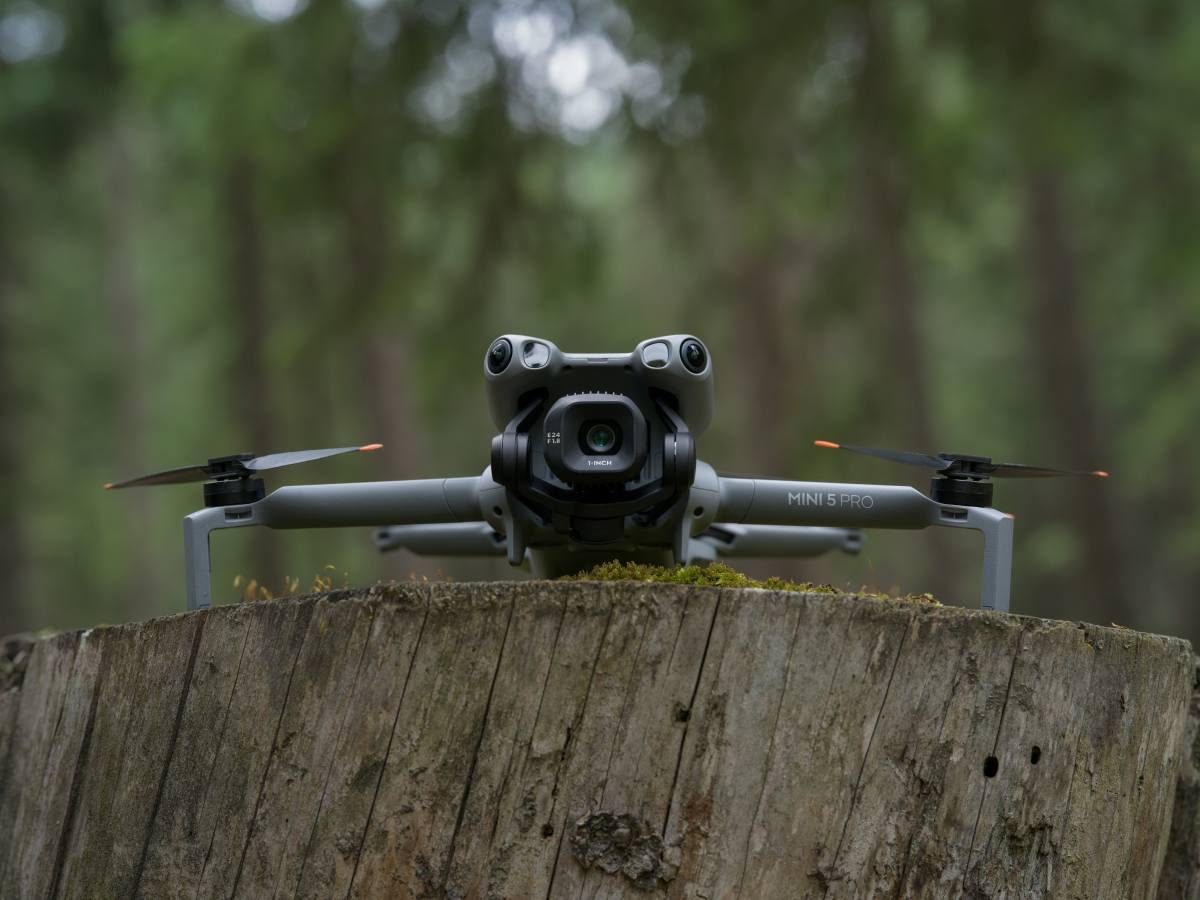
DJI is rolling out new firmware for some of its most capable consumer camera drones, giving Mini 5 Pro, Air 3S, and Mavic 4 Pro owners another reason to check their DJI Fly apps.
The catch? These updates are about fixing known issues, not adding exciting new features.
The releases arrive as DJI also refreshes firmware for several older favorites, including the Mavic Air 2, Air 2S, Mini 2, and Mini 3 Pro. So, whether you bought your drone recently or have been flying the same aircraft for years, there is something to check this week.
DJI Mini 5 Pro gets firmware v01.00.0800
The DJI Mini 5 Pro receives aircraft firmware v01.00.0800, alongside updates for its compatible remote controllers. DJI RC Pro 2 moves to v10.00.0700, DJI RC 2 to v10.00.0800, RC-N3 to v01.00.0400, and RC-N2 to v01.00.0300.
The release notes list one change: fixing known issues. Owners will also need DJI Fly v1.21.12 or later to access features that require the updated app.
That might not sound like much for a drone that has plenty going for it already. The Mini 5 Pro packs a 50MP, 1-inch CMOS camera into a compact aircraft weighing approximately 249.9 grams. It can shoot 4K video at up to 120fps, making it a compelling option for creators who want slow-motion footage without carrying a larger drone.
Its forward-facing LiDAR and omnidirectional obstacle sensing also help with flying in challenging environments, including low-light conditions. The camera’s ability to rotate through a wide range of angles adds creative flexibility for unusual compositions.
One important heads-up: DJI says the firmware update will reset camera settings. Check your preferred resolution, frame rate, color profile, and other settings before your next shoot.
DJI Air 3S update focuses on known issues
The DJI Air 3S gets aircraft firmware v01.00.1800. Compatible controller updates include v01.00.0900 for DJI RC Pro 2, v10.00.0900 for DJI RC 2, v01.04.0200 for RC-N2, and v01.00.0600 for RC-N3. DJI Fly v1.21.16 is listed for both iOS and Android.
Again, the official release notes simply say that known issues have been fixed.
The Air 3S remains a particularly interesting choice for travel photographers. Its dual-camera system combines a 50MP, 1-inch CMOS wide-angle camera with a 48MP medium telephoto camera offering 3x optical zoom. That means you can capture sweeping landscapes and tighter, more cinematic shots without changing aircraft.
The drone also supports 4K/60fps HDR video, 4K/120fps recording, and Free Panorama. Its forward-facing LiDAR works alongside other sensors to improve obstacle detection at night, while its Smart Return to Home features can help it navigate back more safely.
For owners, the latest firmware is a maintenance update rather than a reason to expect new shooting modes or camera capabilities. DJI recommends using the latest DJI Fly version when installing the update.
Mavic 4 Pro gets another firmware refresh
DJI’s flagship Mavic 4 Pro is also receiving an update, with aircraft firmware v01.00.0900. The DJI RC Pro 2 remote controller moves to v01.00.0900, while the DJI RC 2 receives v10.00.0900. DJI Fly v1.21.16 is also listed.
The release notes once again mention only fixes for known issues. As with the Mini 5 Pro, DJI warns that camera settings will reset after installation, so owners should review their configuration before flying.
That is worth remembering when you’re working with a drone built around a sophisticated imaging system. The Mavic 4 Pro features a 100MP Hasselblad main camera with a Four Thirds-type sensor, two telephoto cameras, and a 360-degree Infinity Gimbal. It can record 6K/60fps HDR video and offers true vertical shooting across all three cameras, making it a powerful tool for both cinematic productions and social media content.
For professionals and serious enthusiasts, keeping the aircraft and controller firmware current is part of maintaining a reliable shooting setup, even when the update doesn’t introduce anything new.
DJI hasn’t forgotten its older drones
The firmware wave extends beyond DJI’s latest models. The Mavic Air 2, Air 2S, Mini 2, and Mini 3 Pro have also received updates, each with release notes focused on fixing known issues rather than introducing new capabilities. The Mini 2 and Mini 3 Pro updates are particularly notable because both drones had gone years without a firmware refresh.
It is a useful reminder that a drone doesn’t become irrelevant simply because a newer model arrives. Older aircraft can remain capable tools for travel photography, hobby flying, and content creation, and maintenance updates can help keep them working as expected.
Before updating, check the firmware versions for your aircraft and controller, and make sure you’re using the required DJI Fly app version. If an update fails, DJI recommends restarting the aircraft, controller, and app or using DJI Assistant 2 before trying again.
No dramatic new features this time, then. But if one of these drones is your go-to camera in the sky, this is still a good moment to make sure its software is up to date.
More: DJI Osmo Pocket 4 update makes tracking easier for holiday videos


FTC: We use income earning auto affiliate links. More.


Comments