
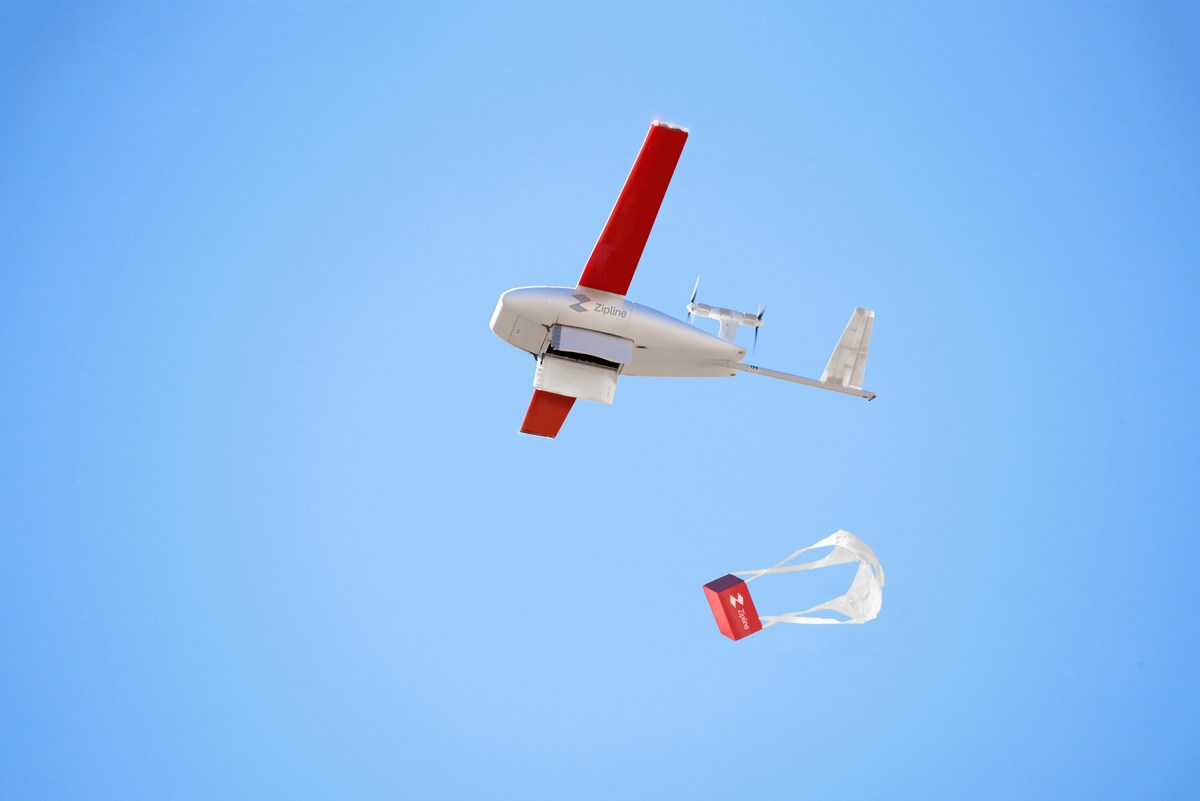
Zipline just scored a massive win: a $150 million US State Department investment to help African nations scale the world’s largest medical drone network, tripling access to lifesaving deliveries of blood and medicine.
The goal is simple: Increase the number of hospitals and clinics Zipline serves, from 5,000 today to as many as 15,000 in the coming years. That expansion could give as many as 130 million people near-instant access to blood, vaccines, medicines, and other essential health supplies, often in places where delivery by road is slow, inconsistent, or impossible.
What makes this agreement stand out is its “pay-for-performance” structure, something the State Department hasn’t used before in a technology project like this. The US will shoulder upfront manufacturing and infrastructure costs — essentially helping Zipline build the hubs, aircraft, AI systems, and robotics needed to expand. But African nations must sign on and pay for deliveries themselves, contributing up to $400 million in service fees once operations begin.
In other words, America jump-starts the buildout, and partner countries sustain it.
Zipline CEO Keller Rinaudo Cliffton sees this as proof that American innovation can have a global impact. “Presidents and prime ministers have told me for years they want the best of what America has to offer — innovation, jobs, and 21st-century technology to leapfrog into the future,” he says. “Today the State Department is making that happen.”
Under Secretary of State Jeremy Lewin calls the partnership a cornerstone of the “America First” foreign assistance agenda, arguing that small US investments can catalyze long-term, locally funded improvements. And with Zipline building and designing its aircraft domestically, the deal supports stateside manufacturing jobs too.
New: DJI packs huge quality boosts into new Osmo Nano firmware
Zipline’s pitch isn’t hypothetical. The company has been operating since 2016 and has racked up 1.8 million autonomous deliveries with zero safety incidents, making it by far the world’s largest autonomous delivery fleet.
Independent studies show the impact:
- Maternal mortality drops up to 56% at Zipline-supported facilities
- Medicine and vaccine stockouts cut by 60%
- Immunization rates jump 13–37 percentage points
- Tens of thousands of lives saved
- Delivery time reduced from 13 days to under 30 minutes in some areas
And here’s the stat global health experts love: Zipline is one of the most cost-effective immunization interventions ever studied, far outperforming many traditional methods.
That’s why countries like Rwanda, Nigeria, and Côte d’Ivoire have already been using and paying for Zipline’s services. This new partnership is designed to scale what’s already working.
Rwanda’s Minister of ICT and Innovation Paula Ingabire calls the expansion a major step forward. The country plans to extend Zipline from rural medical drops into urban delivery, allowing more people to receive orders in minutes.
Nigeria’s Minister of Health Muhammad Ali Pate says Zipline has already changed how healthcare works in three Nigerian states — reducing stockouts, improving treatment rates, and helping health facilities serve more patients.
Côte d’Ivoire’s Minister Pierre Dimba praises how drone delivery brings “rapid, reliable, and equitable access” to even remote villages. Expanding it nationwide, he said, fits the country’s broader goal of a modern, resilient health system.
While drones still represent a tiny slice of the world’s delivery infrastructure — less than 1% — Zipline and the US government see this as the start of something much bigger. Each Zipline hub is a permanent facility staffed entirely by locals, creating skilled jobs and stimulating regional economies.
It also signals a shift in how the US approaches foreign assistance. Instead of shipping supplies or deploying short-term humanitarian projects, this model builds long-term, locally owned infrastructure, powered by American tech. And if other aid agencies adopt this model of “scale what works, pay for results”, Zipline says this approach could be replicated globally.
Not bad for a company once dismissed as a “crazy experiment” when it launched its first drone flight nine years ago!
More: This DJI Mini 4 Pro twin with 3 batteries is only $629 today


FTC: We use income earning auto affiliate links. More.


Comments