
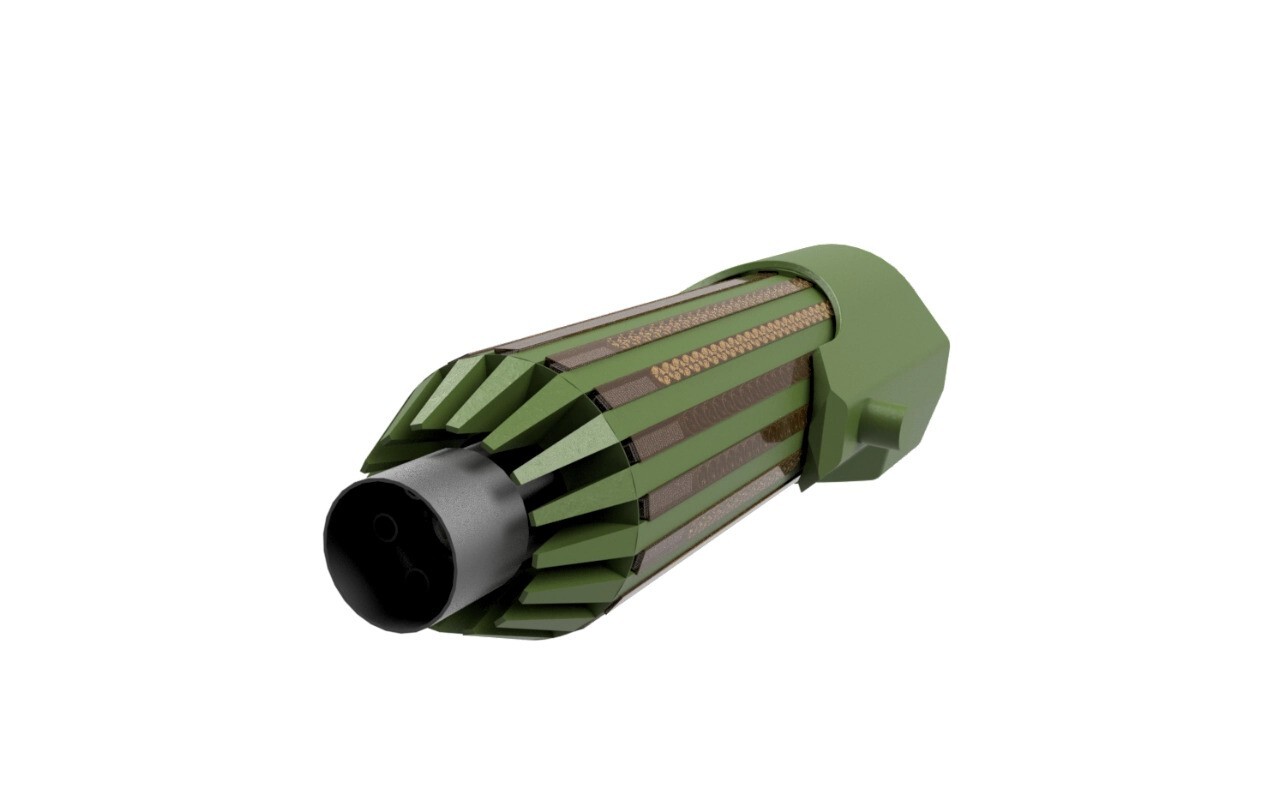
A Danish defense startup betting on raw kinetic force instead of electronic warfare has raised more money than planned — a signal of how fast the counter-drone arms race is heating up.
Shotling announced it has closed a pre-seed funding round with about $760,000 committed, overshooting its original target of roughly $545,000. The round was led by Myriad Defense Fund, with co-investment from IPO CLUB’s Fund II America 2030 and support from EIFO, Denmark’s state-backed export and investment fund.
Shotling is focused on a very specific — and increasingly urgent — problem: stopping FPV drones and loitering munitions at close range, where missiles are too expensive, and jamming isn’t always reliable. Its solution is a rotary, electrically driven shotgun system designed for short-range, last-line drone defense.
The system uses a Gatling-style design paired with a high-capacity, linkless onboard magazine (patent pending). It fires standard or tungsten-based 12-gauge shells at rates of up to 3,000 rounds per minute, creating a dense cloud of fragments meant to overwhelm small, fast-moving drones at distances of 50 to 100 meters. Shotling says the approach dramatically boosts hit probability against FPV drones that rely on speed and evasive maneuvers.
New: HoverAir X1 Pro, Pro Max drones get smarter winter tracking
Cost is a major part of the pitch. According to the company, the system delivers a better than 1:10 cost-to-kill ratio when used against low-cost FPV drones — a key consideration as militaries face adversaries deploying $500 drones to trigger million-dollar responses. The platform also supports elevation beyond 90 degrees, allowing it to engage steep, top-down attack angles that are increasingly common in modern drone warfare.
The shotgun effector is built to be flexible. It can serve as a primary weapon on small remote weapon stations, act as a secondary arm on larger turrets, or be deployed manually on tripods and vehicles. With capacity for more than 30 engagements before reload, it’s also designed for unmanned ground vehicles and mobile platforms where reloading during a mission may not be possible.
Shotling’s concept recently gained visibility after being selected as a finalist in the NATO Innovation Challenge in Tallinn, focused on countering fiber-optic FPV drones. As the global counter-drone market accelerates toward a projected $10 billion by 2030, Shotling is betting that sometimes the most effective drone defense is simple, brutal, and very close-range.
More: Switzerland is putting tiny spy drones inside armored vehicles


FTC: We use income earning auto affiliate links. More.




Comments