
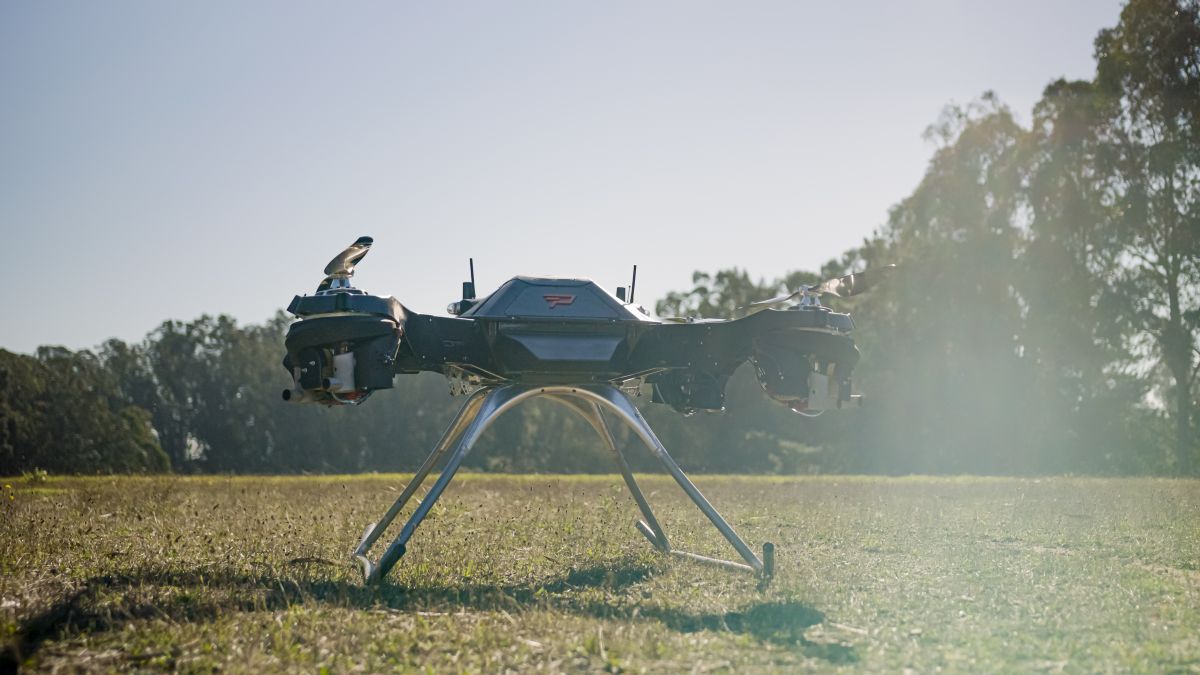
A new heavy-lift drone built in the United States is getting ready to take on some of the toughest jobs in the sky, thanks to a key regulatory green light.
California-based Parallel Flight Technologies has received an exemption under 49 U.S.C. §44807 from the Federal Aviation Administration (FAA), allowing the company to operate its Firefly heavy-lift drone commercially in the United States. The decision marks a major step toward deploying the hybrid-powered drone across a wide range of industrial missions nationwide.
In simple terms, the exemption allows the company to legally operate Firefly under defined FAA conditions while the broader regulatory framework for advanced drones continues to evolve. For Parallel Flight, that means it can move from testing and development into real commercial work.
New: Meet Hammer F1, the foldable drone built for US troops
The company says the approval opens the door to several high-demand applications. Firefly could soon support wildland firefighting operations, carry large sensor packages for industrial inspections, or transport cargo to remote locations where traditional aircraft may struggle to operate.
“This is an important step for our team and our customers,” says CEO Craig Stevens. “The 44807 exemption validates the safety architecture, system design, and maturity of our platform.”
And Firefly is not your typical drone. The aircraft is designed as a heavy-lift workhorse while still remaining surprisingly portable. The quadcopter can be transported by just two people and fits in the back of a pickup truck — a feature that could make it particularly useful in disaster zones, remote infrastructure sites, or wildfire response missions.
Despite that portability, the drone packs some serious lifting capability. Firefly can carry payloads up to 100 pounds and remain airborne far longer than most battery-powered drones. That endurance advantage comes from the platform’s patented Parallel Hybrid Electric Multirotor (PHEM) propulsion system. The hybrid setup combines fuel and electric power, allowing the drone to stay in the air up to 10 times longer than typical all-electric UAVs, according to the company.
The system also delivers up to 2 kilowatts of continuous power during flight, enabling it to run demanding onboard equipment such as advanced sensors, communications gear, or specialized payload systems.
Firefly has already attracted support from several major US government agencies and research organizations, including the Defense Innovation Unit (DIU), NASA, the USDA, the National Science Foundation, and the Office of Naval Research.
With FAA authorization now secured, Parallel Flight says it plans to begin shipping the first customer units this summer. The company is also working to expand its approved flight envelope and ramp up manufacturing as demand for heavy-lift drones continues to grow.
New: A sub-$300 drone with obstacle avoidance? Meet Skyrover S1


FTC: We use income earning auto affiliate links. More.





Comments