
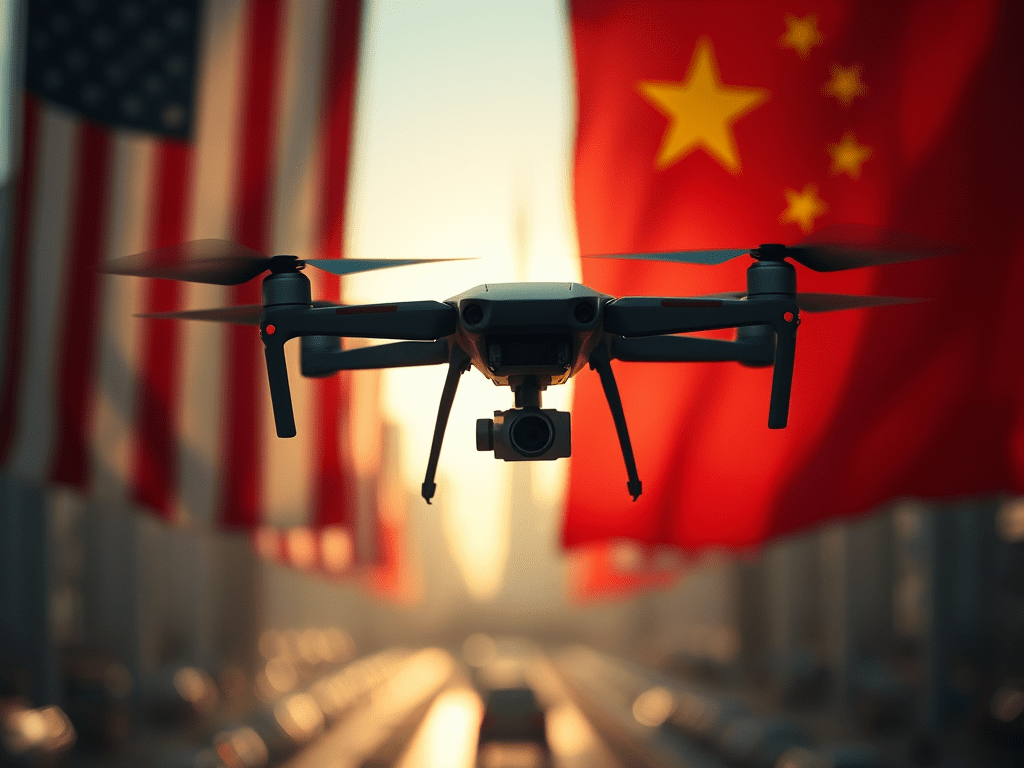
When the Federal Communications Commission (FCC) effectively placed nearly all foreign-produced drones on its national security “Covered List” late last year, many drone pilots feared the door was closing on a huge portion of the industry. Instead, a different story is now emerging.
The FCC has quietly continued expanding a growing list of drones that have been granted special exemptions from those restrictions, with the latest update arriving on June 4. The newest addition is Innovation First International’s VEX AIR drone, which received a Conditional Approval valid through December 31, 2026.
The move highlights an important reality that many drone operators may have missed: while the FCC’s Covered List restrictions remain in place, manufacturers still have a pathway to prove their products do not pose unacceptable national security risks. And more companies are taking advantage of it.
How we got here
The story began on December 22, 2025, when the FCC’s Public Safety and Homeland Security Bureau added all foreign-produced uncrewed aircraft systems (UAS) and UAS critical components to its Covered List. The action followed a national security determination by multiple Executive Branch agencies that foreign-produced drones and critical components could pose risks to US national security and public safety.
Related: DJI critics won’t like what this drone security audit found
For many in the drone industry, the announcement represented one of the most significant federal actions ever taken against foreign drone technology. However, regulators also left the door open for exceptions.
The FCC stated that if the Department of War (DoW) or Department of Homeland Security determined that specific drones did not present unacceptable risks, those products could be exempted from the Covered List. That exemption process has now evolved into a steadily growing approval program.
The first wave of approvals
In January 2026, the FCC carved out broad exemptions for drones appearing on the government’s Blue UAS Cleared List and for drones qualifying as domestic end products under Buy American standards. Then, in March, the agency began issuing approvals for individual drone systems.
At the time of the latest June 4 update, several drone manufacturers had secured Conditional Approvals:
• SiFly Aviation – Q12 UAS
• Mobilicom – SkyHopper Series, M Band Tactical Data Link, controllers, and security software
• ScoutDI – Scout 137 UAS
• Verge – X1 UAS
• Sees.ai – v.USA. 1.0 UAS
• Air6 System GmbH – AIR8 and AIR4 series drones
• Elevon Aerial – AG, Z30, Z50, and Z80 drones
• Blueflite – Cobalt 461 and related critical components
• Verity AG – Series 4 Indoor Autonomous Inventory System
• Air VEV – 120C and 060C systems
• Innovation First International – VEX AIR UAS (newest addition)
Most of these approvals currently run through December 31, 2026.
New: DJI Avata 360 vs Avata 2: Which drone should you buy?
What’s striking isn’t necessarily any single approval. It’s the pace. The first FCC list contained just four approved drone systems in March. By April, additional manufacturers were added. May brought another surge of approvals, and June added yet another entrant. The list has nearly tripled in size in less than three months.
That trend suggests regulators are actively reviewing submissions rather than treating exemptions as rare exceptions. For drone manufacturers hoping to access the US market, that’s a meaningful signal.
The FCC says companies producing drones in foreign countries can submit their products for evaluation by the Department of War or Department of Homeland Security. If those agencies determine a drone does not pose unacceptable risks, the FCC can remove that product from Covered List restrictions through a Conditional Approval.
For everyday drone users, the FCC’s approval list may become increasingly important. Manufacturers that secure Conditional Approvals gain a clearer path to operating within the US regulatory framework at a time when scrutiny of foreign technology continues to intensify.
The list also offers a glimpse into which companies are successfully navigating the government’s national security review process. Many of the approved systems are aimed at enterprise, industrial, inspection, mapping, inventory management, and public safety operations rather than consumer photography. That suggests the exemption process is currently playing a particularly important role for commercial drone operators and organizations that rely on specialized aircraft.
In the end, for drone manufacturers, that means there is still a route forward. For drone operators, it means the list of government-cleared options keeps getting longer. And if recent months are any indication, the FCC’s next update may add even more names.
More: The race for US-made drones is getting intense


FTC: We use income earning auto affiliate links. More.


Comments