
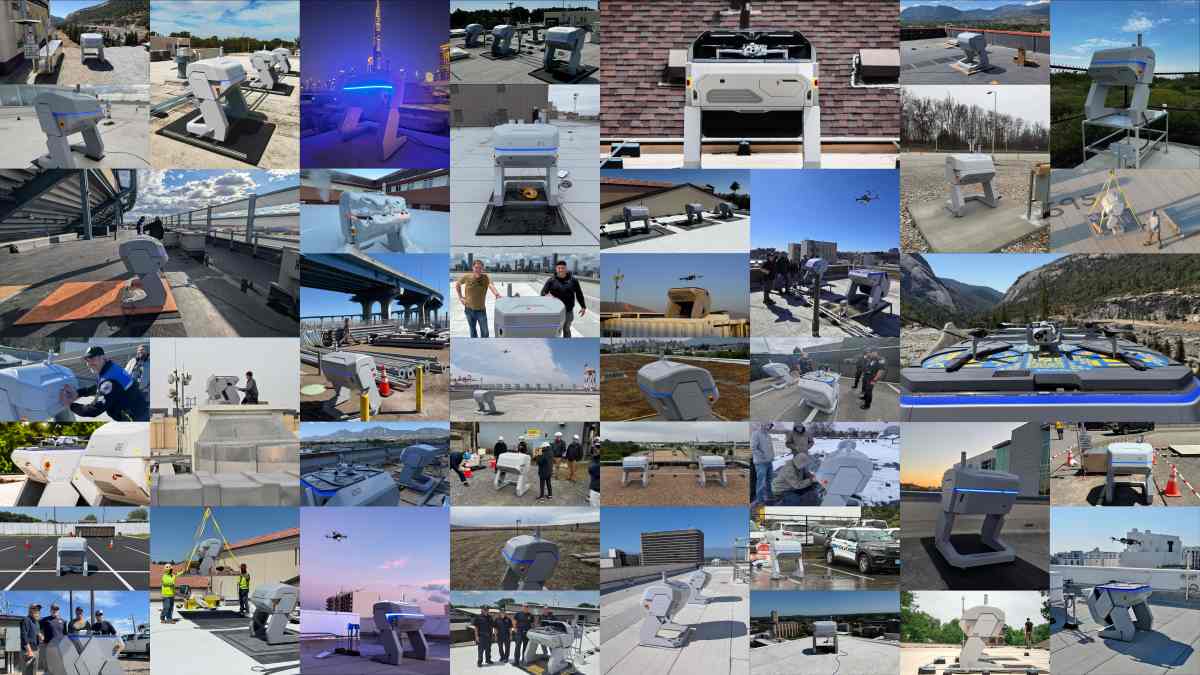
Just one year after shipping its first production Dock system, Skydio says it has crossed an important milestone for autonomous drone operations: more than 1,000 Dock installations are now deployed in the field.
The California-based drone maker announced this week that 1,070 Skydio Dock systems are now operating across public safety agencies, critical infrastructure operators, and defense programs in three countries. The company also says its drones have logged more than 4 million customer flights, underscoring the growing role of remotely operated drone infrastructure rather than traditional pilot-driven deployments.
For readers unfamiliar with the technology, Skydio Dock is essentially a weatherproof “drone-in-a-box” system. It houses, charges, and automatically launches a compatible Skydio X10 drone whenever it’s needed. Once a mission is complete, the drone returns to the Dock, recharges, and waits for the next assignment, allowing organizations to keep aircraft ready around the clock with minimal human involvement.
According to Skydio, those 1,070 deployed Dock systems are already supporting a wide range of missions. Public safety agencies are using them to search for missing people, provide aerial awareness during emergencies, and identify hotspots during fires to improve firefighter safety. Utilities rely on them to inspect power infrastructure, while defense customers use them for intelligence, surveillance, reconnaissance, and base security.
The company argues that reaching more than 1,000 deployed Dock systems within the product’s first year of commercial availability demonstrates that autonomous drone infrastructure is moving beyond pilot programs and into routine operations. While autonomous drone docks have been discussed for years, large-scale deployments across multiple industries have remained relatively limited.
A big reason for that growth, Skydio says, is that Dock changes one of the biggest challenges facing enterprise drone programs: staffing.
Traditionally, expanding a drone program meant hiring more pilots. With Dock, organizations instead add more autonomous launch points. A single remote operator can oversee multiple drones flying simultaneous missions from different Dock locations, reducing the number of personnel needed to cover large areas.
That capability has become increasingly important as public safety agencies and infrastructure operators look to stretch limited staffing while maintaining faster response times. The approach also aligns with Skydio’s broader push toward Drone as First Responder (DFR) programs, where drones are dispatched immediately after emergency calls to give responders a live aerial view before officers or firefighters arrive on scene.
The milestone also comes as Skydio continues expanding its autonomous ecosystem. In recent months, the company has introduced multi-drone operations, allowing a single operator to manage several aircraft simultaneously, and recently secured a contract worth more than $9 million to deploy Dock systems for US Air Forces Central to help secure military airbases in the Middle East.
Looking ahead, Skydio says the next phase of growth will focus on expanding into new industries, entering additional countries, and integrating Dock systems more deeply into customers’ existing workflows.
More: 1,100 drones challenge FIFA World Cup security, 500 already seized


FTC: We use income earning auto affiliate links. More.


Comments