
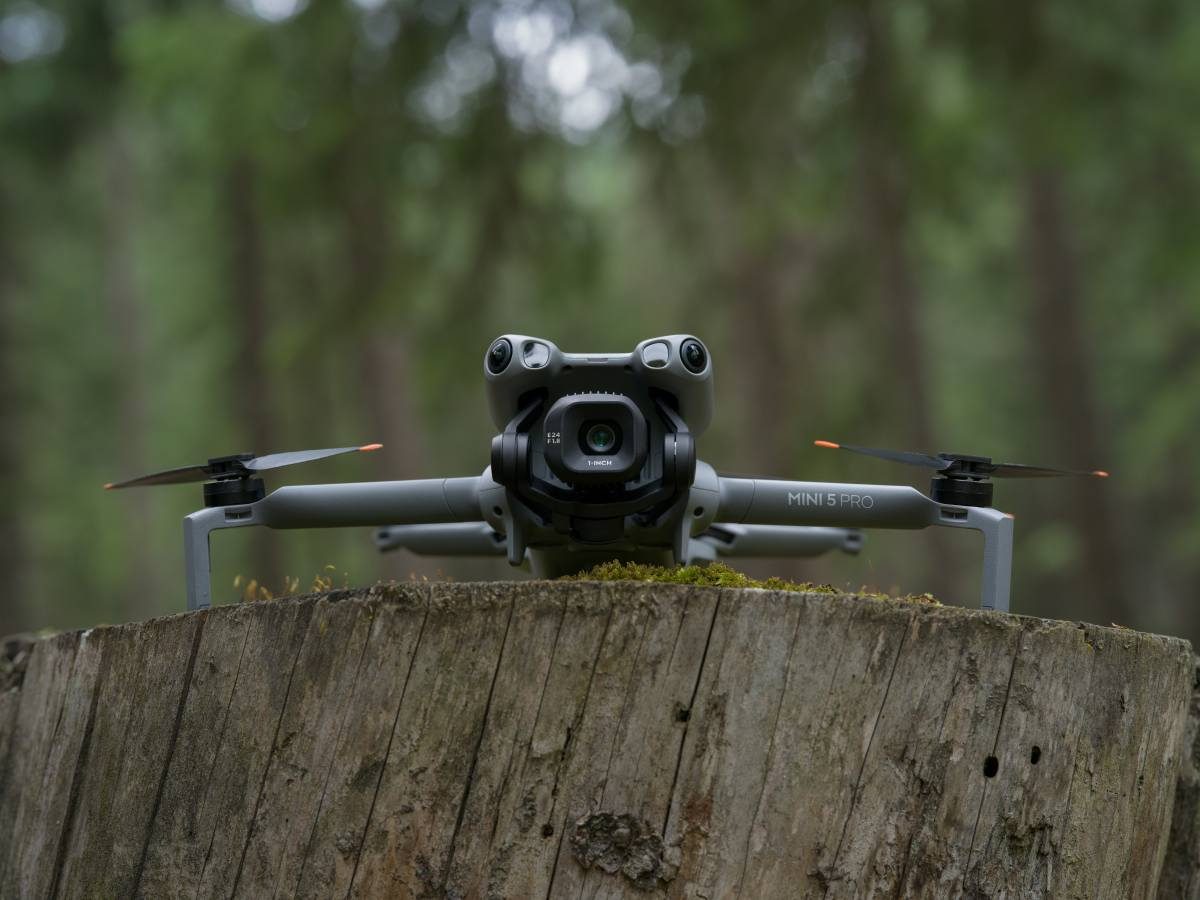
American drone pilots are already feeling the impact of Washington’s crackdown on Chinese drones. Thanks to existing restrictions, DJI’s latest Lito series still isn’t officially available in the US. Now, the Federal Communications Commission (FCC) is considering rules that could affect future imports and sales of a much broader range of DJI aircraft, including the very popular Mini 5 Pro, Air 3S, and Avata 360 camera drones.
The FCC’s public comment period for this proposal is now closed after attracting nearly 4,000 submissions from drone pilots, public safety agencies, businesses, and manufacturers. And in a 26-page filing, DJI has laid out exactly why it believes the proposed restrictions should never become final.
The filing responds to the FCC’s proposal to prohibit the continued importation and marketing of previously authorized foreign-made drones that regulators classify as “military-grade.” Unlike previous actions that targeted specific companies, this proposal focuses on drone capabilities — including thermal cameras, LiDAR sensors, autonomous docking stations, swarming software, agricultural spraying systems, defense integration, and aircraft weighing more than 55 pounds.
That definition immediately raised eyebrows because many of those technologies are no longer confined to military hardware. They’re increasingly found on commercial inspection drones, search-and-rescue aircraft, mapping platforms, agricultural drones, and even some advanced consumer models.
For instance, features like LiDAR-assisted obstacle sensing appear on popular consumer models including the DJI Mini 5 Pro and DJI Air 3S, where they’re designed to prevent crashes during low-light flights, not military operations. As such, the tech giant’s response wastes no time challenging the proposal’s very foundation.
Related: Why modern DJI drones rely on LiDAR
‘The FCC invented this category’
The biggest takeaway from DJI’s filing is also its boldest accusation. According to the company, the FCC is relying on a December 2025 National Security Determination that never actually created a “military-grade” drone category in the first place.
Instead, DJI argues, FCC staff later came up with those seven capability-based categories on their own. “The seven ‘military-grade’ categories… are an entirely post-hoc creation of the Bureaus,” DJI writes, adding they “have no foundation” in the National Security Determination the proposal claims to rely on.
That’s a significant claim because it doesn’t merely challenge the proposed rule; it questions whether the FCC has the legal authority to create it at all.
DJI argues the underlying national security determination simply treated foreign-produced drones as a broad category. It never concluded that thermal imaging, LiDAR, swarming technology, docking stations, or agricultural spraying systems somehow deserved separate treatment.
These aren’t just ‘military’ features anymore
One of DJI’s strongest arguments is also one that everyday drone users can easily understand. The company says the technologies being labeled as “military-grade” have become standard tools across countless civilian industries.
- Thermal cameras help firefighters locate hotspots and missing people.
- LiDAR is used for surveying, mapping, construction, mining, and infrastructure inspections.
- Docking stations allow utilities and industrial companies to automate inspections of power lines, pipelines, and critical infrastructure.
- Agricultural spraying systems are designed to apply pesticides and fertilizers, not military payloads.
- Swarming software can even power recreational drone light shows.
In DJI’s view, the FCC is effectively treating everyday commercial technology as though it belongs exclusively on the battlefield.
Billions of dollars at stake
DJI also paints a stark picture of what could happen if the proposal becomes final. The company says revoking existing FCC authorizations would affect thousands of drone products, preventing their continued importation and marketing in the United States while inflicting “billions of dollars in losses” across manufacturers, distributors, and end users who built businesses around equipment that was legally approved for sale.
For DJI itself, the financial impact could be enormous. The filing estimates the company’s losses alone would exceed $1.5 billion, with broader consequences extending across nearly every foreign drone manufacturer whose products fall within the FCC’s proposed definition.
So, rather than focusing solely on its own business, DJI repeatedly shifts attention to Americans who depend on drones every day… Police departments. Firefighters. Emergency responders. Utility crews. Farmers. Researchers. Filmmakers. Infrastructure inspectors.
The company reminds regulators that these users have integrated DJI drones into their daily operations over more than a decade. “Every one of these use cases is put at risk if the Commission moves forward with this proposal,” the filing states.
DJI also points to the nearly 4,000 public comments submitted during the FCC proceeding, arguing they demonstrate just how broadly these technologies are used throughout the United States. According to the filing, comments from law enforcement agencies, fire departments, aerial mapping firms, drone service providers, real estate photographers, and infrastructure inspectors show the proposal could affect far more than military-style operations.
DJI says the rules are too vague to follow
Another recurring theme throughout the 26-page filing is uncertainty. DJI argues the FCC never clearly explains what actually qualifies as “military-grade.”
For example, the proposal mentions thermal imaging sensors but doesn’t specify what resolution, sensitivity, or detection range would place a drone inside or outside the proposed restrictions.
Likewise, the filing says terms such as “defense article” remain largely undefined.
Even more striking, DJI notes that the FCC simultaneously asks commenters whether its own definition is too broad, too narrow, or missing additional categories altogether.
If regulators are still asking what belongs on the list, DJI argues, manufacturers cannot reasonably determine which products are legal. “The Notice creates precisely the vagueness and fair-notice harm” the FCC’s own regulations were designed to prevent, the company says.
DJI also criticizes how the FCC developed the proposal. Throughout the notice, regulators repeatedly say they “tentatively conclude” the proposal would have only limited economic and supply-chain impacts before asking commenters to provide supporting data.
DJI argues that’s backwards. “An agency cannot outsource its analytical obligation to the public it proposes to regulate,” the company writes.
Later, the filing goes even further, saying the FCC effectively left commenters to perform the impact assessment required under its own rules instead of completing that work before proposing the regulation.
But perhaps the filing’s most persuasive question isn’t legal at all. If these drones genuinely pose such a serious national security threat, DJI asks, why would the federal government still be allowed to acquire and use them while state and local police departments and fire agencies could lose access?
The filing argues the FCC never explains why identical drones would supposedly be safe enough for one level of government but not another.
DJI also notes what it sees as another inconsistency: the FCC acknowledges that foreign-made drones dominate the recreational market while simultaneously suggesting the proposal would have only limited economic consequences — a conclusion DJI says lacks supporting analysis.
What happens next?
The public comment period is now over, and the FCC will review thousands of submissions before deciding whether to finalize the proposal. DJI, however, is asking regulators to do much more than make a few revisions.
The company wants the proposal withdrawn entirely, arguing it exceeds the FCC’s legal authority, violates the agency’s own procedures, ignores due process, and rests on a definition of “military-grade” drones that no national security agency ever established.
If the FCC decides to move forward anyway, DJI says any future proposal should rely on product-specific national security findings rather than broad capability lists, provide at least an 18-month transition period, protect state and local public safety agencies, and replace vague feature-based definitions with objective technical standards.
Whether regulators ultimately agree remains to be seen. But after months of hearing from critics, supporters, first responders, businesses, and nearly 4,000 public commenters, DJI has now put its own position on the record in unmistakable terms. The company isn’t simply arguing that the FCC’s proposal goes too far; it says the agency is trying to rewrite the rules around “military-grade” drones without the legal foundation to support them.
More: DJI Neo hits record low before tariffs shake drone prices


FTC: We use income earning auto affiliate links. More.




Comments