
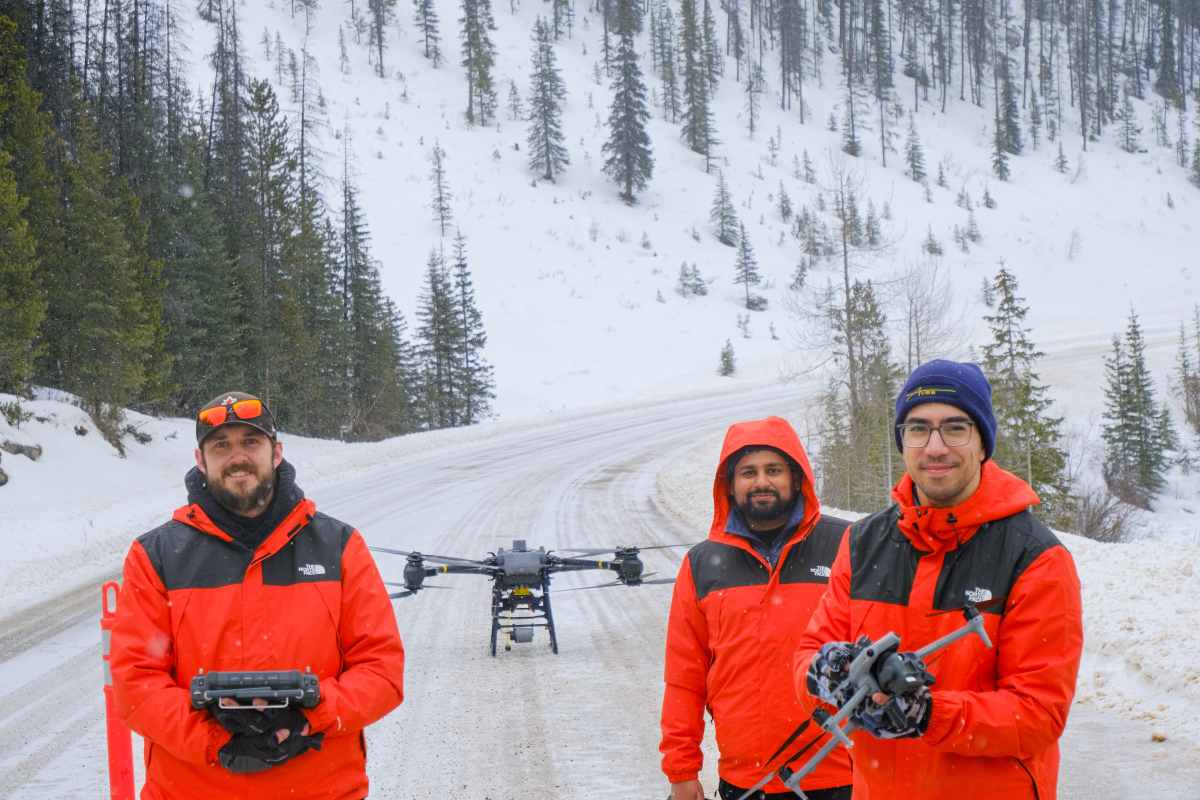
Aerial Vehicle Safety Solutions (AVSS) is pushing drone utility into an explosive new territory, literally. The Canadian drone safety company has just wrapped up real-world testing of a system designed to trigger avalanches remotely, using drones to drop explosives in controlled conditions.
The trials took place in early 2026 at Jasper National Park, where AVSS partnered with multiple Canadian government agencies under the Innovative Solutions Canada initiative. The goal: figure out whether drones can safely and effectively take on one of the riskiest jobs in mountain operations — avalanche control.
Traditionally, avalanche mitigation relies on helicopters or ground crews placing explosives in unstable snowpack zones. Both approaches carry significant risk and cost. AVSS’s Precision Avalanche Management System (PAMS) aims to change that equation by keeping humans at a safer distance while still triggering controlled slides.
And this wasn’t just a lab demo. The company conducted live explosive drops in a regulated environment, marking what appears to be the first approved use of drones for avalanche control involving explosives in Canada. That’s a notable milestone for both regulators and the broader drone industry.
The system itself is built around a drone-mounted drop mechanism paired with a remotely triggered initiation system. A key safety feature ensures the explosive won’t arm until the drone reaches a safe altitude and is positioned within a defined drop zone. In simple terms, it’s designed to minimize risk at every stage, from takeoff to detonation. Take a look:
According to AVSS, the testing delivered more than just proof of concept. The team gathered operational insights like ideal drop heights, safe flight practices in mountainous terrain, and how drones can integrate into existing avalanche control workflows. These details matter because avalanche mitigation isn’t just about triggering slides; it’s about doing so predictably and safely in highly variable conditions.
What’s particularly interesting is how this tech builds on AVSS’s earlier work in aerial delivery systems. The company has already developed tools for delivering payloads to hard-to-reach areas: think emergency supplies where landing isn’t possible. PAMS takes that core idea and adapts it for a much more specialized, high-stakes application.
Closer home, avalanche control is a major concern in states like Colorado, Utah, and Alaska, where transportation corridors and ski resorts rely heavily on mitigation programs. In 2024, the Alaska Department of Transportation and Public Facilities (DOT&PF) also tested drone-based avalanche control systems.
Meanwhile, this project also underscores a broader trend: governments are increasingly willing to collaborate with drone companies to test real-world use cases. Programs like Innovative Solutions Canada are essentially acting as proving grounds, helping startups move from concept to deployment faster. AVSS plans to present more detailed findings at the Canadian Avalanche Association conference in May, where industry professionals will get a closer look at how drones might fit into their toolkit.
More: Skydio’s $3.5 billion US drone expansion begins


FTC: We use income earning auto affiliate links. More.




Comments