
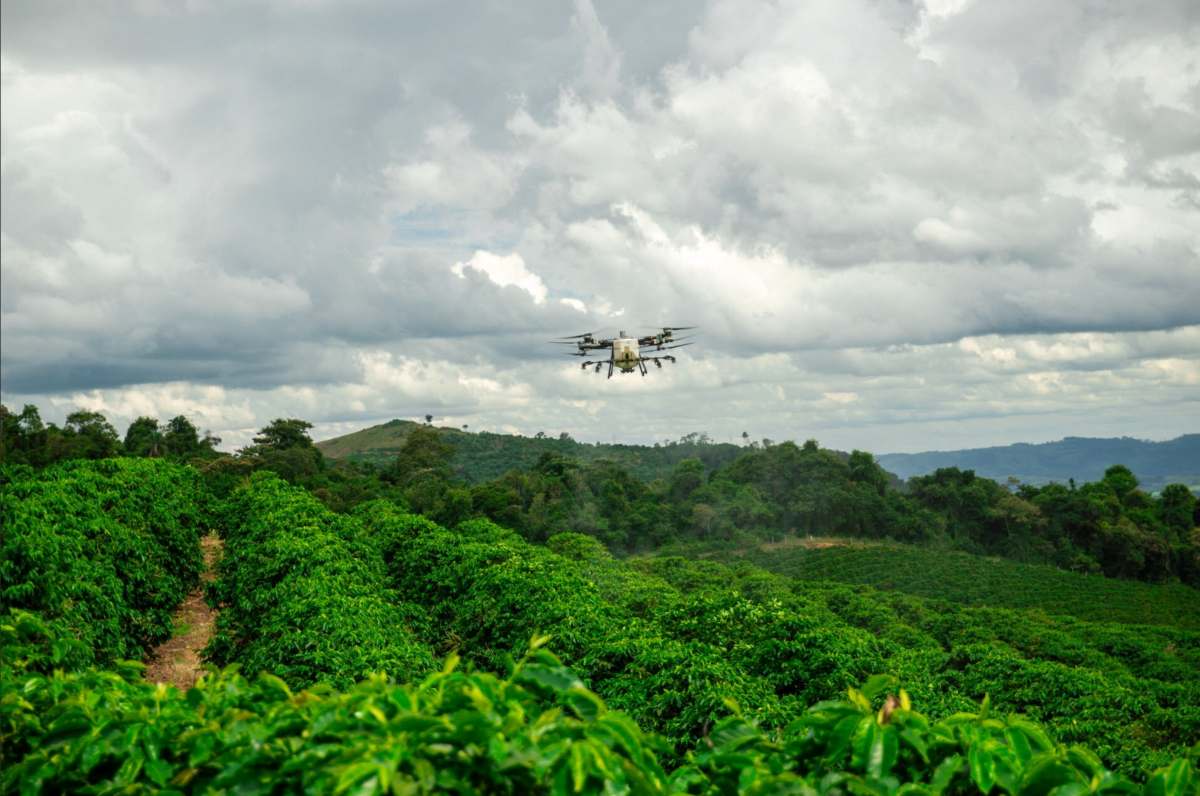
If you want a snapshot of where farming is headed, look no further than a drone hovering over a soybean field in Brazil. At this year’s Agrishow 2026, DJI rolled out its latest Agricultural Drone Industry Insight Report, and the numbers are hard to ignore. More than 600,000 DJI agricultural drones are now deployed across 100+ countries, operated by over 600,000 trained pilots.
In other words, farm drones aren’t experimental anymore. They’re becoming standard equipment.
From niche tech to everyday farm tool
DJI says its agri drones have already helped save 410 million tons of water globally — roughly equal to the annual drinking needs of 740 million people. On top of that, they’ve reduced carbon emissions by 51 million tons, comparable to planting 240 million trees. That kind of impact is why countries like Brazil are leaning in hard.
According to DJI’s report, drones are now widely used across Brazilian agriculture — from coffee and corn to soybeans and sugarcane. Farmers are using models like the DJI Agras T25P, DJI Agras T70P, and DJI Agras T100 for everything from seeding to precision spraying.
And the efficiency gains are real. Spot-spraying weeds with drones can cut herbicide use by up to 35%, while also avoiding soil compaction from heavy machinery.
The appeal goes beyond cost savings. Drone-based farming reduces chemical drift, limits environmental damage, and allows farmers to treat only the areas that actually need attention. It’s a shift toward precision agriculture, where data and automation replace blanket spraying and guesswork.
The report also highlights growing academic support. New field trials and studies are validating drone spraying as not just efficient, but safer and more environmentally responsible. Groups like UAPASTF are even helping shape standardized guidelines for pesticide application using drones.
That research is feeding directly into policy changes worldwide. Brazil’s aviation regulator ANAC has introduced “standard scenarios” to simplify agricultural drone operations. Meanwhile, Transport Canada has eased rules to support drone spraying, mapping, and monitoring.
Globally, the trend is clear: regulations are becoming more drone-friendly, not less.
The US? It’s a very different story
While the rest of the world accelerates, the US is… complicated. DJI, the dominant player in agricultural drones, is facing ongoing scrutiny in Washington over national security concerns tied to its Chinese origins. The company has already been placed on federal watchlists, and lawmakers continue to push for tighter restrictions on Chinese-made drones. This has created a ripple effect across the market.
Related: 25 new DJI launches blocked by FCC, $1.5 billion at stake
Even though agricultural drones have nothing to do with surveillance, they’re still caught in the broader geopolitical crossfire. As a result, US farmers often face limited access, higher costs, or regulatory uncertainty when it comes to adopting DJI equipment.
Programs like the “Covered List” maintained by the Federal Communications Commission have added to the pressure, while some government agencies actively encourage alternatives to Chinese drone technology.
At the same time, the Federal Aviation Administration continues to require waivers and certifications for many advanced drone operations, including spraying, slowing down widespread adoption compared to countries with more streamlined frameworks.
This mismatch is now starting to show. While Brazilian and Canadian farmers are integrating drones into everyday workflows, many US growers are still navigating regulatory hurdles or waiting for clearer guidance. And that could have long-term implications.
Agricultural drones don’t just save time; they fundamentally change how farms operate. From reducing input costs to improving yields and sustainability, the technology is quickly becoming a competitive advantage.
DJI, for its part, is doubling down globally. The company now supports a network of 3,500 service and repair centers and more than 7,000 certified instructors to train operators worldwide.
The takeaway from DJI’s latest report is simple: agricultural drones have crossed a tipping point. They’re no longer a futuristic add-on; they’re becoming essential infrastructure for modern farming. But while the technology is booming worldwide, America’s farmers are navigating a far more uncertain path — one shaped less by agriculture and more by geopolitics.
More: FCC’s DJI drone ban review now depends on public feedback


FTC: We use income earning auto affiliate links. More.




Comments