Author

Avatar for Bruce Crumley

Bruce Crumley

BDronedj

Bruce Crumley is journalist and writer who has worked for Fortune, Sports Illustrated, the New York Times, The Guardian, AFP, and was Paris correspondent and bureau chief for Time magazine specializing in political and terrorism reporting. He splits his time between Paris and Biarritz, and is the author of novel Maika‘i Stink Eye.

Connect with Bruce Crumley

French partners develop water-launched naval UAV

French UAV water

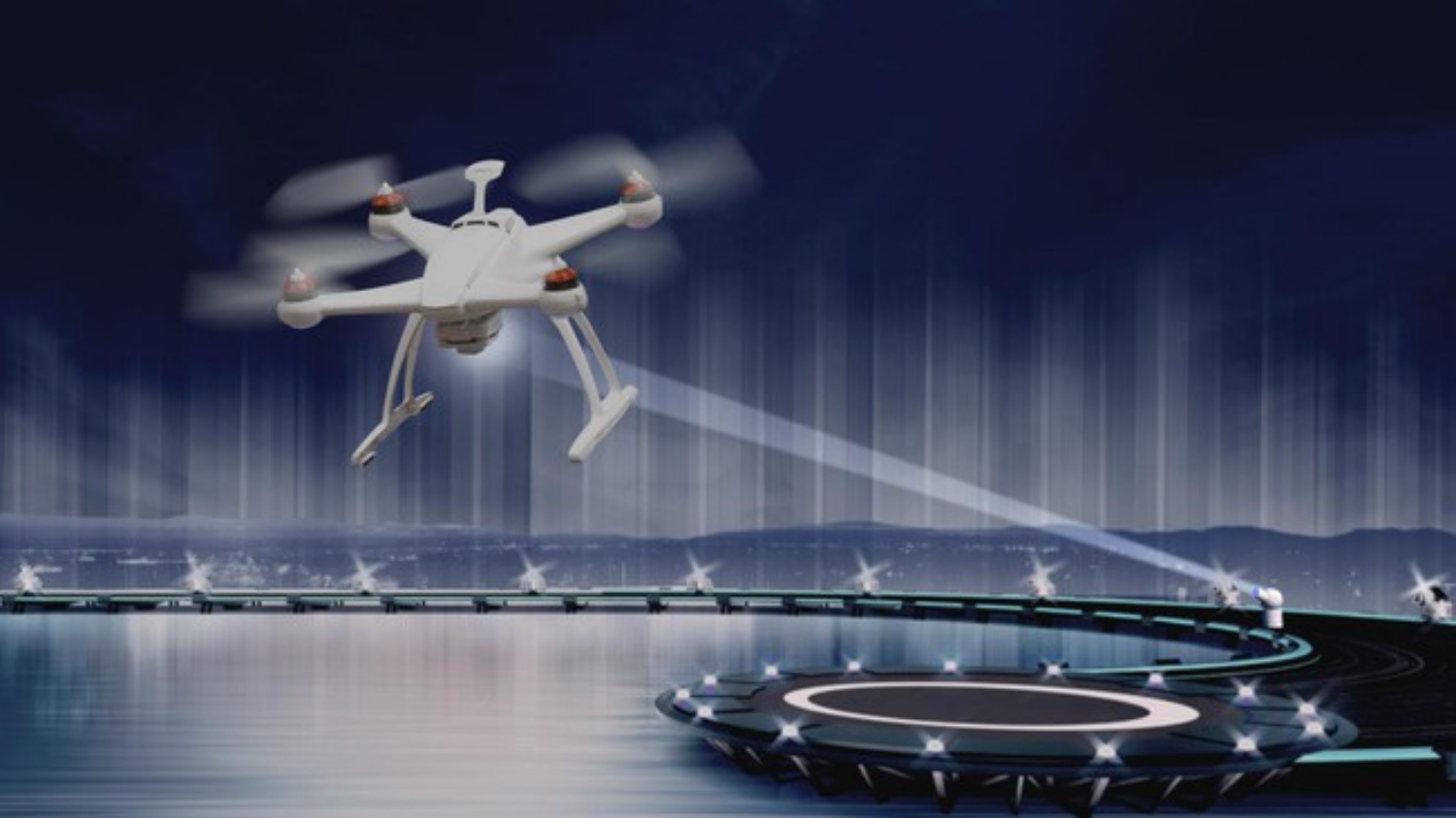
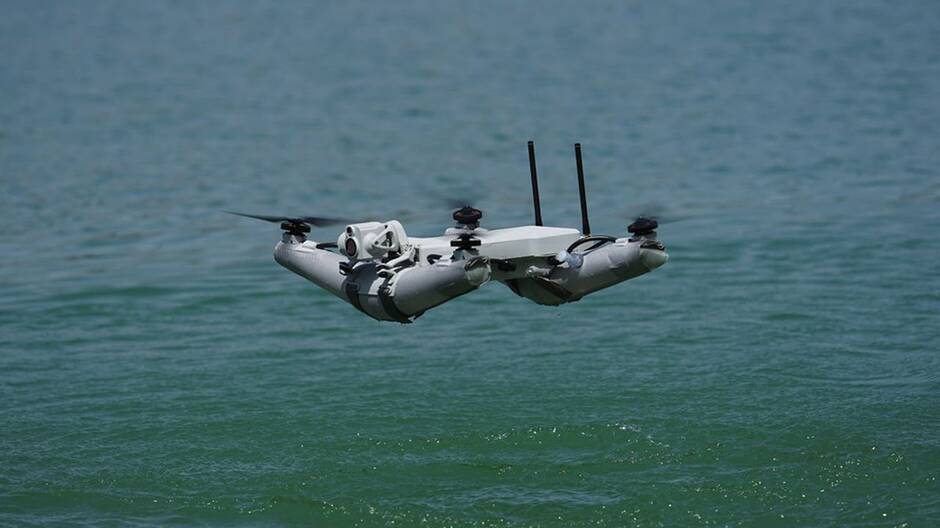
Two French companies are getting closer to perfecting an asset that will allow naval forces to launch small UAVs from the surface of – or beneath – the bodies of water they’re patrolling.

The French maritime defense company, Naval Group, has teamed up with the Toulouse-based drone startup Diodon to adapt a specialized, compact UAV for water deployment by navy, coast guard, and other forces policing the seas. The partners have already worked together in use scenarios with a current version of the craft, and plan on testing the next-generation upgrade of the vehicle next year. 

There have, of course, been several projects initiated elsewhere to develop drones capable of making the transition from water to air (and in some cases, back into the drink again and again).  The Naval Group-Diodon tandem, however, is close to deploying a specialized UAV that can be launched from submarines or boats, and almost immediately begin performing airborne missions with all the tech and flight capacities of exclusively aerial high-performance quadcopters.

A major difference between Diodon’s new HP30 iteration and other liquid-to-air craft under development is its expandable components. The body and foldable wings are surrounded by a tough but collapsible skin that is inflated before deployment. That approach makes the craft lighter and more compact in storage, and far more buoyant when rising to or floating on surfaces of water. The encasing is also highly puncture-resistance and entirely air-tight.

Diodon’s drones are intended for detection, patrol, reconnaissance, surveillance, and engagement with criminal or hostile targets under watch by official forces in France and the 18 other nations Naval Drone works with. The HP30 has a range of 8 km, maximum flight time of 30 minutes at top speeds of 55 km/h, and resists winds of up to 25 knots per hour. Setup to launch time is a minute or less.

Diodon officials say ongoing tests of the earlier model HP20 have been successful at depths of several meters under water, with trials of the HP30 intending to launch the craft farther down from submarines.

Forget drones: Zipline says success comes from serving human needs

Zipline drones delivery supplies

There haven’t been many companies that have embodied the concept of “drones for good” as compellingly as medical delivery specialist Zipline. Yet despite being one of the brightest stars in global UAV activity, the company is again offering a reminder of why it succeeds: It forgets about the drones, and focuses on the service.

Expand Expanding Close

Will ‘les drones’ join satellites in unmasking French tax cheats?

France drones tax

The success of a new satellite-based campaign to ferret out French homeowners shirking tax liabilities by failing to declare property improvements will determine whether a thus far rock-solid ban on using lower-altitude drones to peek in on the affairs of private citizens is added to that mix of snooping tools. That’s a potentially explosive possibility in a nation where the priority of protect one’s privacy is second only to dodging tax authorities.

Expand Expanding Close

Video shows a Peruvian cop drone rescuing an SOL pigeon

drone video pigeon

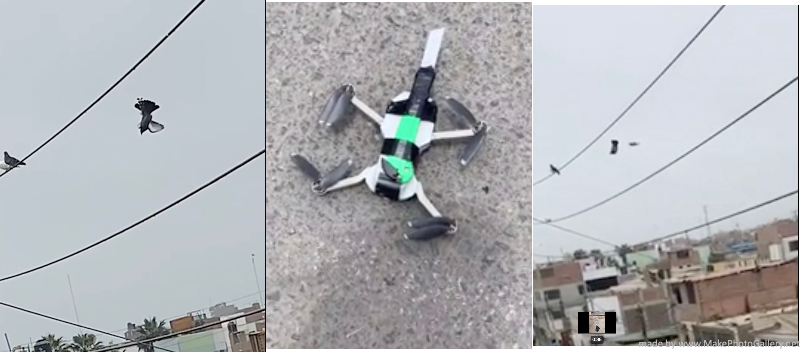
Pigeons don’t often inspire demonstrations of concern and care from city dwellers, many of whom tend to revile the ubiquitous scavengers as “rats with wings.” But one of the birds became the object of much attention – and the star of a drone video – when a Peruvian neighborhood went to work to save the pigeon after it had gotten itself into a seemingly hopeless fix.

Expand Expanding Close

Tales of d’oh! Another drone delivery of prison contraband fails miserably

drone transport contraband prison

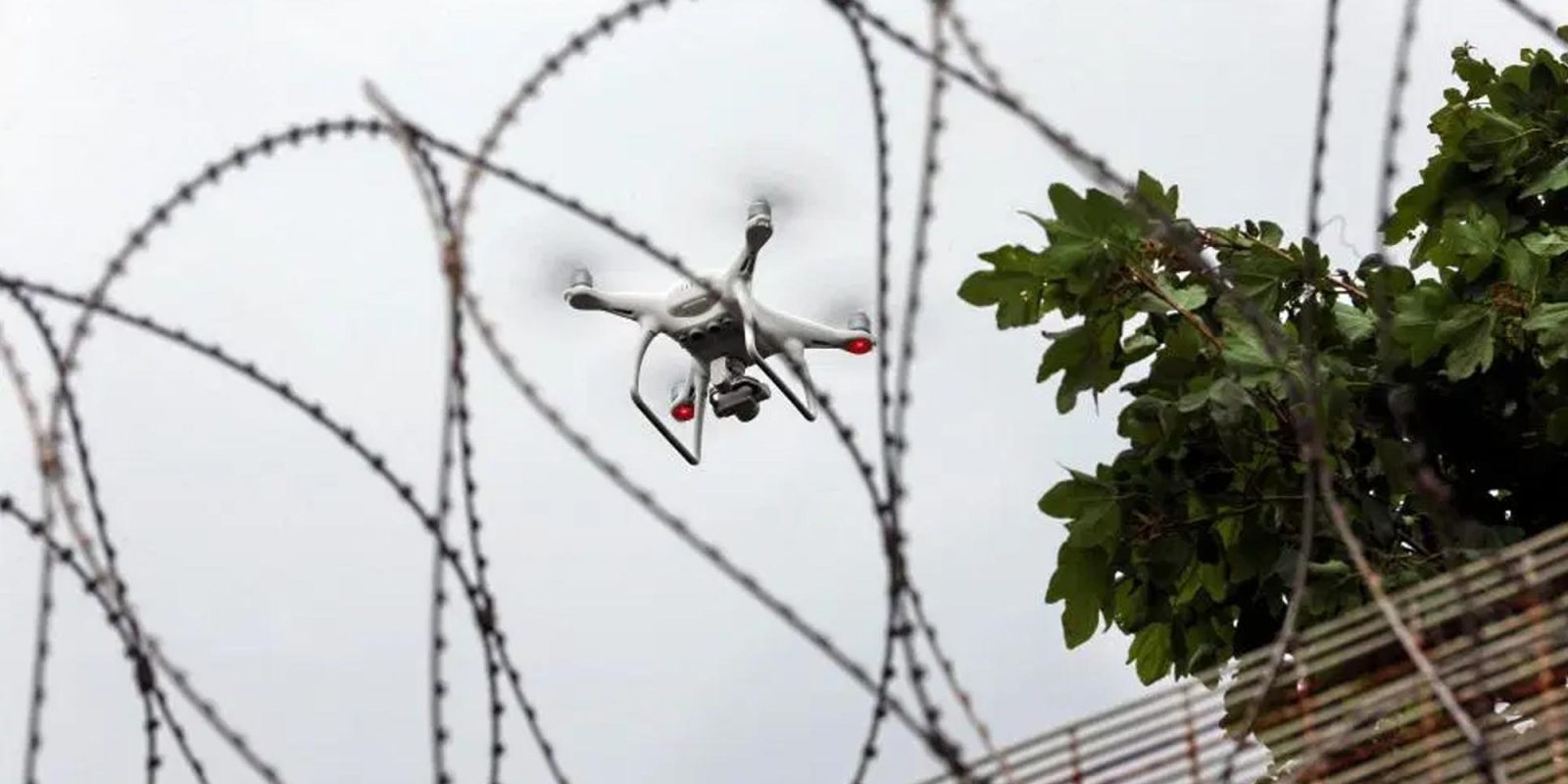
There’s debate about just how interested in and entertained readers are by the lengthening litany of stupendously ill-advised efforts using drones for contraband deliveries to prisons – and their frequently shared destiny to fail as resoundingly as many indeed do. But this week’s addition is such a sure-fire, first ballot inductee to the “Not Very Sharp Aerial Felons’ Hall of Fame” that we feel duty-bound to give it the attention it so richly deserves.

Expand Expanding Close

Researchers test drone images, neural computing to fight wildfires

drone images neural fires

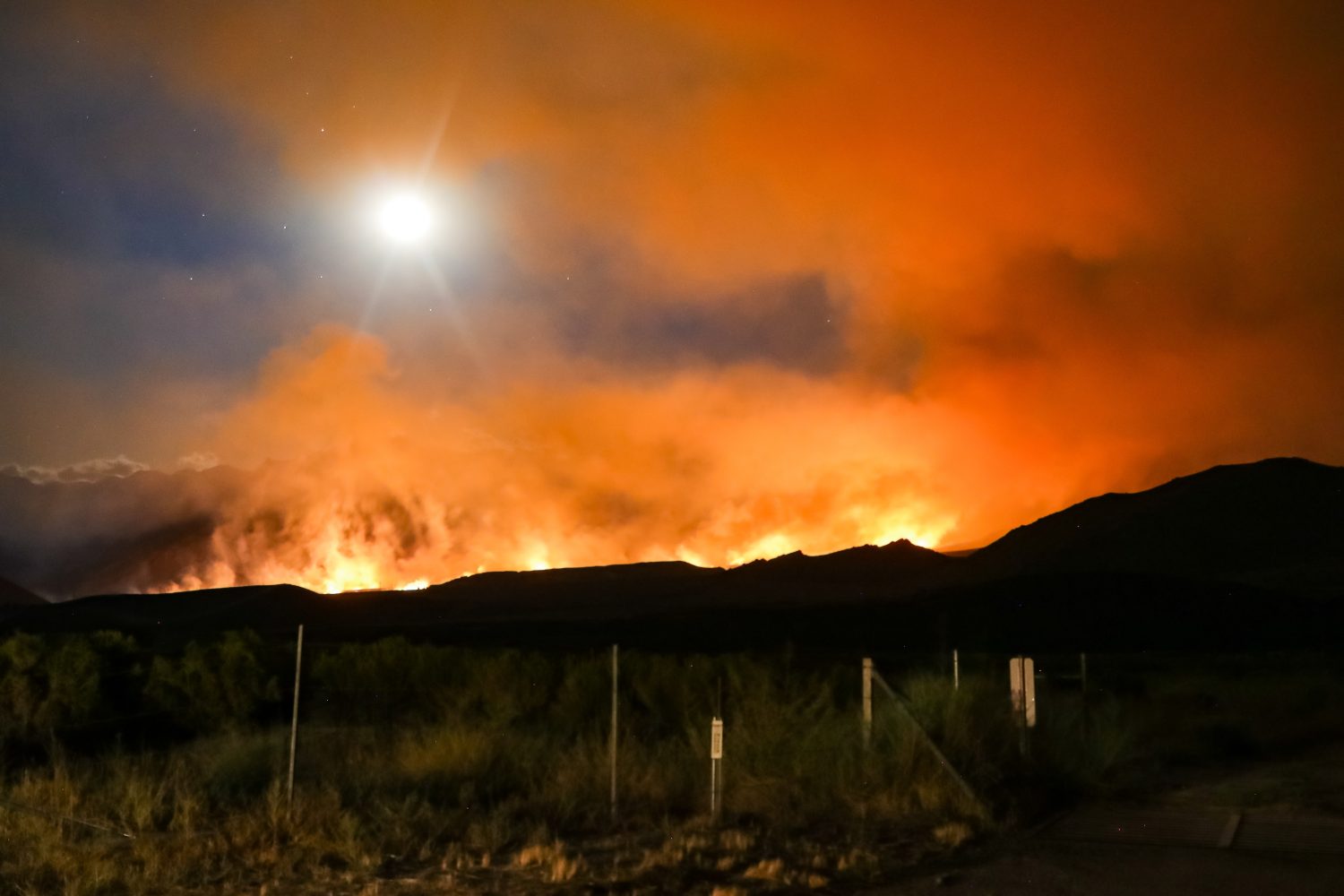
Over the past few years of terrible wildfires that have ravaged parts of Europe, Australia, and western US states, the critical use of UAVs in helping responders deploy to and battle hot spots has gotten deserved attention. Now, a group of researchers is developing a way of using deep learning neural computing applications analyzing drone images to automatically detect new fires, and identify hot spots requiring fastest reaction.

A group of professors at Indiana’s Purdue University has teamed up with computer and information technology graduate student Ziyang Tang to use neural networks and deep learning computers to speed up and strengthen the way images from drones can be used in fighting fires. At the moment, most analyses and decisions made based on aerial photos are taken by humans scouring footage taken over large expanses of burning land. The task is as huge as it is taxing, and the current objective is to make that faster and easier through automation.

Tang’s work began when he asked why the increasingly rapid and powerful interpretation and deduction capacities of computers weren’t being used to automate the search for wildfire for humans to act on. 

“Deep learning has had great success with detecting objects like people and vehicles,” Tang said in an article published on Purdue’s news page. “But little has been done to help computers detect objects with amorphous and irregular shapes, such as spot fires.” 

Tang and his academic partners went to work trying to harness the processing power that allows computers to detect drone-filmed objects with fixed sizes and regular shapes, and apply it to the rapidly changing and unpredictable forms of flames. 

Reconstructing neural computer analysis of drone images to spot irregular, changing shapes of flames

The first step in that was introducing an algorithm that would identify flames, responders, and other factors involved in wildfire events captured in drone images and relay them to human monitors. The simplest, immediate goal was making the process of scanning so much footage taken over such vast areas less daunting and laborious through computerization.

“In an actual wildfire event, there is a distinct level of organized chaos,” Tang explained. “The operator of a UAS platform is often monitoring hundreds of spot fires and having to track multiple fire crews and related equipment on the ground. Because we are fallible and suffer from fatigue and short attention spans, some objects can be overlooked.” 

The next task focused on overcoming two limitations in current neural network detection systems. First was changing their reliance on low-resolution images – usually 600 x 400 pixels – with an upgraded adaptation to the 4K footage that drones tend to take. As part of that, neural network detection methods that divide larger shots into many, equally sized boxes that are individually processed in search of catalogued images had to be changed. That procedure is not only time consuming, but risks missing fire that isn’t neatly limited to single quadrants.

In search of a solution, Tang and his team fed the 4K drone images of a controlled fire into their system. They created what they believe is the first public high-resolution wildfire dataset of 1,400 annotated photos containing 18,449 identifiable object like trucks, people, landscape features, and fire. 

They also established a “coarse-to-fine” search approach to the automated detection of sparse, small, and irregularly shaped wildfire flames. In contrast to the analysis of each quadrant from photos that previous neural systems carried out, the course-to-fine method only scours boxes containing images of interest like probable flames – or sections in which such imagery overlaps two squares. The details of each of those is then passed along to human monitors much faster, since the process skips sections of the far bigger 4K superset unlikely to contain wildfire data.

“After extracting objects from high-resolution images, we zoom in to detect the small objects and fuse the final results back into the original images,” said Tang. “Our experiments show that the method can achieve high accuracy while maintaining fast speeds.” 

Blockchain tech may thwart hacks of automated drone fleets

drone swarm operator

To skeptics who’ve seen one too many meltdowns arising from too-good-to-be-true finance market innovation, blockchain technology has earned a suspicious reputation through its role in cryptocurrency schemes. But blockchain may benefit from positive rehabilitation if – as researchers now suggest – it can play a role in thwarting attempted hacks of automated drone fleets.

Expand Expanding Close