Less than two weeks after completing its acquisition of aerial mobility business Blade, eVTOL air taxi developer Joby Aviation has expanded an ongoing partnership with Uber, Inc. to bring those flights to the popular rideshare app.
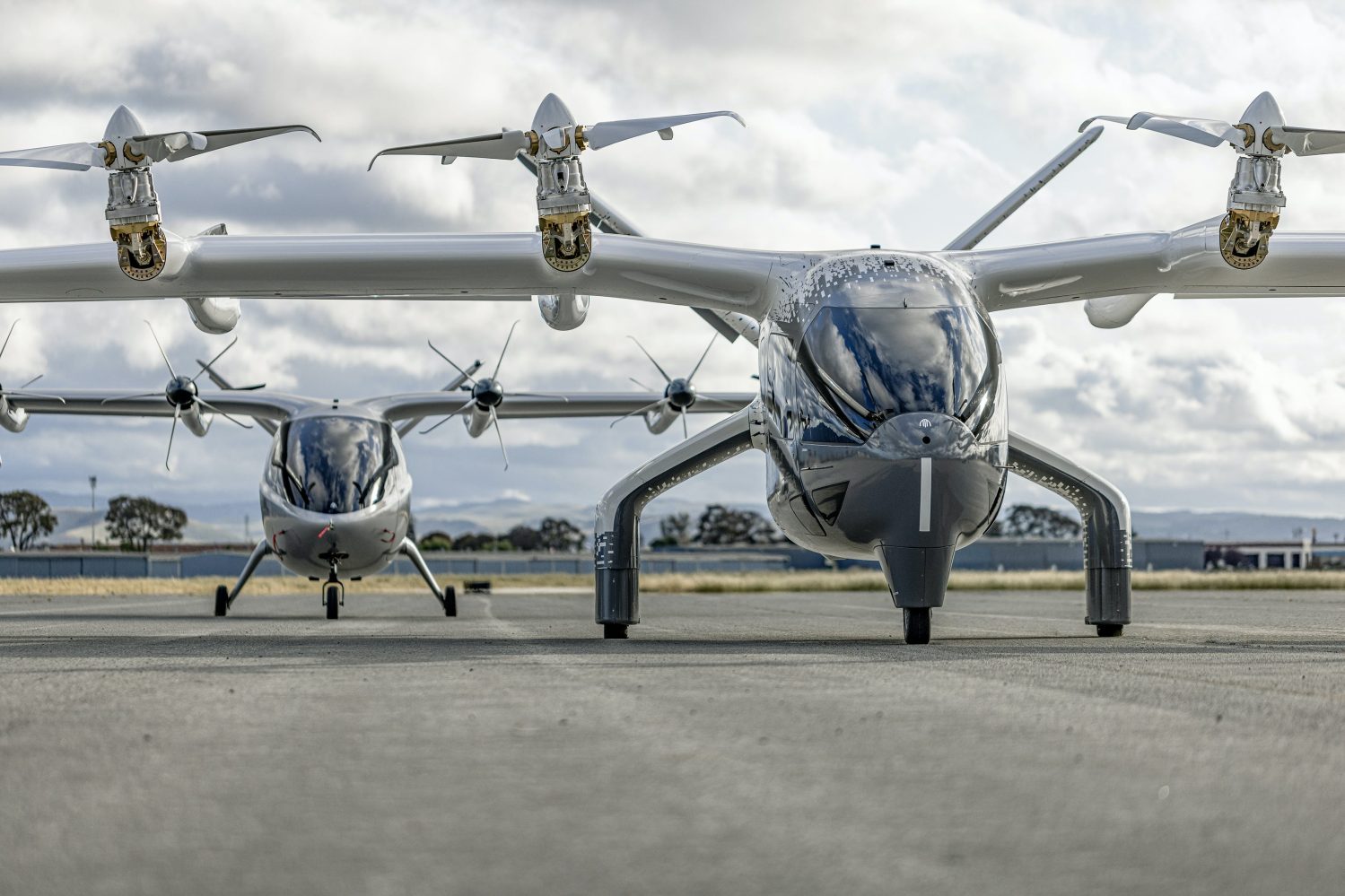
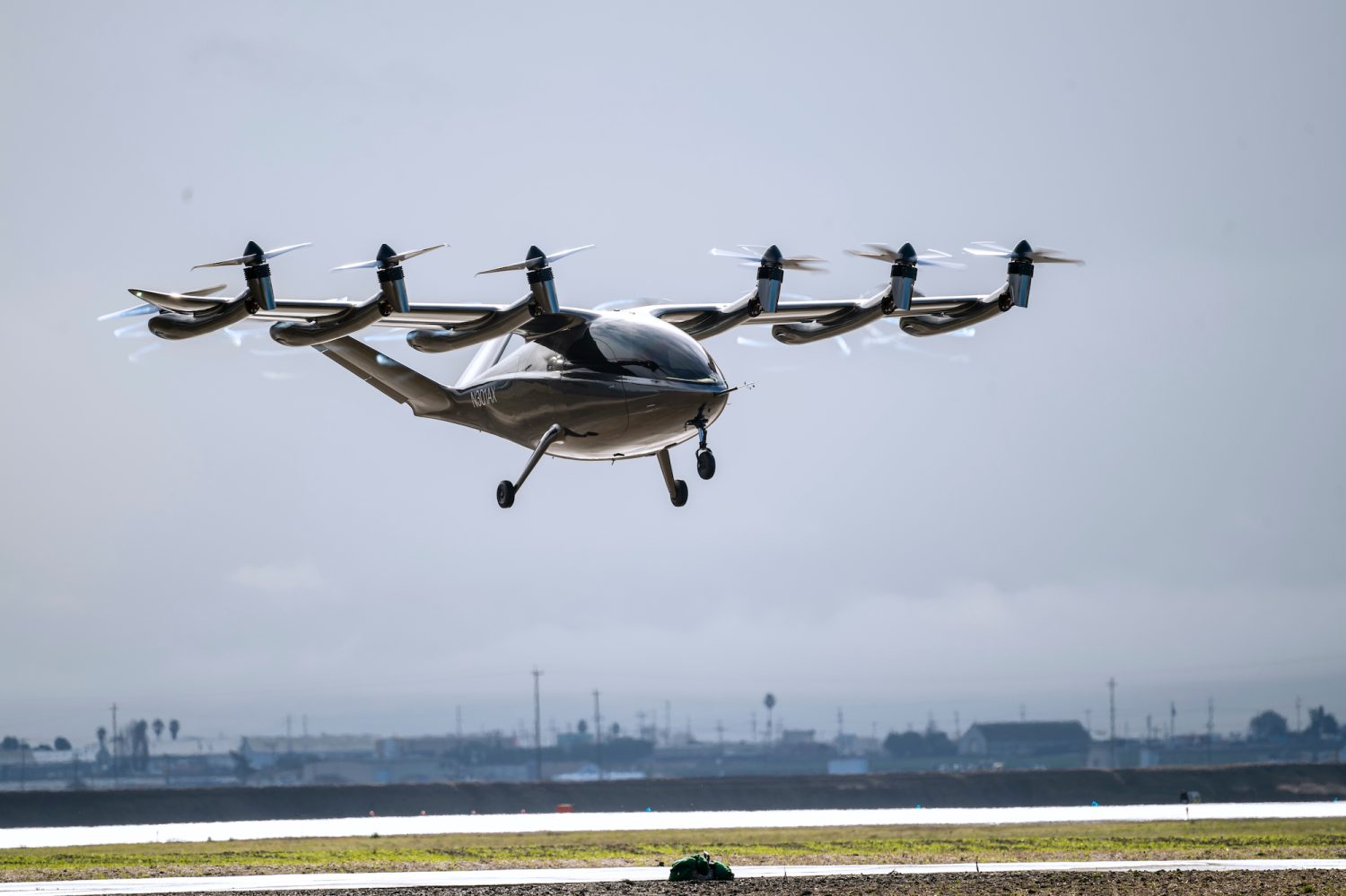
Japan is quickly becoming a hub for eVTOL and air taxi technology. This morning, Archer Aviation announced it is the latest sustainable aviation developer to sign a deal in the region and implement aerial taxi transportation, beginning with Soracle Corporation’s purchase of up to 100 Midnight eVTOL aircraft.
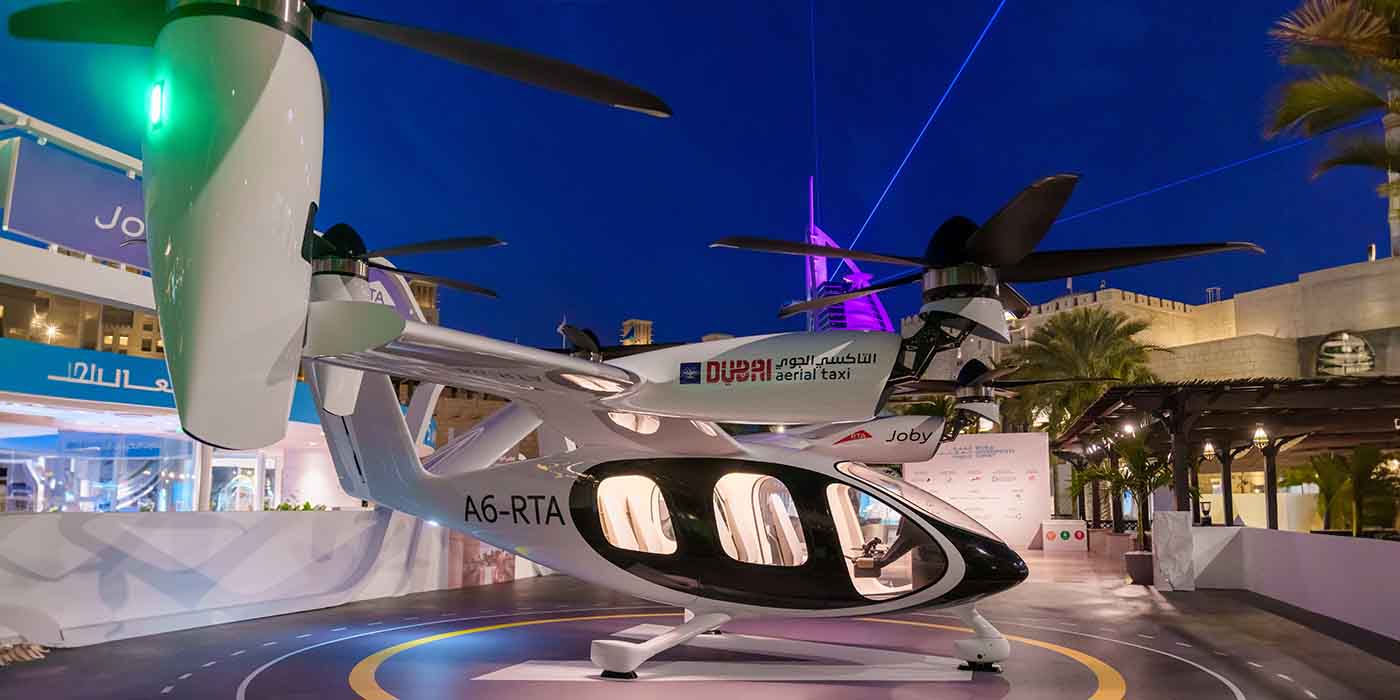
eVTOL developer Joby Aviation has signed a definitive agreement with the government of Dubai to begin air taxi operations in the United Arab Emirates (UAE), sweetened by the exclusive rights to aerial operations in the country’s capitol for six years.
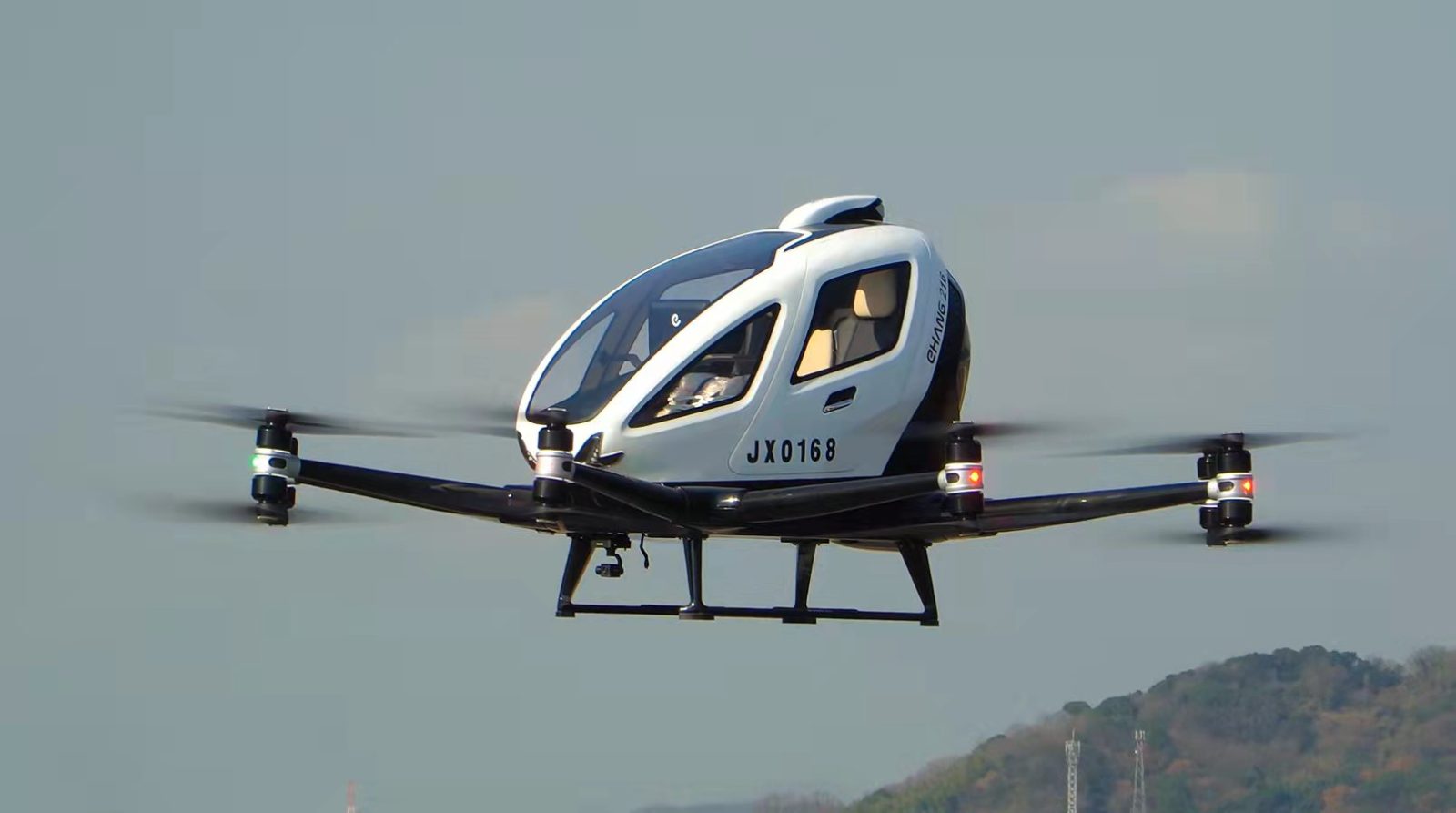
China’s leading developer of electric vertical takeoff and landing (eVTOL) planes for air taxi operation, EHang, is broadening its work with authorities in Europe to help usher in urban air mobility (UAM) operating systems and services.
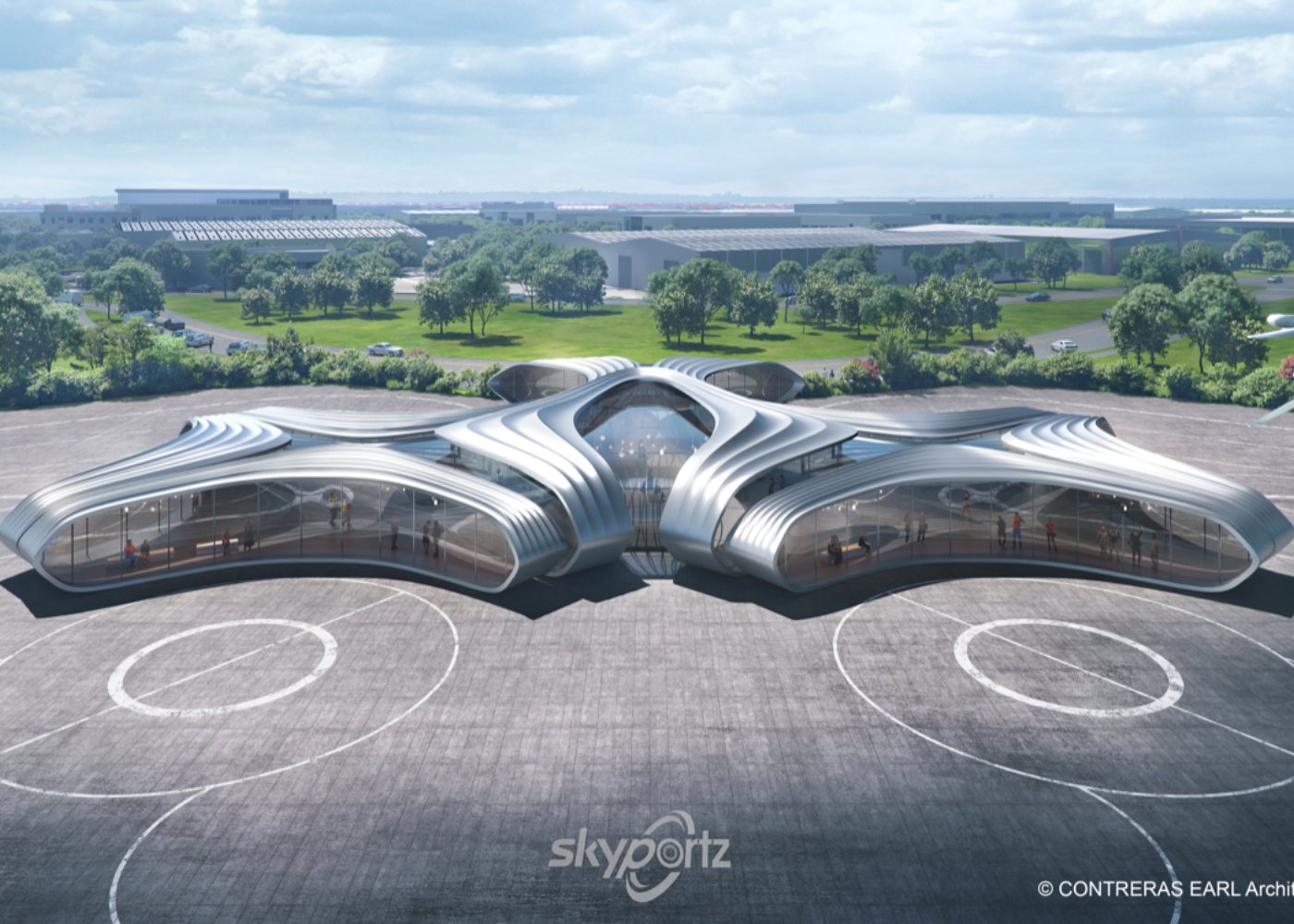
Just a week after Australian vertiport company Skyportz announced its plans to create the country’s first network of air taxi terminals in Melbourne, the company unveiled a database analyzing and cataloguing potential spots for urban air mobility (UAM) infrastructure worldwide.
Next-generation electric takeoff and landing aircraft (eVTOL) manufacturer Archer Aviation and United Airways are deepening their partnership through the establishment of a joint advisory committee to prepare efficient, safety-focused maintenance operations for future air taxis and other urban air mobility (UAM) planes.
With its purchase of a composite glider company DG Flugzeugbau, electric vertical takeoff and landing (eVTOL) heavyweight Volocopter has done more than expanded through acquisition. It has also taken a major step forward toward its goal of obtaining air taxi operating authorization from the European Union Aviation Safety Agency (EASA).
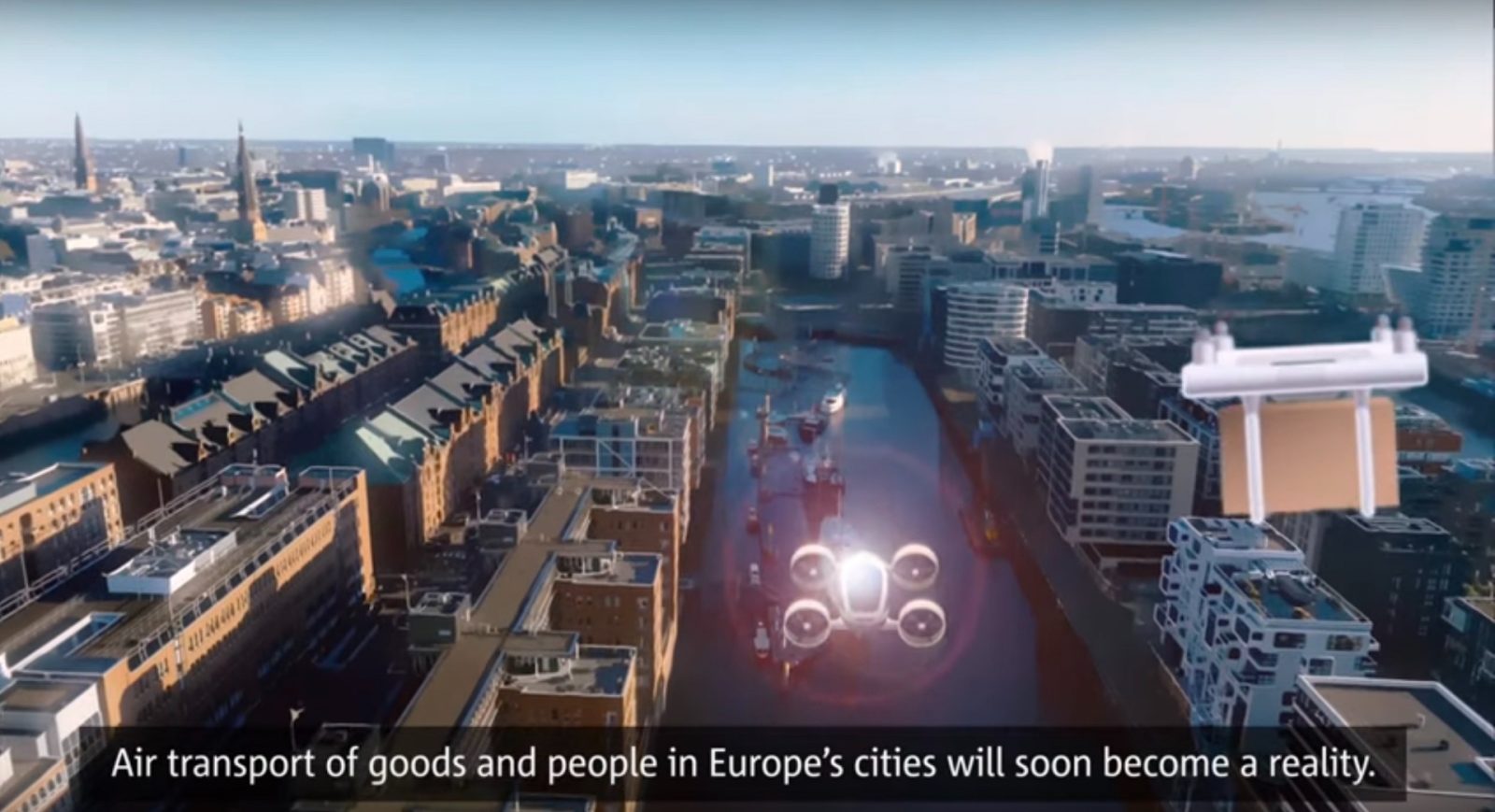
The future of European urban air mobility (UAM) drew a little bit nearer after German vehicle manufacturer Volocopter piloted the first public flight in France of its 2X copter. Company officials say they hope to have a similar craft in commercial air taxi service in time for the 2024 Paris Olympic and Paralympic Games.
Developments in advanced aerial mobility (AAM) are heating up amid a flurry of moves by deep-pocketed, traditional airline players. And Bristol-based electric vertical take-off and landing (eVTOL) company Vertical Aerospace has been at the center of most of it.
If you’re going to think new, think new really big. That’s the attitude of New York startup Kelekona, which plans to produce an electric vertical takeoff and landing (eVTOL) craft capable of transporting 40 people, or 10,000 lbs. of cargo.
For more than a half century, much of the urban experience has been built around the needs and capabilities of automobiles. Now China is experimenting with a framework built around air taxis to create the world’s first drone hotel. Expand Expanding Close
Led by Volvo owner Geely, air-taxi Volocopter has raised $55M and hopes to bring the passenger drone and services to market in the next two to three years. The company’s focus has not been on the US market due to regulatory challenges.
On Tuesday, Boeing’s autonomous air taxi completed its first flight in Manassas, Va. The aircraft takes off and lands vertically (VTOL) but transitions into a horizontal flight path once airborne. A number of other companies, such as Bell, Volocopter, and eHang are developing similar air taxis.
Zephyr Airworks, Kitty Hawk’s operator in New Zealand, just announced that they entered into a partnership with Air New Zealand. Kitty Hawk is the company behind the Cora passenger or taxi drone and is funded by Google co-founder Larry Page and CEO-ed by Sebastian Thrun, the self-driving car pioneer who is the founding director of Google’s X lab.
The collaboration between Zephyr Airworks and Air New Zealand aims to bring the world’s first autonomous electric air taxi service to market in New Zealand. Various companies around the world are working to bring air taxis or passenger drones to the market. Other examples are Volocopter, Workhorse, eHang, Airbus and Bell Helicopter.
Philippine inventor, Kyxz Mendiola unveiled a passenger drone. He calls it a flying sports car that represents the future of transportation. He drove it out of a warehouse and took off among a cheering crowd, leaving them all in a cloud of dust.
Morris Mbetsa, a mostly self-taught inventor and electrical engineer, has built the first passenger drone in Africa. Inspired by companies like Uber and Volocopter, Morris set out to create this prototype to show the world that the people in Africa have the brain power to develop passenger drones, and ultimately to be the first nation in the world with flying taxis
The flying taxi company Kitty Hawk last night launched ‘Cora’, a Vertical Takeoff and Landing (VTOL) personal airplane/helicopter drone hybrid that will carry a passenger. Kitty Hawk is funded by Google co-founder Larry Page and CEO-ed by Sebastian Thrun, the self-driving car pioneer who is the founding director of Google’s X lab. Expand Expanding Close
Only two years ago at CES in Las Vegas, Ehang promised to deliver an autonomous, passenger-carrying taxi-drone and in a video released by Ehang today, it shows that they have. Over the last couple of months, Ehang has conducted over 1,000 test flights with human passengers on board. In the video below they even show how they send their company officials for a test flight in the Ehang 184.
During the CES 2018 event in Las Vegas, the Volocopter 2X, an 18-rotor air taxi drone, made its debut flight. Volocopter works closely together with Intel and after the tech giant completed their keynote presentation, the taxi drone to make its short first flight over the stage. Granted it was a very short flight but the first, nonetheless for Volocopter in North America.
Uber and Bell Helicopter are showing off a four-passenger taxi drone simulator at CES this year. The drone is meant to fly people from A to B on fixed routes, for instance from a train station or parking garage to an airport. The drone can be flown manually by a pilot or it can fly itself. Neither Uber or Bell offered any details on the propulsion system, unfortunately. We do know however that it has VTOL capability, i.e. vertical take-off and landing.
The Surefly is a hybrid octocopter that can carry two passengers. The aerial vehicle can be flown manually with a joystick. Something that should be as easy as flying a DJI drone, according to Workhorse. Or it can be flown in a fully autonomous (drone) mode using sense-and-avoid technology to bring its passengers safely to their destination. A 4-cylinder gasoline engine charges the batteries, which in turn power the electric motors for the eight propellers. The personal helicopter has a range of 70 miles and can lift 400 lbs. The rotor arms can be folded as shown in the photos below.
Drone taxi EHang 184 was introduced at the World Internet Conference in Wuzhen, Zhejiang Province in China on December 4, 2017. The drone taxi has automatic navigation and can take off and land vertically. No runway needed.